Competitor negative reviews are the most overlooked marketing asset in any local service market. Every plumber, roofer, and HVAC company you compete against seems to sit near a 4.8 or 4.9 star average, so on the surface nobody looks beatable. However, averages hide outliers, and a 4.9-star competitor with 1,500 reviews still has dozens of customers who wrote down, in detail, exactly what went wrong. Those reviews are public, searchable, and specific. This article explains what competitor negative reviews are, how to find them, and how to turn them into campaign copy that wins the next unhappy customer before your competitor loses them.
What Are Competitor Negative Reviews?
Competitor negative reviews are the one-to-three-star ratings and written complaints that customers leave for a rival business on platforms like Google Business Profile, Yelp, or Facebook. In practice, they are the small, buried fraction of feedback sitting underneath an otherwise strong star average. For example, a plumbing company with 1,200 reviews and a 4.8 average might still carry 40 to 70 negative reviews describing missed appointment windows, surprise charges, or rushed repairs. Those reviews matter because they describe real friction in the buying decision, written by the exact customer type you want to reach next.
The Problem With Average Star Ratings
A star rating is a summary statistic, not a guarantee. Consequently, two competitors can share a 4.9 average while having very different failure patterns underneath it. One company's bad reviews might cluster around pricing surprises; another's might center on no-shows or pushy upsells. In particular, this is why reading the raw text matters more than the number displayed at the top of a profile. Above all, the goal is to find a theme repeated across multiple unhappy customers, not a single outlier complaint that may not reflect a real pattern. An online review is, by definition, one person's account, so patterns across many reviews carry far more weight than any single entry.

Reading past the average rating is the first step in spotting competitor negative reviews that reveal real patterns.
Why Competitor Negative Reviews Are Your Best Marketing Data
Competitor negative reviews work as marketing data because they come straight from the mouths of real buyers in your market. Therefore, instead of guessing what messaging might resonate, you can read exactly why a customer left a one-star review and build a headline around avoiding that exact outcome. According to BrightLocal's long-running Local Consumer Review Survey, the large majority of consumers read online reviews before choosing a local business, and a cluster of recent negative reviews is often enough to change that decision. As a result, the complaints sitting under a competitor's star rating are not just reputation noise. They are a map of what the next customer in your market fears most.
Data point: survey research on local review behavior consistently finds that most consumers read reviews before contacting a service business, and recent negative reviews materially influence who they choose instead. Source: BrightLocal Local Consumer Review Survey.
How to Find and Analyze Competitor Negative Reviews
Finding competitor negative reviews is straightforward; the hard part is organizing them into something you can act on. The following process mirrors what a structured competitive intelligence review should cover, whether you do it manually or use a service built for it.
- Pick up to five direct competitors. Choose the businesses customers compare you against most often, not just the biggest name in the market.
- Pull the full review history. Read every review available, not just the ones the platform surfaces first, since older complaints often repeat in newer ones.
- Isolate the one-to-three star reviews. Filter out the five-star noise and read the low-rated feedback in full, word for word.
- Cluster complaints into named themes. Group similar complaints like "missed arrival windows" or "surprise charges" so patterns become visible instead of scattered anecdotes.
- Score each theme for exploitability. Rank how often a theme repeats and how strongly it would influence a buying decision, since a rare complaint is less useful than a recurring one.
- Check your own reviews for the same pattern. Before building a campaign around a weakness, confirm your own customers are not describing the identical problem.
Reading Reviews Manually vs. Using a Dedicated Tool
Manual review mining works for a single competitor over an afternoon, but it gets slow once you add four or five rivals with thousands of combined reviews. In contrast, a dedicated process can read every review across five competitors, cluster them into named themes, and score exploitability without the hours of manual tagging. Similarly, checking your own reviews for the same flaw, sometimes called a backfire check, is easy to skip when doing this by hand, which is exactly where most self-built campaigns go wrong.
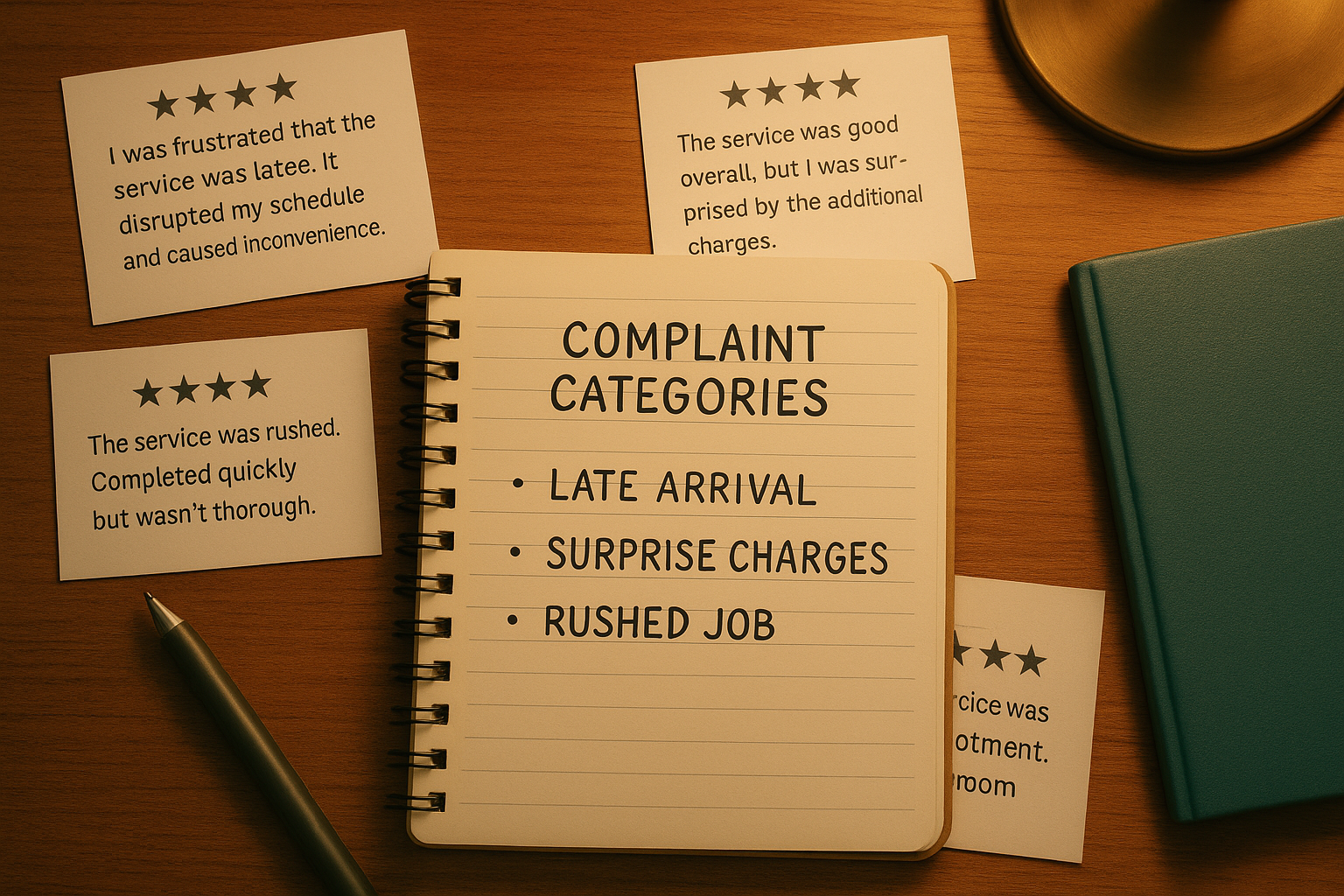
Clustering competitor negative reviews into named themes turns scattered complaints into a usable pattern.
Turning Competitor Complaint Patterns Into Campaign Copy
Once the themes are scored and backed by verbatim quotes, the next step is translating them into copy without naming the competitor directly. For instance, if a competitor's negative reviews repeatedly describe a technician who never called before arriving, a strong Google Ads headline might read "We Call 30 Minutes Before We Arrive, Every Time." In addition, the same weakness theme can become a Google Business Profile post, a Meta ad, or an email subject line. Specifically, WeakSpot packages these into Google Ads headlines validated against the 30 and 90 character limits and Meta ad copy that fits within the 40, 125, and 25 character fields the platform requires.
Keeping Claims Ethical and Specific
Good copy built from negative customer feedback never names the rival business. Instead, it states your own standard plainly and lets the contrast speak for itself. The FTC's guidance on endorsements and reviews is a useful reference here, since it reinforces that claims in advertising should be truthful and substantiated. As a result, the safest and most effective approach is to anchor every headline in a verbatim quote pattern you can defend if a customer asks where it came from.
Avoid the Backfire Risk Before You Run a Campaign
A campaign built on a competitor's weakness can backfire if your own business shares the same flaw. For example, running "we show up on time" ads while your own reviews complain about late arrivals invites a comparison you will lose. Therefore, before any angle goes live, run your own Google reviews through the identical analysis you used on competitors. This step, often called backfire protection, is the difference between a claim you can defend confidently and one that invites an uncomfortable screenshot in the comments section.
Where WeakSpot Fits Into This Process
WeakSpot automates the entire workflow described above for local home-service businesses. Specifically, the service monitors up to five competitors you choose, reads their entire Google review history, and clusters the one-to-three star corpus into named, scored weakness themes backed by verbatim quotes. Every plan starts with a self-analysis of your own reviews first, so backfire risk gets flagged before any copy reaches you. You can request a free self-analysis at weakspot.io, review how the monthly intelligence report looks on weakspot.io's plan pages, or see a finished report walkthrough at app.weakspot.io/demo.
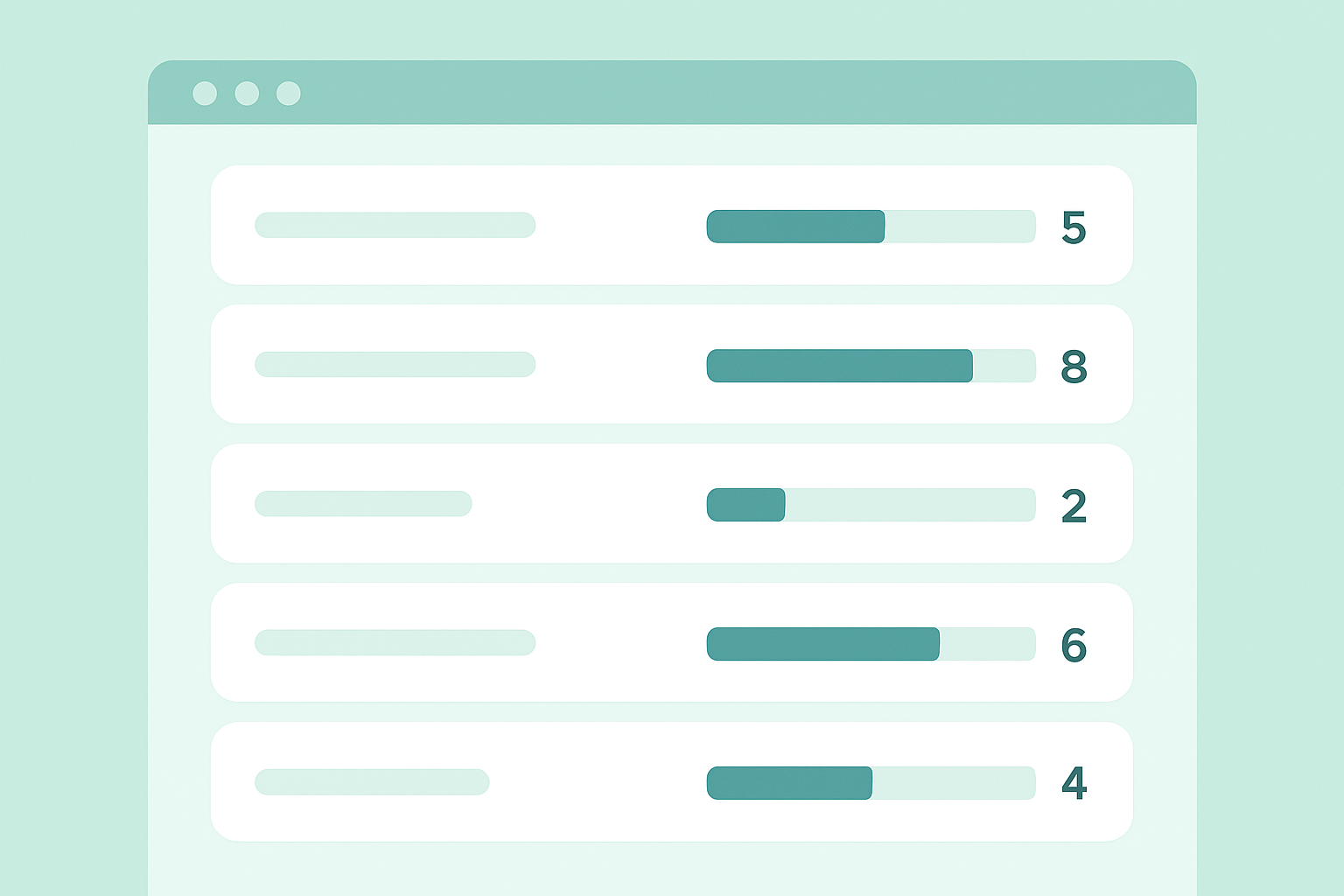
Scoring each weakness theme turns raw competitor negative reviews into a ranked list of usable campaign angles.
Frequently Asked Questions About Competitor Negative Reviews
What are competitor negative reviews?
Competitor negative reviews are the one-to-three-star ratings and written complaints customers leave for a rival business on Google, Yelp, or Facebook. They sit beneath an otherwise strong star average and describe specific problems like missed appointments or surprise charges.
How do I find competitor negative reviews on Google?
Open the competitor's Google Business Profile, filter reviews by rating, and read every one-to-three star entry in full. Scroll past the recent highlights, since older reviews often repeat the same complaint patterns.
Why should I use competitor negative reviews in my marketing?
Competitor negative reviews reveal exactly what the next customer in your market is afraid of, in their own words. That makes them a far more reliable source for ad messaging than generic positioning statements.
How many competitors should I monitor for negative reviews?
Most local businesses get useful results monitoring three to five direct competitors. Tracking more than that tends to dilute focus without adding meaningfully different complaint themes.
What is the difference between reading reviews manually and using a service like WeakSpot?
Manual reading finds individual complaints, while a structured service clusters hundreds of reviews into named, scored weakness themes backed by verbatim quotes. WeakSpot also checks your own reviews for the same flaw before handing you a campaign angle.
How much does it cost to track competitor negative reviews?
Doing it manually costs only time, but a dedicated service typically runs in the low hundreds of dollars per month. WeakSpot's plans start at $149 per month for two competitors and a monthly report.
How long does it take to get a competitor review analysis?
A thorough manual review of one competitor's full history can take several hours per business. WeakSpot's free self-analysis of your own reviews is emailed within two business days with no call required.
What common mistakes do businesses make when using competitor negative reviews?
The biggest mistake is building a campaign around a weakness without checking whether your own reviews describe the same problem. A close second is naming the competitor directly, which can read as unprofessional and invite unnecessary risk.
Is it legal or ethical to use competitor negative reviews in advertising?
Yes, as long as you reference public review data accurately and avoid naming the competitor or making unverifiable claims. Focus the message on your own strength rather than disparaging a named rival.
Should I name competitors directly in my ads?
No, most practitioners recommend against naming competitors directly in ad copy. It can trigger platform policy reviews and comes across as negative rather than confident.
What is backfire protection and why does it matter?
Backfire protection means checking your own reviews against a weakness theme before you run a campaign built on it. It matters because a claim your own customers contradict can damage trust faster than it builds leads.
Can competitor negative reviews help with SEO content too?
Yes, weakness themes translate well into SEO content briefs that answer the exact questions worried customers search for, such as pricing transparency or arrival time guarantees. This helps content rank for intent-driven, comparison-style searches.
How often should I recheck competitor negative reviews?
Monthly rechecks work well for most local service categories, since new reviews accumulate steadily and ratings can shift after a busy season. A monthly watch list also catches complaint surges or sudden rating drops early.
Final Takeaway
Competitor negative reviews are not reputation gossip; they are a documented record of what the next customer in your market wants to avoid. In summary, the businesses that read past the star rating, cluster the real complaints, and check their own reviews first will consistently out-message rivals who are still competing purely on price and ad spend. Ultimately, whether you build this process by hand or let a service like WeakSpot handle the reading, clustering, and backfire check, the opportunity sitting in your competitors' negative reviews is public, specific, and waiting to be used.
