
Home Service Marketing Content That Wins Customers
Home service marketing content is the ads, posts, and web pages that plumbers, HVAC companies, roofers, and other local service providers use to win new customers. However, most of it says the exact same thing: fast, friendly, licensed, and insured. In a market where nearly every competitor sits at 4.8 stars or higher, that kind of generic messaging blends in instead of standing out. This article explains where sharper home service marketing content actually comes from, how to build it around real customer complaints instead of guesswork, and how a tool like WeakSpot turns competitor review data into ready-to-run campaigns.
What Is Home Service Marketing Content?
In practice, this content spans several channels: paid search ads, social media campaigns, Google Business Profile posts, blog articles, and email. Each channel has its own format and character limits, but the underlying message should stay consistent. For example, a company fighting surprise pricing complaints in its market should repeat a "no surprise pricing" promise across every touchpoint, not just one ad set.
Why Local Service Business Marketing Blends Together
In almost every local market, every serious competitor looks perfect on the surface. Plumbers, roofers, HVAC companies, and residential service providers routinely sit between 4.8 and 5.0 stars. As a result, there is nothing obvious to separate them, so they end up competing on price and on who spends the most on ads. According to BrightLocal's Local Consumer Review Survey, the vast majority of consumers read reviews before choosing a local business, and many will not consider a provider below roughly a four-star average. That means star ratings alone rarely distinguish one contractor from the next.
Consequently, the owner who wants to grow ends up paying more for the same clicks as everyone else. Above all, this is a content problem, not just a budget problem. The businesses that break out of the price war are usually the ones saying something specific that their competitors cannot honestly say back.
Building home service marketing content starts with reading what competitors' customers actually complain about.
The Hidden Data Source Behind Sharper Marketing Content
A star rating is an average, and averages hide things. A competitor with a 4.9 and 1,500 reviews still has thirty to fifty unhappy customers who took the time to write down exactly why they left. Comments like "quoted one price, billed another" or "waited all day, nobody called" are public, specific, and describe, in the customer's own words, the exact frustration the next shopper in that market is trying to avoid.
Almost nobody reads that far into a competitor's review history. Specifically, WeakSpot monitors up to five competitors a business chooses, reads their entire Google review history, and isolates the one to three star corpus into named weakness themes such as surprise charges, missed arrival windows, rushed jobs, callbacks that never come, messy installs, pushy upsells, and warranty runarounds. Each theme is scored from 1 to 10 for how exploitable it is, backed by verbatim quotes, so the pattern is undeniable rather than a vague impression.
How to Build Home Service Marketing Content From Review Data
Turning raw reviews into usable home service marketing content follows a repeatable sequence. In particular, skipping any of these steps tends to produce copy that sounds sharp but cannot be defended once a customer checks it against reality.
- Pull the full review history for each chosen competitor, not just the recent highlights, since older complaints often reveal habits that still hold true today.
- Isolate the one to three star reviews and cluster them into named themes, such as surprise charges, missed arrival windows, rushed jobs, or warranty runarounds.
- Score each weakness theme from 1 to 10 based on how often it appears and how strongly customers describe it, so effort goes toward the most exploitable patterns first.
- Run the identical analysis on your own reviews before writing anything, because a claim your own customers contradict will undermine the entire campaign.
- Turn the validated weaknesses into platform-ready copy, formatted to each channel's character limits, from search ads to email subject lines.
Backfire Protection: The Step Most Home Services Marketing Skips
Before any angle reaches a client, WeakSpot runs the business's own reviews through the exact same analysis used on competitors. If a company's customers also complain about late arrivals, a "we show up when we say we will" campaign gets flagged, because it invites a comparison the business would lose. This is called backfire protection, and it is the fastest way to stop wasting ad budget on claims your own reviews contradict.
Therefore, every message that survives this check is one a business can actually win on. In addition, campaign copy built this way never names a competitor directly; it focuses on the customer's pain point, which keeps the message defensible and compliant with advertising norms such as those referenced in the FTC's endorsement guidance.

Scored weakness themes, backed by verbatim quotes, form the backbone of validated home service marketing content.
What a Finished Home Service Content Marketing Pack Includes
Competing tools often end with a dashboard telling a business there is a problem. In contrast, a finished pack ends with the headline that runs Monday. Each month, a validated pack typically includes Google Ads headlines checked against the 30 and 90 character limits, Meta ad copy fitted within 40, 125, and 25 characters, Google Business Profile posts, SEO content briefs, and email hooks, ready to drop into existing ad accounts.
WeakSpot's plans reflect this structure directly. The Weak Spot Intel plan, at 149 dollars a month, covers two competitors with a monthly intelligence report and watch-list alerts, but no campaign copy. The Market Edge plan, at 299 dollars a month and the most popular option, covers five competitors with a full campaign pack, a monthly self-analysis, and a backfire check refreshed every month. Under the Market Edge and Market Takeover plans, if the first report does not surface at least three exploitable weaknesses across competitors, that month is free. Every engagement starts the same simple way: submit a business name, a website or Google Maps link, and a business email at weakspot.io, and receive the free self-analysis within two business days, no call required.
Measuring Results From Your Home Service Advertising Content
Building the content is only half the work; tracking whether it holds up matters just as much. Specifically, a watch list that alerts a business to complaint surges, rating drops, or new weakness themes at watched competitors keeps a campaign accurate over time, since a competitor that fixes a problem this quarter may no longer be a fair target next quarter.
Similarly, comparing lead volume and cost-per-click before and after switching from generic claims to weakness-driven messaging offers a clear read on whether the new content is working. For further background on structuring content around audience intent, the Wikipedia overview of content marketing is a useful starting reference, as is Google's own guidance in its Google Business Profile help center. You can also see a live walkthrough of how this process runs end to end at app.weakspot.io/demo.
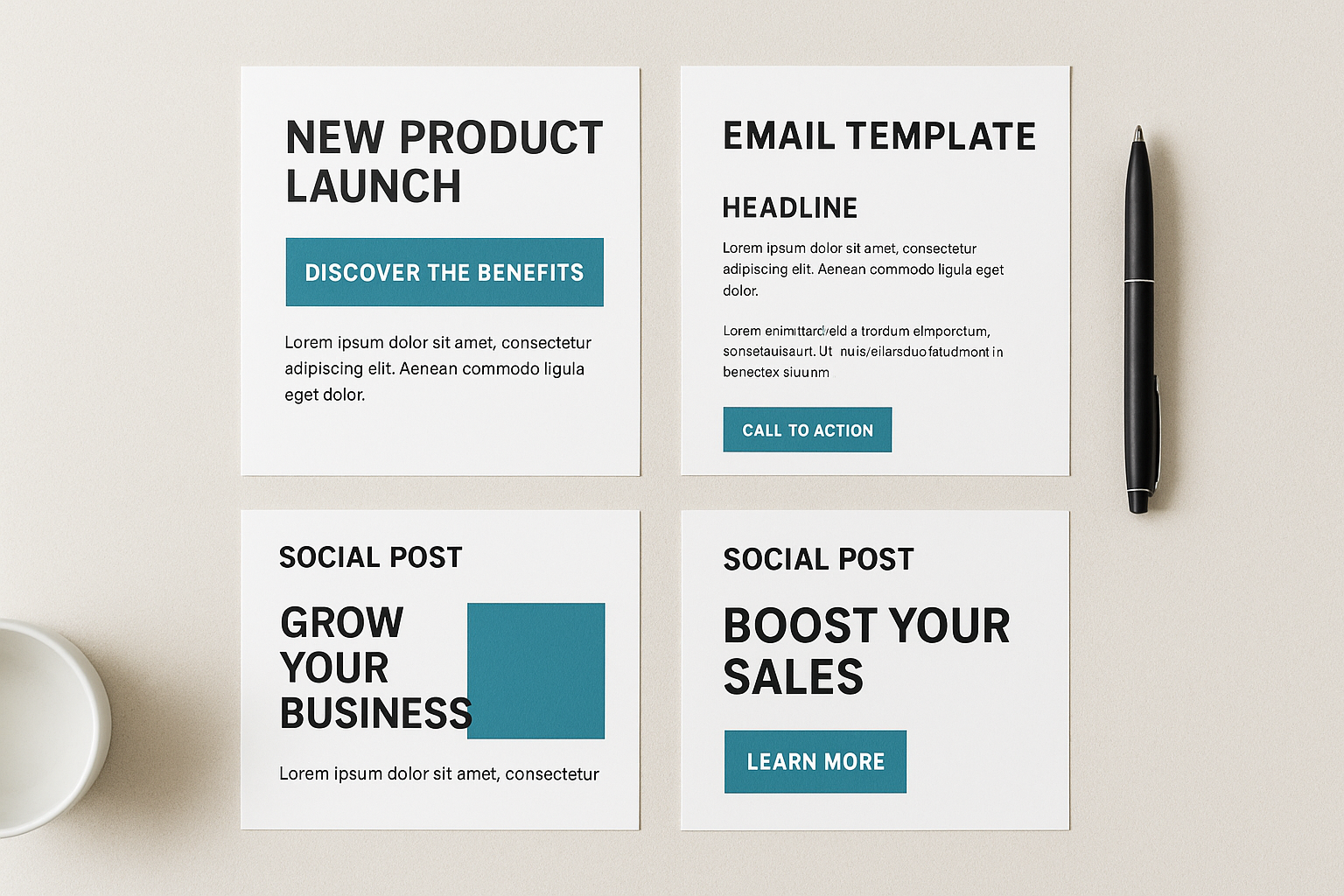
A finished campaign pack turns validated weakness themes into ready-to-run home service marketing content.
Frequently Asked Questions About Home Service Marketing Content
What is home service marketing content?
Home service marketing content is the ads, web pages, and social posts that plumbers, HVAC companies, roofers, and similar businesses use to attract local customers. The strongest versions are built around a specific customer pain point rather than generic claims like fast or friendly.
How is home service marketing content different from generic advertising?
Generic advertising leans on broad claims such as licensed and insured, which nearly every competitor also uses. Effective home service marketing content instead targets a documented frustration, such as surprise charges or missed appointment windows, so the message stands apart.
Why do most home service companies struggle to stand out with their marketing content?
Most local service providers sit between 4.8 and 5.0 stars, so on the surface they all look identical. Without a way to see beneath the average rating, marketing teams end up repeating the same safe phrases as every competitor.
How do competitor reviews help create better home service marketing content?
A 4.9-star competitor with hundreds of reviews still has dozens of one and two-star complaints describing exact frustrations, such as billed prices that did not match the quote. Those verbatim quotes reveal what the next customer in that market is actively trying to avoid.
What is backfire protection in home service marketing content?
Backfire protection means checking a company's own reviews for the same complaint before building a campaign around it. If a business also gets criticized for late arrivals, a we-show-up-on-time campaign would invite a comparison it would lose.
How much does professionally built home service marketing content cost?
Pricing varies by provider and scope. WeakSpot's plans start at 149 dollars a month for a two-competitor intelligence report, while the 299 dollar Market Edge plan adds a full campaign pack, backfire checks, and a monthly self-analysis.
How long does it take to get home service marketing content from review data?
A free self-analysis of a company's own reviews is typically returned within two business days with no call required. A full competitor intelligence report and campaign pack is generally delivered on a monthly cycle.
What platforms need different versions of home service marketing content?
Google Ads, Meta ads, Google Business Profile posts, SEO content, and email each have their own length and format rules. Google Ads headlines are limited to 30 characters, while Meta ad copy fits within 40, 125, and 25-character fields.
Can home service marketing content name competitors directly?
No. Responsible campaign copy focuses on the customer's pain point rather than naming a specific competitor, since everything analyzed is public review data used to inform strategy, not to attack a named business.
What is the biggest mistake companies make with home service marketing content?
The most common mistake is claiming a strength the business cannot actually back up, such as promising on-time arrivals while its own reviews mention the same complaint. That mismatch erodes trust the moment a new customer checks reviews.
How often should home service marketing content be refreshed?
Review patterns shift as competitors change staff, pricing, or processes, so a monthly refresh is a practical baseline. Watch-list alerts for complaint surges or new weakness themes help flag when an update is needed sooner.
Is a free self-analysis a good way to start building home service marketing content?
Yes. Reviewing a company's own complaint patterns first prevents it from building a campaign around a claim its own customers would contradict, which makes every later message stronger and safer to run.
Final Thoughts on Home Service Marketing Content
In a market where every competitor looks nearly identical on paper, home service marketing content built from generic claims will keep blending in. However, the businesses that stand out are the ones reading past the star rating, finding the thirty or fifty unhappy customers hiding under a 4.9 average, and turning those verbatim complaints into validated, backfire-checked copy. In short, home service marketing content works best when it is specific, defensible, and grounded in what real customers have already said in public. Starting with a free self-analysis at weakspot.io is a practical first step toward that kind of content, without committing to anything more than a business name and a Google Maps link.
