How to get more plumbing customers is the question nearly every local plumbing company owner eventually asks, usually right after noticing that competitors with almost identical star ratings keep winning more calls. In most metro areas, plumbers cluster tightly between 4.8 and 5.0 stars, so on the surface there is little separating one company from another. As a result, many owners end up competing on price, ad spend, or sheer volume of ads. However, a star rating is only an average, and averages hide the details that actually move customers. Underneath that shiny number, dozens of people often wrote down exactly why they almost didn't hire that company, and those specific complaints are public, searchable, and reusable.
What Is the Fastest Way to Get More Plumbing Customers?
The fastest way to get more plumbing customers is to build marketing around the specific service failures your competitors' unhappy clients describe in their own Google reviews, such as missed arrival windows, surprise pricing, or rushed jobs, rather than generic claims like "reliable" or "affordable." This works because it addresses a frustration the next customer is already trying to avoid, instead of asking them to take a vague promise on faith.
For example, if three different competitors have reviews complaining about technicians who never call before arriving, a plumbing company that promises, and delivers, a confirmed arrival window has an immediate, specific advantage. Consequently, the marketing message writes itself: it is not a slogan, it is a direct answer to a complaint real customers have already posted in public. Similarly, pricing complaints are common across the home-service industry, so a transparent, upfront quote can become a genuine differentiator rather than just another ad claim nobody believes.
How to Get More Plumbing Customers Using Competitor Review Intelligence
Every serious plumbing competitor in your market has a Google review history stretching back years, and most of it goes unread by anyone outside the unhappy customer who wrote it. That history is a free, public dataset describing exactly what frustrates people enough to leave a review. Reading all of it, not just the testimonials a competitor pins to their website, is a basic form of online reputation management, applied in reverse, on someone else's business.
Specifically, the one-star, two-star, and three-star reviews are where the detail lives. A happy customer usually writes something short, like "great service." An unhappy one writes a paragraph. They explain the quoted price, the billed price, how long they waited, and whether anyone apologized. Therefore, that smaller slice of reviews carries far more usable marketing information than the five-star average most owners stare at.
Why Star Ratings Don't Tell the Whole Story
A 4.9-star average built on 1,500 reviews can still include thirty to fifty reviews rating the business one, two, or three stars, customers who explained, in detail, exactly what went wrong. Those reviews rarely move the overall average much, so they stay buried under the headline score, even though they describe the precise frustration the next customer is trying to avoid.
In particular, patterns repeat. If several customers across two competitors describe missed arrival windows, that is not a coincidence, it is a weakness theme. Likewise, if multiple reviews mention a quoted price that doubled by the time the invoice arrived, that pattern describes a trust problem worth addressing directly in your own marketing, as long as your own reviews do not show the same issue.

Reading the full review history, not just the highlights, reveals how to get more plumbing customers from unhappy competitor clients.
Proven Plumbing Marketing Strategies That Still Work
Beyond competitor review analysis, a handful of marketing fundamentals still drive most of the qualified leads plumbing companies receive. First, a complete and consistently updated Google Business Profile remains one of the highest-leverage, lowest-cost tools available, since it directly affects whether a company shows up in the local map results people see first. According to Google's own guidance for local businesses, profiles with accurate categories, services, and regularly added photos tend to perform better in local search than neglected ones.
Second, responding to every review, positive and negative, signals to both customers and search algorithms that the business is active and accountable. Third, ad campaigns built around specific, provable claims outperform generic "trusted local plumber" messaging, because specificity reads as credibility rather than marketing noise.
Finally, email and direct-mail follow-ups to past customers remain underused. A plumbing company that reminds previous customers about seasonal maintenance, water heater flushing, or drain cleaning before problems start often generates repeat revenue at a fraction of the cost of acquiring a brand-new customer. In short, the strategies that work are rarely exotic; they are simply applied consistently.
How to Attract More Plumbing Leads With Local SEO
Local search engine optimization, the practice of improving how a business ranks in search results for a specific city or region, remains one of the most reliable channels for plumbing leads. Because most plumbing searches happen when someone already has a problem, a leaking pipe, a broken water heater, intent is high and competition for those searches is fierce.
Therefore, three things matter most: consistent business information across directories, genuine customer reviews that mention specific services and neighborhoods, and location-specific landing pages describing the actual work done in that city rather than generic company-wide copy. Additionally, listing service areas clearly helps both users and search engines understand exactly where a company operates. Industry research from BrightLocal's Local Consumer Review Survey has repeatedly found that the large majority of consumers read online reviews before choosing a local service business, which is exactly why the detail hidden inside those reviews carries real marketing weight.
For a deeper look at how review data itself factors into local visibility and customer trust, WeakSpot's review intelligence approach treats the review corpus as a marketing asset, not just a reputation score to monitor quietly in the background.
Step-by-Step: How to Run a Competitor Review Audit
Running a basic competitor review audit does not require specialized software, though it is time-consuming to do by hand across several competitors. The following process outlines the core steps:
- Identify your top competitors. Pick three to five plumbing companies in your service area that show up consistently in the same searches and ad placements you compete in.
- Pull their full review history. Read every Google review each competitor has received, not just the most recent ones, since older reviews often contain recurring complaint patterns worth noting.
- Isolate the one, two, and three-star reviews. Separate out the negative and mixed reviews, because these contain the specific detail that drives usable marketing angles for your campaigns.
- Cluster complaints into weakness themes. Group similar complaints together, such as missed arrival windows, surprise charges, or rushed jobs, so patterns become visible across multiple reviews.
- Check your own reviews for the same issues. Before building any campaign around a competitor's weakness, confirm your own reviews do not show the identical problem, since that would invite a losing comparison.
- Turn validated weaknesses into campaign copy. Write headlines, ad copy, and Google Business Profile posts that speak directly to the frustration customers described, without naming any competitor by name.
How to Win New Plumbing Customers From Competitors' Unhappy Clients
Winning customers away from a competitor rarely requires undercutting price. Instead, it usually requires addressing the specific reason someone almost didn't hire that competitor in the first place. For instance, a homeowner who read a review about a technician who never called before arriving is primed to respond to a message guaranteeing a confirmed appointment window with a text alert when the technician is on the way.
Similarly, a prospective customer who has seen complaints about a quoted price that changed at the door responds well to upfront, written estimates before work begins. Because these messages mirror a frustration the customer may have already experienced or read about, they land with more credibility than a generic promise of "quality service."
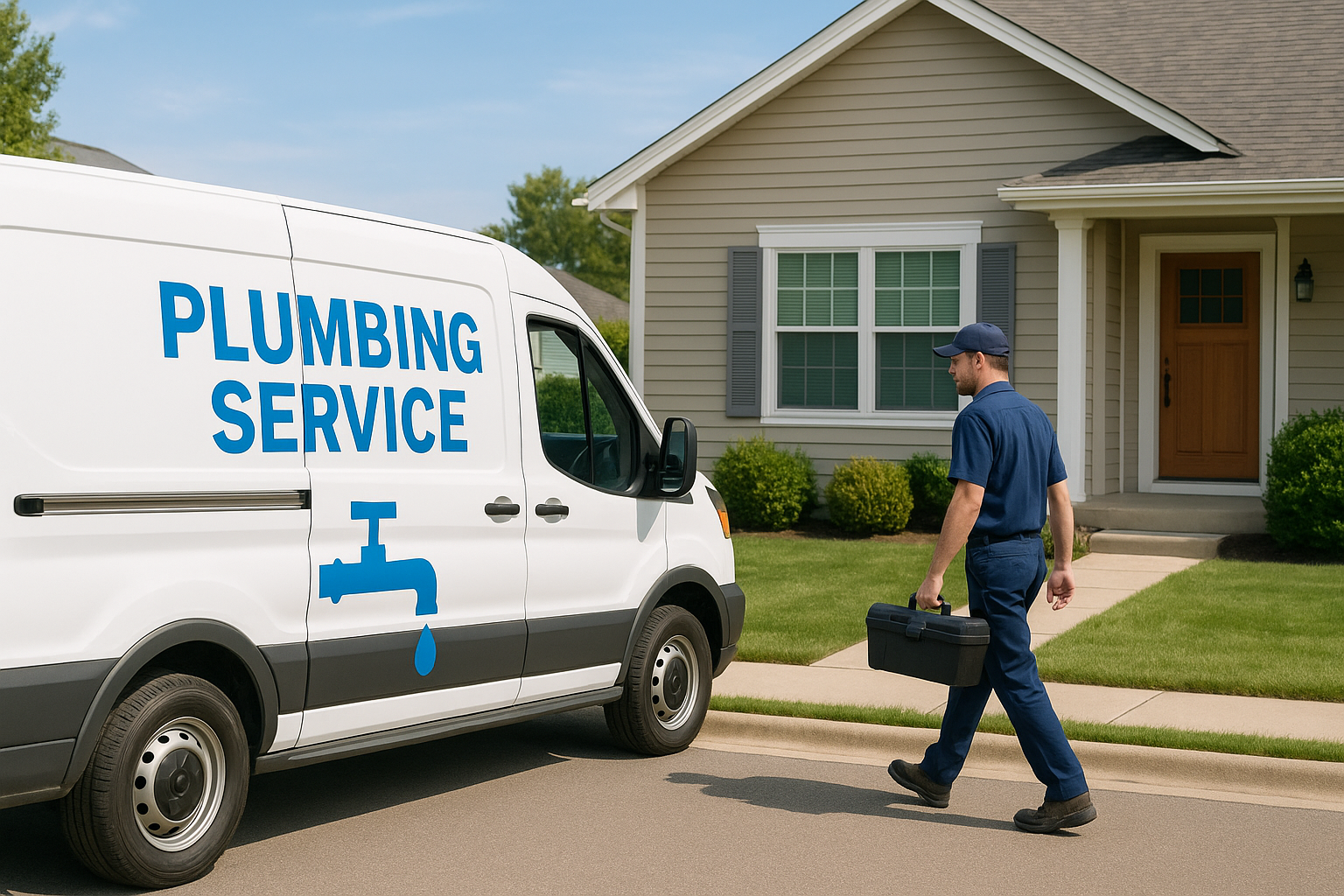
A confirmed arrival window turns a common complaint into a specific, believable promise.
This is also where a monthly competitive intelligence report becomes useful, since tracking competitor weaknesses over time, rather than as a one-time snapshot, catches new complaint patterns and rating drops as they emerge, not months later.
Avoiding the Backfire Trap When Marketing Your Plumbing Business
One mistake undermines more local marketing campaigns than any other: running a message your own reviews contradict. For example, a plumbing company that advertises "we always show up on time" while its own recent reviews mention late arrivals is handing the next customer a reason to distrust the ad itself.
This is commonly called backfire protection, the practice of checking a planned marketing claim against a company's own review history before publishing it, so the message cannot be easily disproven by a quick search. Specifically, before publishing any competitor-based campaign, it is worth running the identical review analysis on your own business and asking whether the same complaint pattern shows up there too.
If it does, the better move is choosing a different weakness theme, one your own reviews genuinely support. This single check, simple as it sounds, is frequently skipped, and it is often the difference between a campaign that converts and one that quietly damages trust instead.
A strong average can still hide the specific complaints that matter most for marketing.
Frequently Asked Questions About How to Get More Plumbing Customers
What is the fastest way to get more plumbing customers?
The fastest way to get more plumbing customers is to build marketing around specific, verified weaknesses in competitors' service, like missed arrival windows or surprise pricing, rather than generic claims. This works because it speaks directly to a frustration customers have already experienced or read about.
How to get more plumbing customers without increasing ad spend?
Reallocating existing ad spend toward specific, review-backed messaging instead of generic slogans typically improves conversion rates without requiring a bigger budget. Improving Google Business Profile completeness and responding to every review also helps at no added cost.
Why do plumbers with nearly identical star ratings get different numbers of calls?
Star ratings are averages, and two companies with the same 4.9 average can have very different complaint patterns hiding underneath. The company whose marketing avoids its own weak spots while addressing a competitor's real weakness usually wins more calls.
What are common complaint themes found in plumbing company reviews?
The most frequent themes include missed arrival windows, prices that increase after the quote, rushed or incomplete jobs, callbacks that never happen, and pushy upsells. These patterns repeat across most local home-service categories, not just plumbing.
How much does it cost to run a competitor review audit for a plumbing business?
Doing it manually costs only time, though reading hundreds of reviews across several competitors by hand can take many hours each month. Services like WeakSpot's Market Edge plan, priced at $299 per month, automate the analysis and deliver ready-to-use campaign copy.
How long does it take to see results from review-based plumbing marketing?
Most companies see early signals, like improved click-through rates on ads, within two to four weeks of launching review-based messaging. Fuller results, including more booked jobs, typically build over two to three months of consistent use.
What is the biggest mistake plumbing companies make when writing ads?
The most common mistake is relying on vague claims like "reliable" or "trusted," which every competitor also uses and which customers tend to ignore. A close second is making a claim, such as always being on time, that the company's own reviews contradict.
Is competitor review analysis better than generic plumbing SEO services?
They solve different problems, so it is not really an either-or choice. Local SEO helps a plumbing company get found; competitor review analysis helps determine what to say once that attention arrives, so the two work best together.
How can a plumbing business avoid a marketing message backfiring?
Before publishing any claim, check it against the company's own recent reviews to confirm customers are not already describing the opposite experience. This step, sometimes called backfire protection, prevents a campaign from accidentally inviting an unfavorable comparison.
Should a plumbing company name competitors in its advertising?
No. Naming a specific competitor in an ad is generally unnecessary, can raise legal and platform-policy concerns, and often reads as defensive rather than confident. It is more effective to describe the problem customers experience and let readers draw their own conclusions.
What is WeakSpot and how does it help plumbing companies get more customers?
WeakSpot is a competitive intelligence service that reads a plumbing company's chosen competitors' full Google review history, identifies exploitable weakness themes, and delivers ready-to-run campaign copy built around those weaknesses. It also checks the client's own reviews first, so the resulting campaigns do not backfire. A live demo is available at app.weakspot.io/demo.
What should a plumbing company do first before launching a new marketing campaign?
Start with a free self-analysis of the company's own reviews to understand existing strengths and weaknesses before building any campaign around a competitor. Submitting a business name and Google Maps link at weakspot.io begins that process, with results emailed within two business days.
Key Takeaways
In the end, how to get more plumbing customers is less about chasing a perfect star rating and more about understanding what already drives customers away from competitors who look nearly identical on paper. Every unhappy review a competitor receives is public, specific, and reusable, and most companies never read past the star count. By analyzing weakness themes, checking claims against a company's own review history, and turning validated patterns into finished campaign copy, a plumbing business can compete on substance rather than ad spend alone. Starting with a free self-analysis at weakspot.io is a reasonable first step toward building a campaign that actually holds up.
