
Watch alerts for review surges are notifications that fire when a competitor suddenly collects more unhappy reviews than normal. For a home-service owner, they turn a slow, invisible shift into a clear signal. You see the problem while customers are still looking for a new provider.
Quick answer: A review surge alert tells you a competitor is generating repeated complaints right now. Read the theme, check your own reviews for the same issue, then run a message you can honestly win on.

An owner checks watch alerts for review surges before the day's first job.
What Are Watch Alerts for Review Surges?
They are automatic flags tied to a competitor's Google reviews. Instead of checking profiles by hand, you get told when complaints jump. A single bad review is noise. Several in a short window, all naming the same problem, is a pattern.
Star averages hide this. A competitor can sit at 4.9 stars with 1,500 reviews and still have thirty to fifty unhappy customers. When a cluster of them lands in two weeks, something changed inside that company.
Why Complaint Spikes Create an Opening
Unhappy customers rarely stay unhappy quietly. They search again. Therefore, the weeks after a surge are when your message is most relevant.
Consider an illustrative example. A fictional Fort Worth roofing company starts missing arrival windows after a busy storm season. Reviews fill up with "Waited all day. Nobody called." A roofer who sees that early can run copy about reliable communication. However, only if their own reviews support it.
Common surge themes in home services
- Surprise charges added after the quote
- Missed or very late arrival windows
- Callbacks that never come
- Rushed jobs and messy installs
- Pushy upsells and warranty runarounds
How the WeakSpot Watch List Works
WeakSpot reads the full Google review history of up to five competitors you choose. It isolates the 1 to 3 star reviews and groups them into named weakness themes. Each theme gets a score from 1 to 10 for how exploitable it is, with verbatim quotes as proof.
The watch list then sends alerts for complaint surges, rating drops and new weakness themes. For a broader look at the approach, see review monitoring and this guide on review monitoring for contractors.
Check Your Own Reviews First: Backfire Protection
An alert is only useful if you can win the comparison. Backfire protection runs your own reviews through the same analysis. If your customers also mention late arrivals, a "we show up when we say we will" campaign gets flagged.
This keeps you from running claims your own reviews contradict. Meanwhile, it points you to themes where you genuinely lead.
Steps to Act on a Surge Alert
- Read the alert and note the repeating theme, the review count and the dates.
- Read the verbatim quotes to learn the customers' exact words.
- Search your own 1 to 3 star reviews for the same complaint.
- Pick or write copy you can honestly win on, inside platform character limits.
- Launch it in your own accounts, or hand it to your agency.
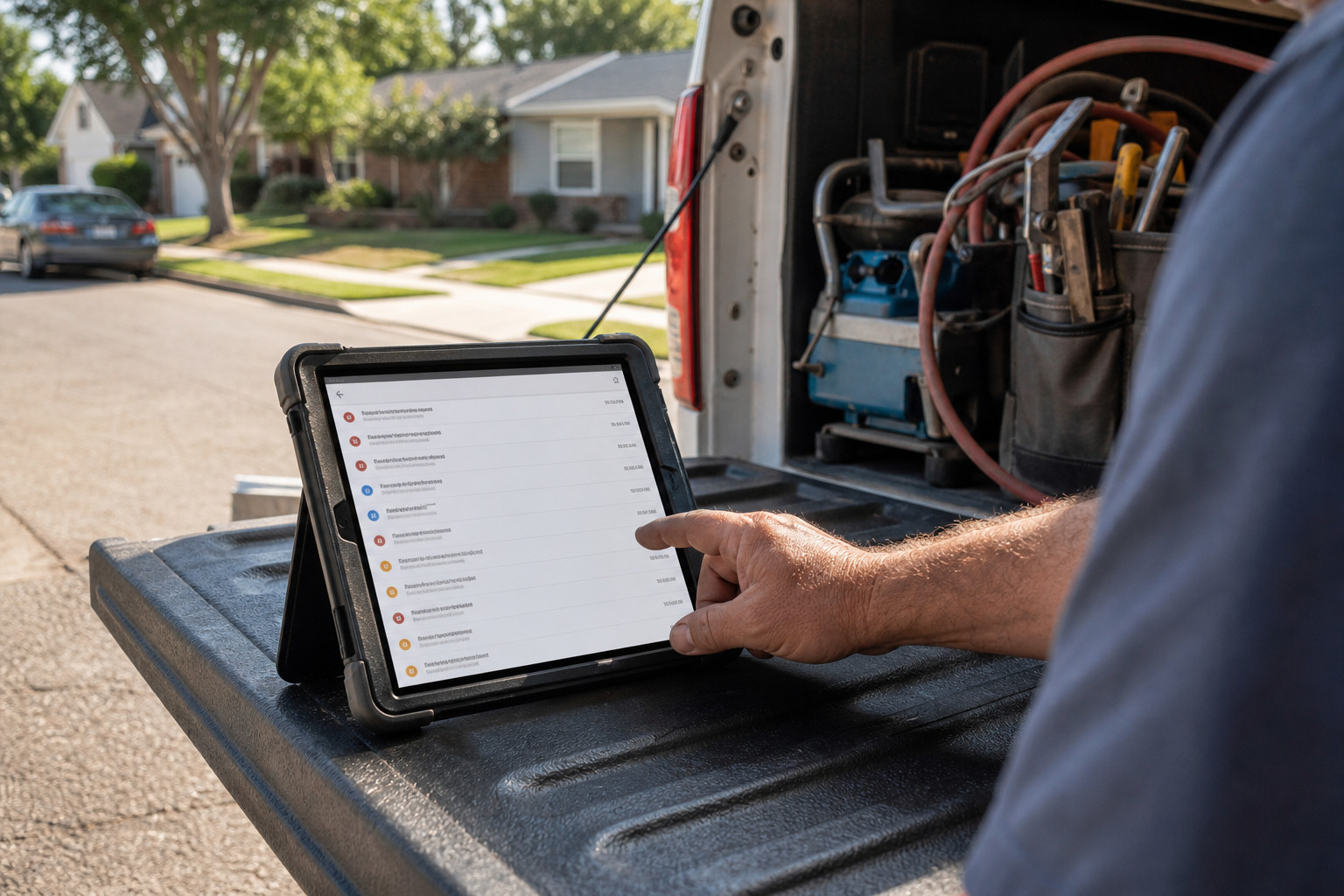
Acting on an alert takes minutes when the copy is already written.
Copy, Not a Chart
Most tools stop at a dashboard. WeakSpot goes further. Market Edge includes a monthly campaign pack: Google Ads headlines validated against the 30 and 90 character limits, Meta ad copy within 40, 125 and 25 characters, Google Business Profile posts, SEO briefs and email hooks.
We do the thinking; you keep the keys. WeakSpot does not run ads. You or your agency do that in your own accounts. Campaign copy never names a competitor, and since comparative advertising rules vary, check your local rules.
Plans and Where Alerts Fit
| Plan | Price | Competitors |
|---|---|---|
| Weak Spot Intel | $149/month | 2, with watch list alerts |
| Market Edge | $299/month | 5, with campaign pack |
Every engagement starts with a free self-analysis of your own reviews. You can also explore the WeakSpot home page or see how this approach applies to other trades, such as pool service.
FAQ: Watch Alerts for Review Surges
What are watch alerts for review surges?
They are notifications that fire when a competitor suddenly gets more negative reviews than usual. They tell you a problem is happening now, so you can respond while customers are still unhappy.
Why do review surges matter to a home-service owner?
A surge usually points to a real operational problem, such as missed appointments or surprise fees. Unhappy customers start searching for another provider right away.
How is a surge different from a normal bad review?
One bad review is noise. A surge is several complaints in a short window, often repeating the same issue.
What does the WeakSpot watch list send?
The watch list sends alerts for complaint surges, rating drops and new weakness themes at competitors you care about.
How many competitors can I monitor?
WeakSpot monitors up to five competitors you choose. Weak Spot Intel covers two, and Market Edge covers five.
Do alerts include the actual review text?
Weakness themes are backed by verbatim quotes from public Google reviews. That keeps the pattern specific and checkable.
What should I do when an alert arrives?
Read the theme, check your own reviews for the same complaint, then run a message you can honestly win on.
What is backfire protection?
It is a check of your own reviews against the same analysis. If your customers share the complaint, that angle is flagged before you run it.
Does WeakSpot run my ads?
No. WeakSpot delivers finished copy, and you or your agency run it in your own accounts.
How much do watch alerts for review surges cost?
Weak Spot Intel is $149 per month and includes watch list alerts for two competitors. Market Edge is $299 per month with five competitors and a full campaign pack.
Is monitoring competitor reviews legal?
Everything analyzed is public review data. Comparative advertising rules vary, so check your local rules before running claims.
How do I start?
Request a free self-analysis at weakspot.io. Results are emailed within two business days, with no call required.
Conclusion
Watch alerts for review surges show you when a competitor's customers are unhappy, in their own words. Use them with backfire protection so you only run claims your reviews support. We're the intelligence, not the ad agency. Request your free self-analysis to see where you stand first.