Competitor review analysis software is the tool smart home-service owners now use to find the cracks hiding underneath a rival's glowing star rating. In trades like plumbing, roofing, HVAC, and residential contracting, nearly every serious competitor sits somewhere between 4.8 and 5.0 stars, so on the surface there is nothing to fight over. However, a star rating is only an average, and averages hide a lot. A business with 1,500 reviews and a 4.9 average can still have thirty or fifty customers who wrote, in detail, exactly what went wrong. That gap is exactly what this kind of software is built to expose.
Direct answer: Competitor review analysis software reads a competitor's entire Google review history, isolates the one to three star reviews, and groups the complaints into named weakness themes scored by how exploitable they are, so a local business can build marketing around problems its rivals actually have.
What Is Competitor Review Analysis Software?
Competitor review analysis software is a category of competitive intelligence tools that mine public review data instead of guessing at a rival's weaknesses. Rather than skimming the five or ten most recent reviews, the software pulls the full history, sometimes thousands of entries, and separates the negative reviews from the positive ones. Specifically, it looks at reviews rated one to three stars, because that is where dissatisfied customers explain, in their own words, exactly what happened.
From there, the software clusters similar complaints into themes. For example, "quoted one price, billed another" and "final invoice was double the estimate" both belong to a surprise-pricing theme. In addition, each theme typically gets a score, often on a 1 to 10 scale, based on how frequently it appears and how strongly customers reacted. As a result, a business owner sees a ranked list of a competitor's real, documented problems instead of a vague sense that "their service could be better."
Why Perfect Star Ratings Still Hide Real Weaknesses
It might seem odd that a nearly perfect rating could contain useful marketing ammunition. However, review behavior explains why. According to BrightLocal's Local Consumer Review Survey, the vast majority of consumers regularly read online reviews before choosing a local business, which means both the good and the bad reviews get real traffic. Consequently, even a small percentage of negative reviews reaches a meaningful audience.
Consider a plumbing company with 1,500 reviews at a 4.9 average. Statistically, that still leaves roughly 30 to 50 reviews at one, two, or three stars. Those customers took the time to write specifics: a technician who never called, a warranty claim that went nowhere, a rushed install that failed within a month. In contrast to a vague competitor weakness, these are verifiable, quotable, and specific. Therefore, they make far more credible marketing material than generic claims like "we care about quality."
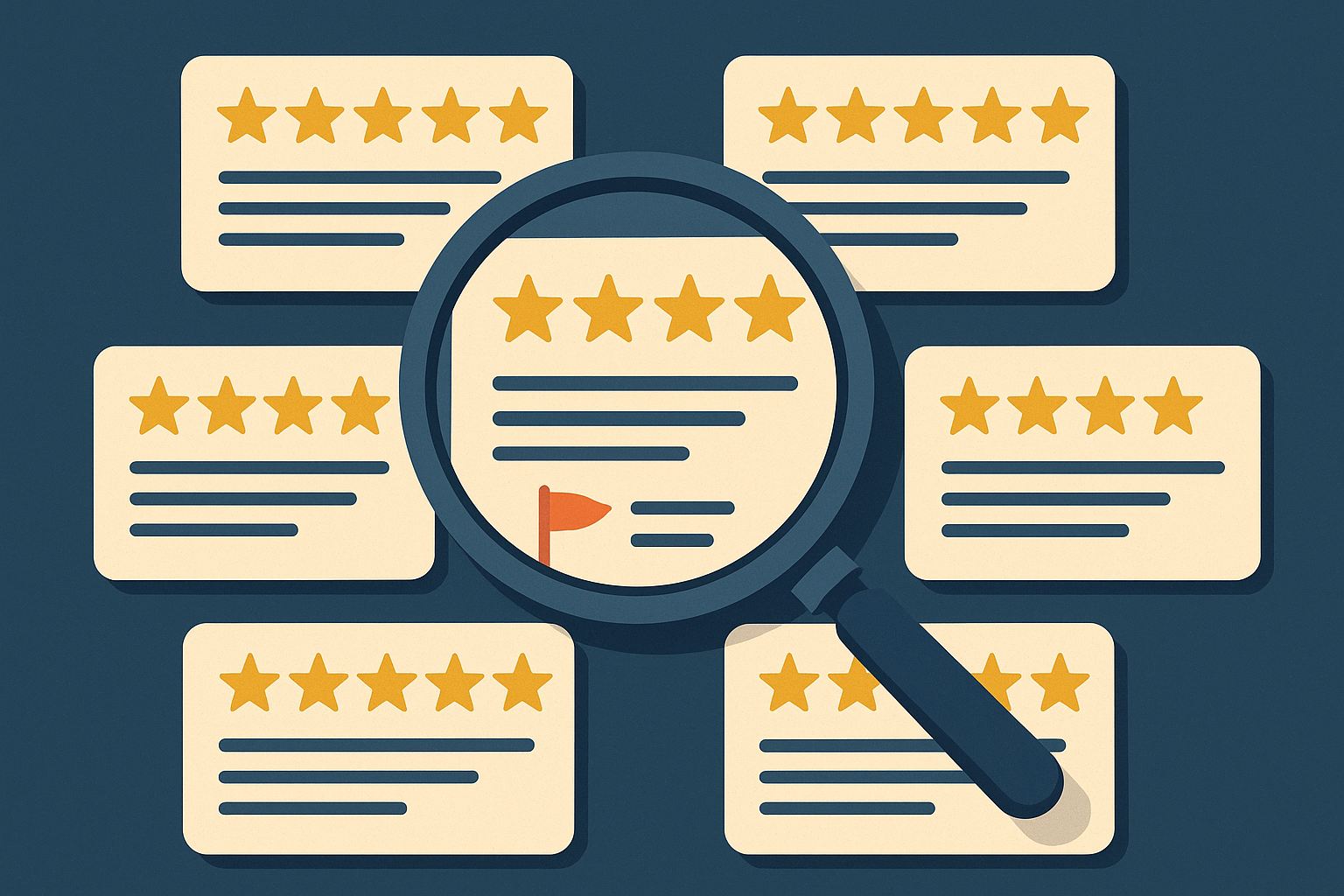
Competitor review analysis software looks past the average rating to find the specific complaints hiding beneath it.
How Competitor Review Analysis Software Works
Although platforms vary in detail, most competitive review monitoring tools follow a similar sequence. The process below reflects how a typical service, including WeakSpot, moves from raw reviews to finished campaign copy.
- Select up to five local competitors to monitor and connect their Google Business Profiles.
- Pull the complete review history for each competitor, not just the highlighted or recent reviews.
- Isolate the one to three star reviews and cluster the complaints into named weakness themes.
- Score each weakness theme from one to ten for how exploitable it is, backed by verbatim quotes.
- Run the same analysis on your own reviews to flag any theme that would backfire if you used it.
- Turn the safe, high-scoring themes into ready-to-run ad copy, GBP posts, and email hooks.
Notably, step five is where most competitor review analysis software stops short. Many tools happily hand over a competitor's weaknesses without ever checking whether the client has the same problem, which can make a campaign backfire in public.
The Backfire Protection Problem Most Review Tools Ignore
Imagine a roofing company that wants to run a "we always show up on time" campaign after finding a scheduling-complaint theme at a competitor. Before that message ever runs, a responsible review intelligence platform checks the client's own reviews for the same complaint. If their own customers also mention late arrivals, that angle gets flagged rather than launched.
This step, sometimes called backfire protection, matters because a review-based campaign only works if the claim is true and defensible. Otherwise, the campaign invites the exact comparison the business would lose. Similarly, the Federal Trade Commission's guidance on online reviews reminds businesses that marketing claims tied to reviews need to be accurate and substantiated, which makes a self-check step more than a nice-to-have. WeakSpot builds this check into every plan that includes campaign copy, comparing a client's own review history against the same weakness themes used against competitors.
Choosing a Review Intelligence Platform for Your Business
Not every review analysis tool covers the same ground. Some stop at a dashboard that flags a rating drop. Others, like WeakSpot, go further and hand over finished, character-limit-checked marketing copy. When evaluating a platform, it helps to compare what actually arrives each month rather than just the feature list.
| Plan | Competitors Tracked | Campaign Copy Included |
|---|---|---|
| Weak Spot Intel ($149/mo) | 2 | No, report and watch list only |
| Market Edge ($299/mo) | 5 | Yes, plus backfire check and self-analysis |
For businesses that only want to know where competitors stand, a lighter monitoring plan may be enough. However, for owners who want finished copy dropped straight into an ad account, a plan with full campaign generation and backfire checking tends to save far more time. Anyone deciding between the two can start with a free self-analysis at weakspot.io, which emails results within two business days and requires no call.
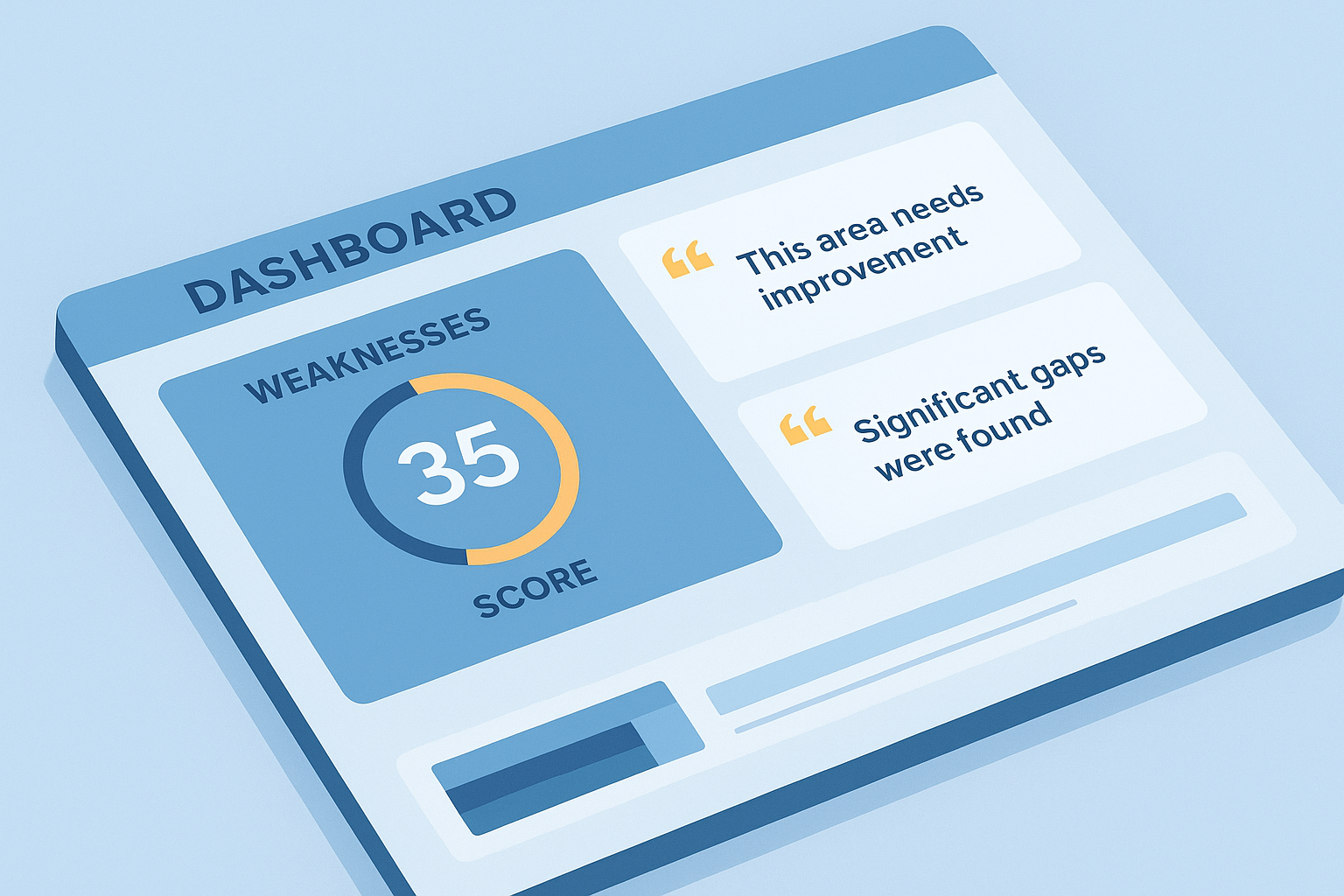
A finished weakness-theme report turns scattered complaints into a scored, evidence-backed marketing plan.
Above all, the right platform depends on how a business wants to act on the data. A live walkthrough is available at weakspot.io's demo, and owners who want to see their own review profile analyzed first can visit app.weakspot.io/demo before committing to a monthly plan. For general background on how review platforms function and why they carry so much weight with consumers, the Wikipedia overview of online reviews is a useful starting point.
Every local home-service competitor leaves a paper trail of public reviews worth analyzing.
Frequently Asked Questions About Competitor Review Analysis Software
What is competitor review analysis software?
Competitor review analysis software is a tool that reads a rival business's entire Google review history, isolates the negative reviews, and groups the complaints into named weakness themes. It turns scattered one to three star reviews into a scored, evidence-backed picture of exactly where a competitor is vulnerable.
How does competitor review analysis software find hidden weaknesses in rival businesses?
It pulls every public review for a chosen competitor, not just the recent or highlighted ones, then filters for the one to three star reviews where customers usually explain exactly what went wrong. Those complaints are clustered into themes, such as surprise charges or missed arrival windows, and scored by how often and how strongly they appear.
Why do businesses with 4.8 to 5.0 star ratings still have exploitable complaints?
A star rating is an average, and averages hide outliers. A company with 1,500 reviews and a 4.9 average can still have thirty to fifty customers who wrote detailed one-star complaints that never show up in the summary score.
What is backfire protection and why does it matter?
Backfire protection means running your own reviews through the same analysis before you build a campaign. If your customers complain about the same issue you planned to attack a competitor for, that angle gets flagged so you never invite a comparison you would lose.
How much does competitor review analysis software cost?
Pricing varies by scope. WeakSpot, for example, offers a Weak Spot Intel plan at $149 per month covering two competitors, and a Market Edge plan at $299 per month covering five competitors plus full campaign copy and backfire checks.
How long does it take to get results from a review analysis?
A free self-analysis typically arrives by email within two business days of submitting a business name and website, with no call required. Ongoing competitor monitoring then refreshes on a monthly cycle.
Can competitor review analysis software name competitors in ad copy?
Responsible tools do not name competitors directly in generated ad copy. Instead, the campaign copy targets the underlying frustration, such as surprise pricing or missed appointments, without ever calling out a rival business by name.
What is the difference between review analysis software and a review monitoring dashboard?
A monitoring dashboard usually shows you that a problem exists, such as a rating drop, and leaves the interpretation to you. Full review analysis software goes further by clustering the complaints into themes, scoring their exploitability, and producing finished campaign copy.
What industries benefit most from competitor review analysis?
Local home-service categories where every serious competitor already sits between 4.8 and 5.0 stars benefit the most, including plumbing, roofing, HVAC, electrical, and residential contracting. In those crowded markets, review-based differentiation often works better than price competition alone.
What common mistakes do businesses make when using competitor reviews for marketing?
The most common mistake is building a campaign around a weakness without checking whether the same weakness appears in your own reviews, which can backfire publicly. Another mistake is relying on a handful of recent reviews instead of the full review history, which misses recurring patterns.
How is competitor review analysis different from reading reviews manually?
Manually reading a competitor's reviews is slow and inconsistent, especially across five competitors with thousands of combined reviews. Software processes the entire history at once, clusters recurring complaints automatically, and scores them, which a manual read rarely does with the same consistency.
What data sources does competitor review analysis software use?
The primary source is public Google Business Profile review data, since that is where most local home-service customers leave feedback. Everything analyzed is publicly available text that any customer could read themselves.
How often should competitor review reports be refreshed?
Monthly refreshes are typical, since new reviews accumulate steadily and a competitor's weakness themes can shift after a bad month or a change in staff. A monthly cadence also lines up naturally with a monthly ad budget cycle.
Is analyzing public Google reviews legal and ethical?
Yes. Reading and summarizing publicly posted reviews is legal, since the reviews are already visible to anyone browsing Google, and it involves no private data. The ethical line is simply not naming competitors directly in the resulting campaign copy.
Key Takeaways
In a market where every competitor hovers near a perfect star rating, competitor review analysis software gives a local business the one thing price competition never can: proof. By reading the full review history, isolating the one to three star complaints, and scoring them for exploitability, this kind of software turns vague frustration into specific, quotable marketing angles. Meanwhile, checking your own reviews first, through backfire protection, keeps every campaign built on a claim you can actually defend. For home-service owners tired of competing on ad spend alone, starting with a free self-analysis at weakspot.io is the fastest way to see what competitor review analysis software can uncover in your own market.
