
SEO content briefs for contractor marketing are one-page plans that tell a writer exactly what a service page must say, to whom, and with what proof. Most roofing, plumbing and HVAC sites skip this step. As a result, their pages read the same.
Short answer: A good contractor brief names one service, one city, and one customer worry. The best worries come from what unhappy customers wrote in competitors' 1 to 3 star reviews.
What Is an SEO Content Brief for a Contractor?
An SEO content brief is a planning document written before the page. It sets the search query, the reader's main question, the headings, and the facts to include. Writers then draft from it.
For a home-service business, the brief also holds local detail. That means the city, the job type, and the concerns homeowners raise before they call.

An owner reviewing a page plan before any writing begins.
Why Contractor Pages Sound Alike
Search a service in any metro and the top results blur together. Each says "licensed, insured, family owned." Each shows a 4.9 rating. Therefore, nothing tells the homeowner why one is different.
A star rating is an average. Behind it sit unhappy customers who described what went wrong. Phrases like "Waited all day. Nobody called." are public, specific, and rarely used. You can learn more in our guide to a contractor marketing strategy that beats 4.9-star rivals.
How to Build a Content Brief Step by Step
Follow this process. It takes about 90 minutes for one page.
- Pick one service and one city. For example, "water heater replacement in Plano." One page, one intent.
- Read competitor 1 to 3 star reviews. Group the complaints into themes and save exact quotes.
- Check your own reviews. Run the same grouping on your reviews so you do not promise what customers say you miss.
- Write the brief. List the query, the reader question, headings, proof points, and questions to answer.
- Publish and link. Link the page from related service pages and your Google Business Profile posts. Review it every quarter.
What Goes Inside the Brief
Keep it to one page. Include these fields:
- Target query and city
- The reader's main worry, in plain words
- A heading outline with question-style headings
- Proof points you can support, such as warranty terms or process steps
- Internal links to related pages
- A "do not claim" list from your own reviews
Using Competitor Complaints as Page Angles
Here is an illustrative example. Imagine a fictional HVAC company, "Example Air," with many reviews saying "Tech left a mess in the garage." That is a messy-install theme.
Your brief for an AC installation page could then include a section on how your crew protects floors and cleans up. It answers the worry directly. It never names the competitor.
The same themes work in other channels. See our examples of Google Business Profile posts for contractors and Meta ad copy within character limits.
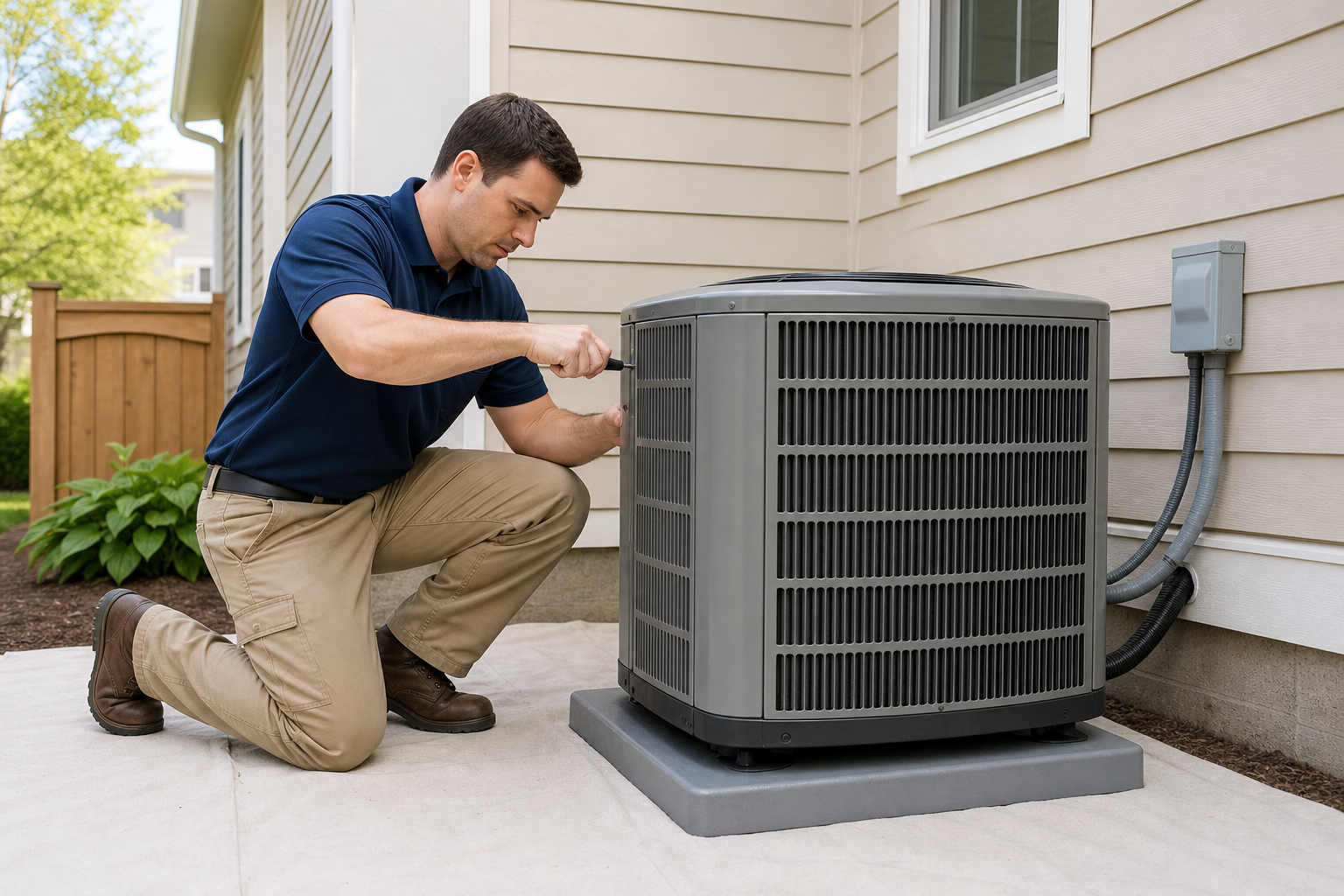
Proof of a clean job site can become a section of a service page.
Protect the Brief With a Check of Your Own Reviews
Before you commit to an angle, test it against your own feedback. This is backfire protection. If customers also mention late arrivals, a page promising punctuality invites a comparison you could lose.
Pick a different theme instead. Choose one where your reviews back you up. Our post on review monitoring for contractors explains how to spot those wins.
Also keep claims general. Do not promise rankings or call volume. Check local rules on comparative advertising before you publish anything that references other businesses.
Where WeakSpot Fits
WeakSpot is a competitive intelligence service for local home-service businesses, starting in Dallas-Fort Worth. It reads the full Google review history of up to five competitors you choose and groups complaints into weakness themes, each scored 1 to 10 for how exploitable it is.
The Market Edge campaign pack includes SEO content briefs, plus ad copy and Google Business Profile posts. We do the thinking; you keep the keys. We're the intelligence, not the ad agency. You or your agency publish in your own accounts. Trades like electrical contractors can start with a free self-analysis of their own reviews, emailed within two business days with no call required.
For background on how search engines treat helpful pages, read Google's guidance on creating helpful content. You can also see the overview of search engine optimization.
Frequently Asked Questions
What are SEO content briefs for contractor marketing?
They are short planning documents that tell a writer what a page must cover, who it is for, and which customer concerns it must answer. For contractors, they focus on one service and one local market.
Why do contractors need a content brief?
A brief keeps pages focused and consistent. Without one, writers fall back on generic text that looks the same as every other contractor site.
What should a contractor content brief include?
Include the target query, the city, the reader's main worry, a heading outline, proof points, questions to answer, and internal links. Add the customer quotes that shaped the angle.
How long should a brief be?
One page is enough for most service pages. Longer briefs tend to go unread.
How do competitor reviews improve a brief?
Low-star reviews show the exact frustrations customers want to avoid. Those complaints tell you which questions your page should answer first.
What is backfire protection?
It is a check of your own reviews before you commit to an angle. If your customers share the same complaint, you avoid claiming the opposite.
How often should I update a content brief?
Review key pages every quarter. Update sooner if your competitors or your own reviews change noticeably.
Can I write the brief myself?
Yes. The steps in this article work for an owner with a spreadsheet and an hour. A service can also do the reading and drafting for you.
How is a brief different from a finished article?
A brief is the plan and the evidence. The article is the final copy written from that plan.
Do I need a separate brief for each city?
Usually yes. Customers in different suburbs raise different concerns, and local details make a page more useful.
What mistakes should I avoid?
Avoid targeting several services on one page, copying competitor language, and making claims your own reviews contradict. Also avoid guaranteeing results you cannot control.
Does WeakSpot provide SEO content briefs for contractor marketing?
Yes. The Market Edge campaign pack includes SEO content briefs built from competitor weakness themes, alongside ad copy and Google Business Profile posts. You publish them in your own accounts.
Conclusion
Strong SEO content briefs for contractor marketing start with one service, one city, and one real customer worry. Competitor low-star reviews supply those worries in plain words, and your own reviews tell you which ones you can safely answer. Find what's under their stars, then write the page that answers it. Request your free self-analysis at weakspot.io to see where your own reviews stand first.