
A/B testing sets for contractor ads are small groups of ad versions that differ in one element, so you can see which message earns a better response. For a plumber, roofer or HVAC owner, the goal is simple: stop guessing and start learning from every dollar your ads spend.
Quick answer: Pick one customer frustration, write two versions that differ in one element, fit each to platform character limits, run both at the same time, and keep the winner. Then test the next change.
What Is an A/B Testing Set for Contractor Ads?
An A/B testing set is a controlled comparison. Version A and version B run together, with the same budget, audience and timing. Only one thing changes. As a result, any difference in response points to that change. You can read more about the method in this overview of A/B testing.
A "set" goes one step further. It groups the versions around a single message angle, so your results build into a clear lesson instead of a pile of random numbers.
Why Home-Service Ads Need Message Tests
In most local markets, every serious competitor looks perfect. They all sit between 4.8 and 5.0 stars. Therefore, ads that say "trusted, reliable, fast" blend together, and owners end up competing on price.
Testing different angles gives you a way out. However, the angles you test matter more than the tool you test with. A weak angle tested perfectly is still weak.
Where to Find Angles Worth Testing
Start with what customers say in public. A competitor with a 4.9 and 1,500 reviews still has dozens of unhappy customers who explained why they left. For example: "Waited all day. Nobody called." That is a ready-made angle about arrival windows and communication.
WeakSpot reads the full Google review history of up to five competitors you choose. It clusters the 1 to 3 star reviews into named weakness themes, each scored 1 to 10 for how exploitable it is. Find what's under their stars.

An owner compares two ad drafts before building A/B testing sets for contractor ads.
How to Build Your Test Set, Step by Step
- Pick one weakness theme. Examples: surprise charges, missed arrival windows, or callbacks that never come.
- Check your own reviews. If your customers raise the same complaint, drop that angle for now.
- Write two variants. Change one element only, such as the headline wording or the call to action.
- Fit the character limits. Trim each version before loading it into the account.
- Split traffic evenly and wait. Run both at the same time, with the same budget and audience.
- Keep the winner and test again. Record the lesson, then change the next single element.
Illustrative Example: Roofing Arrival Windows
The example below is illustrative and uses a fictional company. Imagine a roofer in Fort Worth sees repeated local complaints about missed inspection appointments. The owner tests one angle with two headlines.
| Version | Headline (max 30 characters) | What changes |
|---|---|---|
| A | Roof Inspection, Set Time | Names the benefit |
| B | We Call Before We Arrive | Names the action |
Both fit within 30 characters. Everything else stays identical. Importantly, this only works if the roofer's own reviews do not complain about lateness. That is backfire protection at work.
Character Limits for Each Variant
Every version in a set must fit its platform. Otherwise, you are testing truncation instead of messaging. WeakSpot validates Google Ads copy against the 30 and 90 character limits. Meta ad copy stays within 40, 125 and 25 characters. For platform details, see Google Ads Help.
For more examples, read these HVAC Google Ads examples and this guide to Meta ad copy limits for contractors.
Common Testing Mistakes to Avoid
- Changing several elements at once.
- Ending the test after a handful of clicks.
- Running versions at different times or budgets.
- Testing a claim your own reviews contradict.
- Skipping notes, so the lesson is lost.
Channel choice also affects results. If you are unsure where to spend, compare Local Services Ads and Google Ads first. Then see the wider contractor marketing strategy for 4.9-star markets.
How WeakSpot Supplies Copy for Your Tests
WeakSpot is a competitive intelligence service for local home-service businesses, starting in Dallas-Fort Worth. Each month, you get a branded intelligence report and a campaign pack of finished copy. Every variant stays inside platform limits and never names a competitor. Electricians can also see the electrical contractor page.
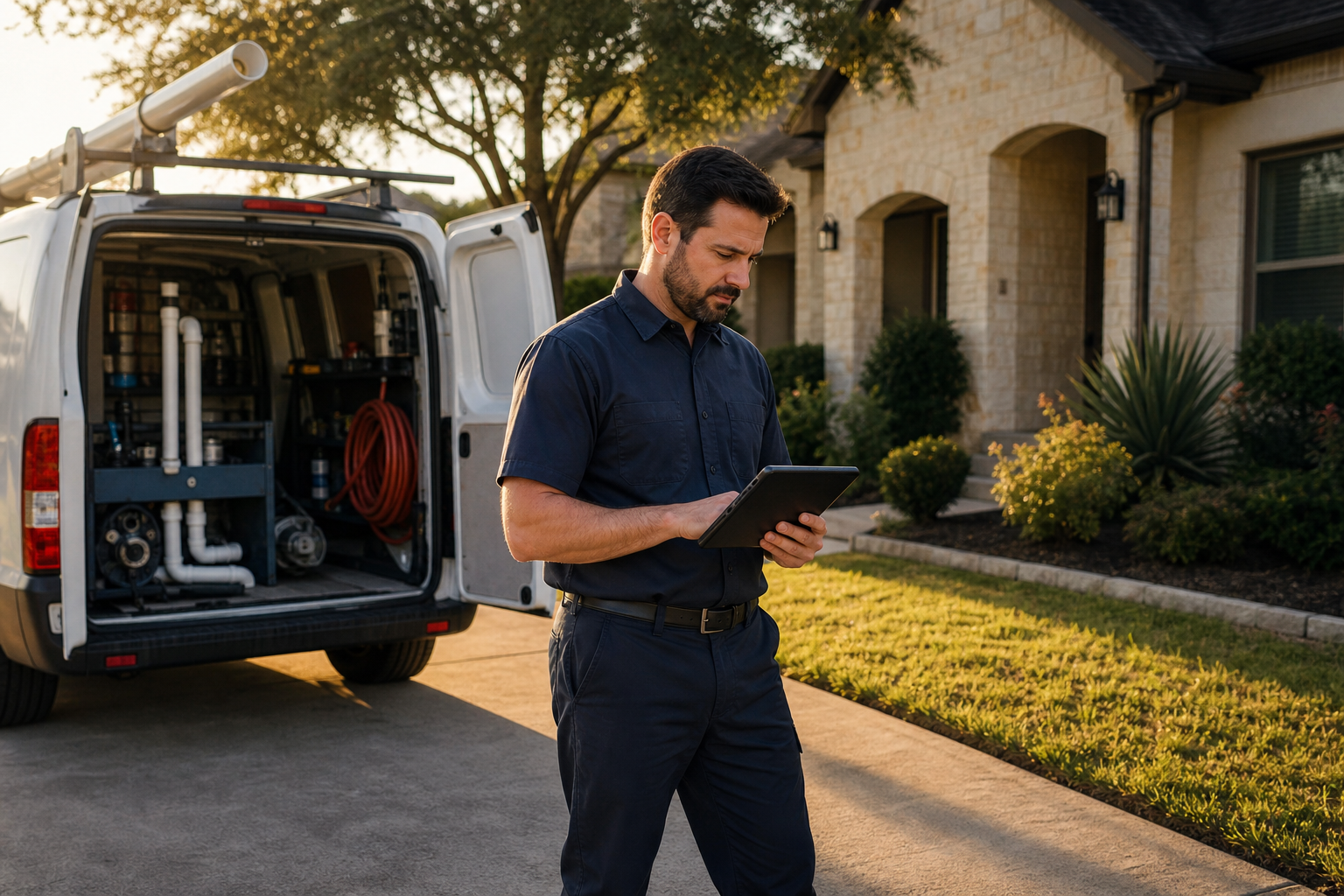
Finished copy goes straight into your own ad accounts, ready to test.
We do the thinking. You keep the keys. WeakSpot does not run ads or buy media. We're the intelligence, not the ad agency. Visit weakspot.io to request your free self-analysis.
Frequently Asked Questions
What are A/B testing sets for contractor ads?
They are pairs or small groups of ad versions that differ in one element. You run them side by side to see which message gets a better response.
How many variables should one test change?
Change one. If you change the headline and the offer together, you cannot tell which change moved the result.
How long should a contractor ad test run?
Run it long enough to cover full weeks, because home-service demand shifts by weekday. Two to four weeks is a common starting point, depending on your volume.
What should I test first?
Test the message angle. A headline built on a real customer frustration usually teaches you more than a font or color change.
How do I find angles worth testing?
Read the 1 to 3 star reviews of local competitors. Repeated complaints show what customers in your market want to avoid.
What is backfire protection?
It is a check of your own reviews against an angle before you run it. If your customers complain about the same issue, the angle is flagged.
What are the Google Ads character limits for tests?
Headlines allow 30 characters and descriptions allow 90. Each variant in your set must fit inside those limits.
What are the Meta ad character limits?
WeakSpot copy stays within 40 characters for the headline, 125 for primary text and 25 for the link description. Check current Meta guidance before launch.
Can I test with a small budget?
Yes, but keep the test simple. Use two variants, one change and one audience so each version gets enough traffic to compare.
What is the most common mistake in contractor ad testing?
Ending the test too early. A few early clicks can look like a win and then reverse.
Does WeakSpot run the tests for me?
No. WeakSpot delivers the copy and you or your agency run the ads in your own accounts. We're the intelligence, not the ad agency.
How do I start with WeakSpot?
Request the free self-analysis at weakspot.io. Your own review results are emailed within two business days, with no call required.
Conclusion
Good A/B testing sets for contractor ads follow a simple pattern: one real customer frustration, one changed element, correct character limits, and enough time to learn. Check your own reviews first so the angle cannot backfire. Then keep the winner and test again. Ready to start? Request your free self-analysis at weakspot.io.