Competitor Weakness Analysis: Turn Bad Reviews Into Leads
Competitor weakness analysis is the practice of reading a rival's negative reviews line by line to uncover the specific, repeated complaints hiding beneath an impressive star rating. In almost every local service market — plumbing, HVAC, roofing, dental, legal, you name it — every serious competitor clusters between 4.7 and 5.0 stars, so on the surface nothing separates them. However, a star rating is only an average, and averages hide the thirty, forty, or fifty unhappy customers who wrote down exactly why they walked away.
Those reviews are public, specific, and sitting in plain view on Google right now. Therefore, the business willing to actually read them gains an advantage almost nobody else is claiming. This guide covers what competitor weakness analysis is, how it differs from a generic competitive analysis or SWOT exercise, the exact step-by-step process for doing it correctly, a ready-to-copy template, the tools available, and the one mistake that makes most weakness-based campaigns backfire. For a related angle, see our breakdown of proven tactics for winning customers away from competitors.
Direct answer: Competitor weakness analysis means reading a competitor's one- to three-star Google reviews, grouping the recurring complaints into themes like surprise charges or missed arrival windows, scoring those themes by how often and how strongly they repeat, and building marketing campaigns only around the weaknesses you can honestly beat.
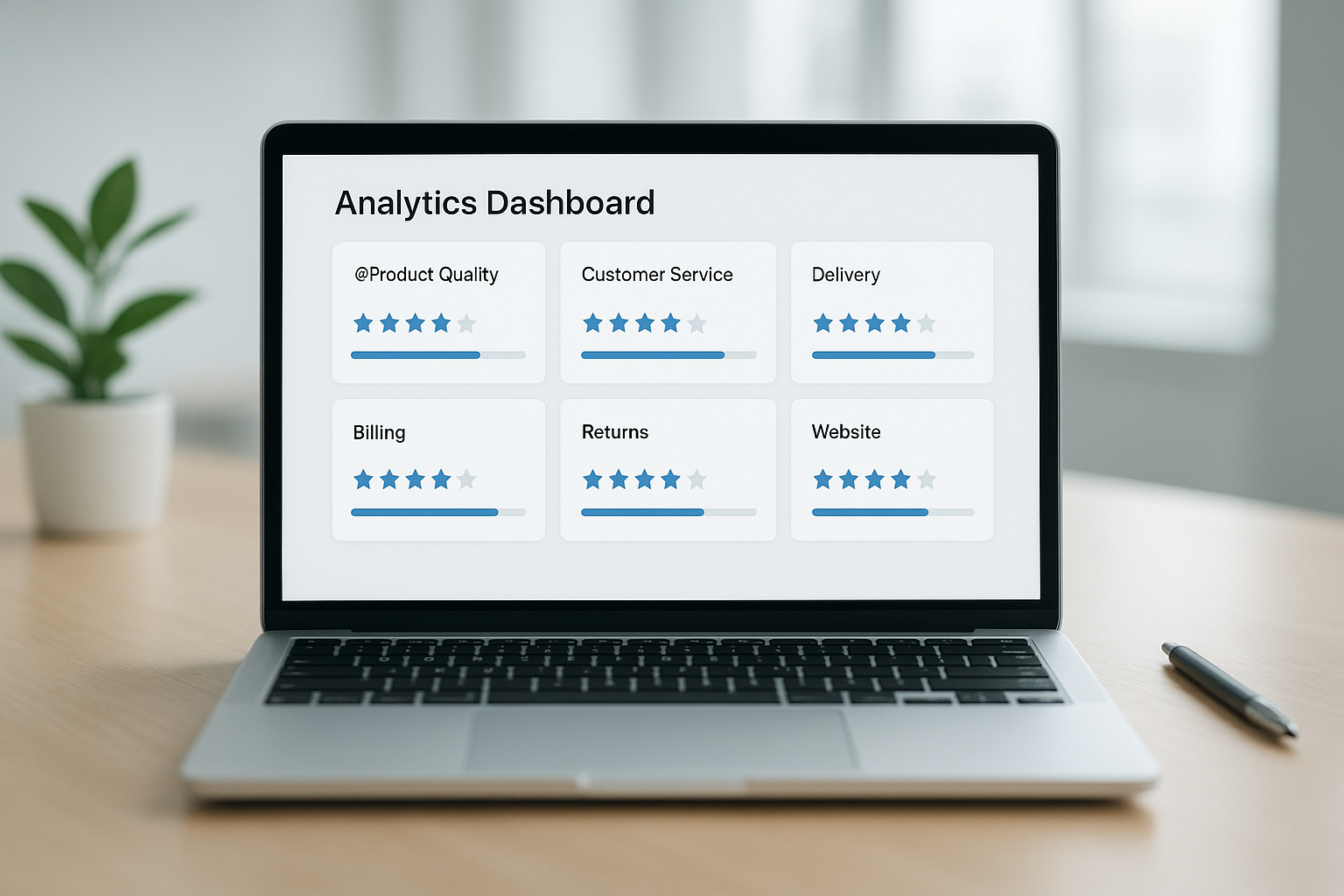
A finished competitor weakness analysis turns scattered complaints into scored, actionable themes.
What Is Competitor Weakness Analysis?
Competitor weakness analysis is the process of systematically reading every negative review a rival has received and converting scattered complaints into named, measurable themes. Rather than guessing why a competitor loses customers, you let their own customers tell you in their own words. This is fundamentally different from broad competitor research that only compares pricing pages, service menus, or marketing channels — it digs into lived customer experience instead of surface-level positioning.
In practice, this means collecting a competitor's full review history, not just the recent reviews Google surfaces by default. Specifically, you isolate the one- to three-star reviews, since those contain the detail a five-star review never bothers to include. A satisfied customer writes "great service!" A frustrated one writes exactly what happened, when it happened, and how much it cost them.
Why Finding a Competitor's Weak Spots Matters More Than Price
Most local service businesses compete on price or ad spend because, on paper, everyone looks the same. Consequently, the owner who wants to grow ends up paying more for the same clicks as every other plumber or roofer in town. Finding a competitor's actual weak spots changes the game, because it gives you something to say that nobody else is saying: a specific promise built on a specific, documented frustration.
According to Pew Research Center, 82% of U.S. adults at least sometimes read online reviews before buying something for the first time, and 40% say they always or almost always do. That means the complaints sitting in a competitor's review history are not background noise; they are actively shaping who the next customer avoids. If you want a broader playbook for applying this at the local level, our guide on competitive intelligence for local businesses expands on the same idea.
Direct vs. Indirect Competitors: Who to Analyze First
Before pulling a single review, decide who actually counts as a competitor. Direct competitors offer the same service in the same service area and show up in the same local search results your customers see. Indirect competitors solve the same underlying problem through a different route — for example, a national home warranty company competing with a local plumber. In particular, competitor weakness analysis delivers the fastest return when it is aimed at direct competitors first, since their weaknesses map one-to-one onto the choice your next customer is actively making.
Competitive Analysis Frameworks vs. Review-Based Weakness Research
Traditional competitive analysis often leans on frameworks like SWOT analysis — strengths, weaknesses, opportunities, and threats. These frameworks are useful for strategic planning, but in contrast, they are usually built from internal brainstorming and assumptions about a rival rather than hard evidence. A marketing team sits in a room and guesses that a competitor is "weak on customer service," with no quote, no date, and no way to prove it.
Competitor weakness analysis solves that problem by replacing assumption with documentation. Instead of guessing that a rival has slow response times, you pull the eleven reviews from the last year that say so, in the customer's own words. As a result, the output is not a strategic quadrant chart — it is a verbatim quote you can legally and honestly reference in an ad headline. Above all, this evidence-based approach is what separates a weakness-based campaign that converts from a campaign built on a hunch.
Why a 4.9-Star Competitor Still Has Real Weaknesses
A 4.9-star average across 1,500 reviews sounds flawless. However, the math tells a different story. If even two percent of those reviewers left one or two stars, that is roughly thirty detailed, specific complaints sitting in plain sight. For example, one might read: "Quoted one price. Billed another." Another might say: "Waited all day. Nobody called."
In particular, these complaints describe the exact frustration the next customer in that market is trying to avoid. Almost nobody reads them closely enough to notice the pattern, which is precisely why competitor weakness analysis works. The business that does the reading gets the angle; the business that does not keeps shouting the same generic promises as everyone else.
How to Conduct a Competitor Weakness Analysis, Step by Step
Although the concept is simple, doing it well requires a consistent process. Below is the sequence that turns raw reviews into a usable marketing angle.
- Choose your competitors. Pick three to five direct rivals in your exact service area, since analysis only matters for businesses customers actually compare you against.
- Pull the full review history. Collect every review, not just the most recent ones, because older complaints often describe a problem that never got fixed.
- Isolate the one- to three-star reviews. This smaller group holds the specific, detailed language a five-star review rarely includes.
- Cluster complaints into named themes. Group similar issues, such as surprise charges or missed arrival windows, and score each theme by how often it repeats.
- Check your own reviews for the same issue. Before building a campaign, confirm your business does not share the weakness you plan to highlight.
- Write the campaign copy. Translate validated themes into ad headlines, Google Business Profile posts, and content briefs within each platform's character limits.
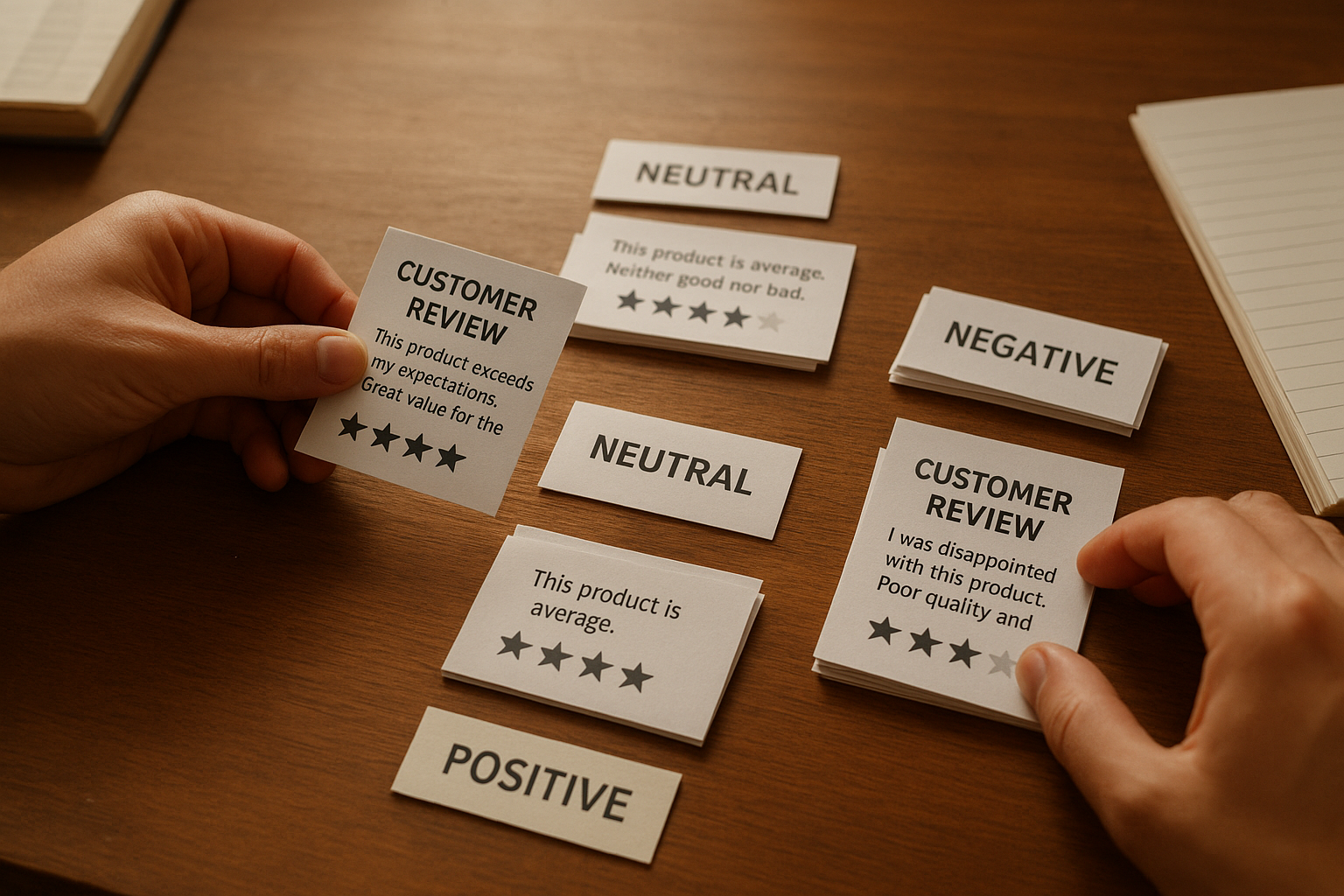
Clustering individual complaints into named themes is the core work of any competitor weakness analysis.
What Competitor Review Mining Usually Uncovers
Across home-service categories like plumbing, roofing, and HVAC, certain complaint themes show up again and again. Surprise charges after the quote are common, as are missed arrival windows where the technician never calls to explain the delay. Rushed installs, callbacks that never happen, pushy upsells, and warranty runarounds round out the usual list.
Importantly, each theme on its own might only appear in a handful of reviews. Yet once grouped, a theme repeated across twenty or thirty reviews becomes a documented pattern rather than a one-off bad day. That distinction is what makes the resulting campaign copy credible instead of speculative.
A Competitor Analysis Template for Scoring Rival Weaknesses
A generic SWOT box only gives you four empty quadrants. In contrast, a usable competitor weakness analysis template should capture evidence, not opinion. Copy the fields below into a spreadsheet for each competitor you track:
- Competitor name and total reviews analyzed — the sample size behind your findings.
- Weakness theme name — a short label such as "surprise charges" or "missed windows."
- Number of mentions — how many separate reviews reference the theme.
- Exploitability score (1–10) — how strongly and how recently the theme repeats.
- Sample verbatim quote — the exact customer language that proves the pattern.
- Recommended campaign angle — the honest promise your business can make instead.
Specifically, this structure forces every claim in your eventual campaign to trace back to a documented quote, which is the single biggest difference between a weakness-based campaign that holds up and one that invites an embarrassing comment-section rebuttal.
The Step Most Businesses Skip: Checking Your Own Reviews First
Here is where most do-it-yourself competitor weakness analysis falls apart. A business finds that a rival's customers complain about late arrivals, builds a "we show up when we say we will" campaign, and launches it. Unfortunately, if that business's own reviews mention the exact same problem, the campaign invites a comparison it cannot win.
This is the logic behind backfire protection: running your own reviews through the identical analysis before any campaign angle gets approved. If your customers also complain about late arrivals, that angle gets flagged and replaced with a theme you can actually defend. As a result, every message you run is one you can win on, not one a reviewer could fact-check against you within seconds. Contractors in particular benefit from this discipline — see our notes on review monitoring for contractors for a closer look at catching hidden wins before a competitor finds them first.
From Weakness Themes to Finished Campaign Copy
A dashboard that simply flags a problem is only half the job. The more useful output is the headline that runs on Monday morning. WeakSpot, for instance, monitors up to five competitors a business chooses, reads their entire Google review history, and scores each weakness theme from one to ten for how exploitable it is, backed by verbatim quotes so the pattern is undeniable.
Every month, subscribers receive a branded intelligence report plus a finished campaign pack: Google Ads headlines validated against the 30 and 90 character limits, Meta ad copy within 40, 125, and 25 characters, Google Business Profile posts, SEO content briefs, and email hooks. Notably, the copy never names a competitor directly, which keeps campaigns focused on the business's own strengths rather than a direct attack. You can compare plan sizes on the pricing page before committing.

Weakness themes only become good marketing when the business can honestly deliver the opposite experience.
How to Start Without Guessing
Owners who want to try this approach typically begin with a free self-analysis. In short, you submit a business name, a website or Google Maps link, and an email at weakspot.io, and the results arrive within two business days with no call required. A live product demo is also available at app.weakspot.io/demo for businesses that want to see the full report format before subscribing.
From there, most businesses choose a monthly plan sized to how many competitors they want tracked. For additional context on how review platforms structure public feedback, Google's own Business Profile help documentation explains how reviews are collected and displayed, while the Wikipedia entry on online reviews offers useful background on how review systems evolved. You can also learn more directly at www.weakspot.io or try the live walkthrough at app.weakspot.io/demo.
Tools and Methods for Finding Competitor Weaknesses
There are two broad ways to run competitor weakness analysis: manually, or with dedicated software. Manually, a spreadsheet works fine for a single competitor with a few hundred reviews — you copy each one- to three-star review, tag it with a theme, and tally repeats by hand. However, this approach breaks down fast once you track five competitors with thousands of reviews combined, since reading them all becomes a part-time job nobody has time for.
Dedicated software solves the scale problem. Rather than reading everything yourself, a platform like WeakSpot ingests the full review history automatically, clusters complaints into themes using the same logic described above, and attaches an exploitability score so you know which theme deserves a campaign first. Similarly, general competitive intelligence tools exist for broader market research, but few are purpose-built for review-level weakness mining in local service categories. That specificity is exactly what makes a dedicated approach faster and more defensible than a general-purpose research tool.
Competitive Weakness Research by Industry
Competitor weakness analysis applies anywhere customers leave detailed reviews, but it performs especially well in trades and professional services where price and scheduling frustrations dominate complaints. Plumbing is a clear example: missed windows, surprise diagnostic fees, and unfinished repairs appear constantly in one-star plumbing reviews. Our plumbing competitor analysis tool guide breaks down exactly which complaint themes recur most often in that trade.
HVAC, roofing, electrical, pest control, landscaping, dental, and legal services all show similar patterns, though the specific complaint themes shift by category — for instance, roofing complaints skew toward warranty disputes, while dental complaints skew toward billing surprises and wait times. In every case, the underlying method stays the same: isolate the low-star reviews, cluster the language, score the pattern, and build a campaign your own business can honestly defend.
Common Mistakes That Sink a Weakness-Based Campaign
Even a solid process can go wrong in execution. Watch for these recurring mistakes:
- Reading only recent reviews. Older complaints often reveal a problem the competitor never fixed, which is more useful, not less.
- Naming the competitor directly. It invites legal risk and makes the campaign feel like an attack instead of a promise.
- Skipping the self-check. Promoting a strength your own reviews contradict is the fastest way to lose customer trust.
- Treating one complaint as a trend. A single review is an anecdote; a theme needs multiple, independent mentions to be credible.
- Writing vague copy. "We care about our customers" does not land the way "scheduled within a two-hour window, every time" does.
Is Using Competitor Review Data Ethical and Legal?
Yes, as long as the data is public and the resulting claims are accurate. Everything analyzed in a competitor weakness analysis comes from reviews the reviewer chose to post publicly on Google. Consequently, referencing the general pattern of a weakness theme in your own marketing is fair, provided you do not name the competitor or fabricate a claim.
The Federal Trade Commission's rule on fake reviews underscores why honesty matters on both sides of this equation: businesses cannot fabricate their own reviews, and by extension, any marketing built from real review data should stay factual rather than exaggerated. This is also why backfire protection matters so much; it keeps every claim grounded in something you can actually prove.
Frequently Asked Questions About Competitor Weakness Analysis
What is competitor weakness analysis?
Competitor weakness analysis is the process of systematically reading a competitor's negative reviews and public complaints to find recurring, specific problems you can address better. Instead of guessing why customers leave, you let their own words identify the pattern.
How do you find a competitor's weaknesses from online reviews?
Start by pulling every one- to three-star review a competitor has received on Google, not just the recent ones, then group the complaints into themes such as pricing surprises or missed appointments. Verbatim quotes make the pattern undeniable to a reader.
Why do high-rated competitors still have exploitable weaknesses?
A star rating is an average, so a business with 4.9 stars across 1,500 reviews can still have thirty to fifty detailed one-star complaints. Those complaints describe exact frustrations the next customer is trying to avoid.
How is competitor weakness analysis different from a SWOT analysis?
A SWOT analysis is a broad internal exercise covering strengths, weaknesses, opportunities, and threats for your own business. Competitor weakness analysis is narrower and evidence based, focused specifically on mining a rival's public reviews for exploitable, quotable complaints.
What is backfire protection in competitive marketing?
Backfire protection means checking your own reviews for the same weakness before you run a campaign calling out a competitor's flaw. If your business also has late-arrival complaints, a "we show up on time" campaign invites a comparison you would lose.
Is it legal to use competitor review data in marketing?
Yes, Google reviews are public data, and referencing the general pattern of complaints in your own marketing copy is legal as long as you do not name the competitor directly or make false claims. Responsible campaigns focus on your own strengths rather than attacking a rival by name.
What tools help automate competitor weakness analysis?
Dedicated platforms such as WeakSpot read a competitor's full Google review history automatically, cluster complaints into named themes, and score each one for exploitability. This saves hours compared with manually tagging reviews in a spreadsheet.
How often should you repeat a competitor weakness analysis?
Monthly reviews work well for most local service categories, since new complaints accumulate steadily and a theme that was weak last quarter can strengthen or disappear as a competitor changes staff, pricing, or scheduling practices.
Final Thoughts on Competitor Weakness Analysis
Ultimately, competitor weakness analysis turns an overlooked resource — public one- and two-star reviews — into a precise marketing advantage. Rather than competing on price alone, a business that reads the complaints hiding under a rival's 4.9-star average can speak directly to the frustration the next customer is trying to avoid.
That said, the analysis only works when it is paired with honesty about your own reviews, since a weakness-based campaign that contradicts your own track record will backfire quickly. Whether you build the process manually with the template above or use a service like WeakSpot to automate it, the core idea stays the same: your competitors' bad reviews are sitting in plain sight, and almost nobody is reading them. Start your own competitor weakness analysis today, and you will be the exception.
