Roofing marketing ideas only matter if they help you win jobs your competitors are currently losing, and the fastest way to find those jobs is hiding inside the one-star and two-star reviews nobody on your team has read. Most roofing contractors sit between 4.7 and 4.9 stars on Google, so a shiny star rating no longer separates one company from the next. However, every one of those "perfect" competitors still has customers who complained about late arrivals, surprise charges, or a crew that never called back. This article breaks down practical, ready-to-use roofing marketing ideas that turn those public complaints into campaigns you can run this month.
Quick answer: The most effective roofing marketing ideas combine local SEO, an active Google Business Profile, targeted paid ads, and content written around the specific frustrations homeowners already search for. The ideas that convert fastest are built on documented weaknesses in competitors' reviews, because they speak directly to a problem a buyer is already trying to avoid.
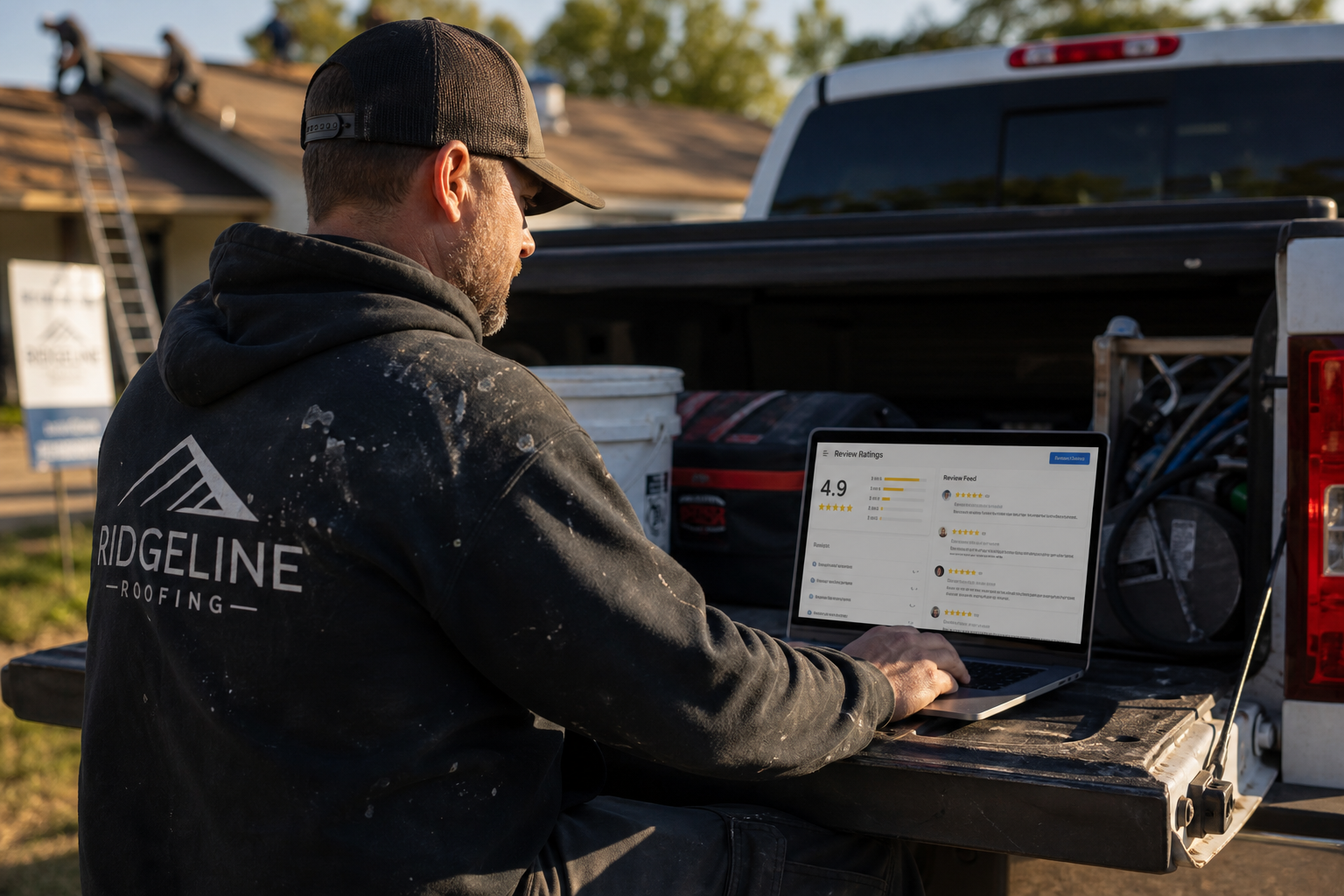
Behind every near-perfect star rating sits a stack of specific, searchable complaints.
What Are Roofing Marketing Ideas That Actually Work?
Roofing marketing ideas are the specific tactics, messages, and channels a roofing company uses to generate estimate requests and repair calls from homeowners in its service area. Working ideas share one trait: they address a frustration the buyer already has, instead of repeating generic claims like "quality workmanship" that every competitor also uses.
In particular, the strongest roofing marketing ideas right now are review-informed. Instead of guessing at a message, a company reads what customers actually complained about at competing roofers, nearly all of whom carry similar star ratings. For example, if three different roofers in a market have reviews describing surprise charges after the inspection, "no surprise invoices, guaranteed in writing" becomes a specific, defensible headline rather than a vague promise.
As a result, this approach shifts marketing away from shouting louder and toward saying something true that competitors cannot say back.
Why Generic Roofing Marketing Strategies Fall Flat in a 4.9-Star Market
Many roofing marketing strategies still lean on broad claims: licensed, insured, family owned, free estimates. These statements are true for almost every competitor in a given zip code, so they do little to move a homeowner from "considering" to "calling." Similarly, price-only competition erodes margin without building loyalty, since the next bidder can always go lower.
According to BrightLocal's Local Consumer Review Survey, the large majority of consumers now read online reviews before choosing a local business, and many specifically look for recent reviews mentioning the exact service they need. Consequently, a homeowner comparing five roofers with near-identical ratings will usually scroll past the five-star reviews and look for the complaints, because that is where the real risk information lives.
Therefore, a marketing strategy that ignores the review layer entirely is competing with one hand tied behind its back.
Step-by-Step: Turning Competitor Weaknesses Into Roofing Advertising Ideas
Building roofing advertising ideas from review data follows a repeatable process. Here is the sequence that works for most local markets:
- Pull every one to three star review from your top competitors and read it in full, not just the short snippet Google shows on the search results page.
- Group the complaints into named themes, such as surprise pricing, missed arrival windows, rushed installs, or ignored callbacks, then note how often each theme repeats.
- Check your own reviews for the same themes before you build a campaign, because promoting a promise your own customers already dispute will backfire quickly.
- Turn the strongest, safest theme into ad headlines, Google Business Profile posts, and email hooks that describe the solution without ever naming a competitor directly.
- Launch the campaign in your own ad accounts, track which headline earns the most clicks and calls, and refresh the review analysis monthly as new complaints appear.
Above all, step three matters most. A company that runs "we always call ahead" while its own reviews describe missed calls is handing the comparison straight back to the competitor.
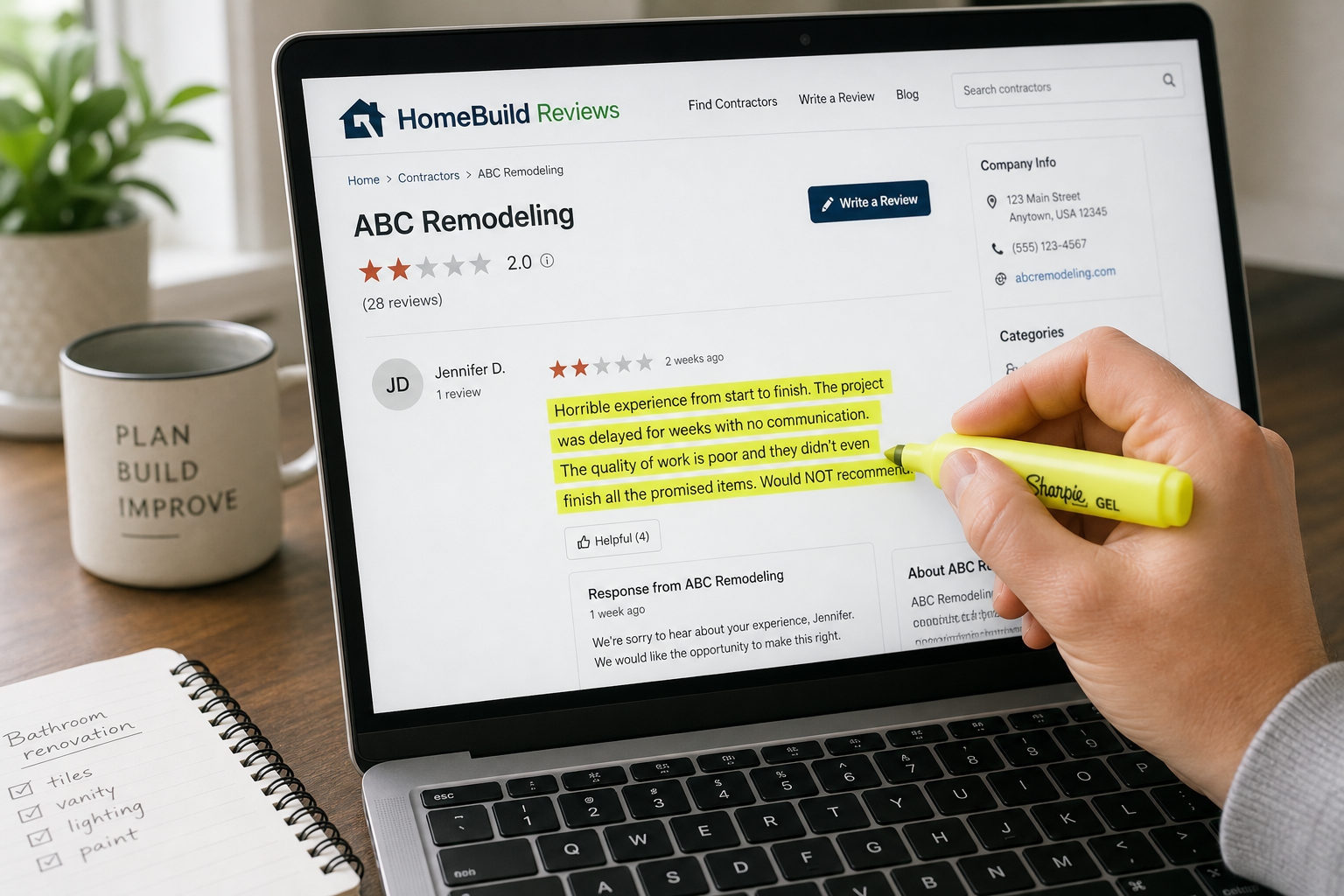
A single repeated complaint, quoted word for word, is more persuasive than any slogan.
Content and Local SEO Tactics That Support Your Roofing Marketing Plan
A roofing marketing plan built on competitor weaknesses still needs a content and local search foundation underneath it. Search engine optimization, the practice of structuring a website so it ranks for relevant local searches, helps homeowners find a roofer organically instead of only through paid clicks.
In practice, this means publishing pages targeted at specific services, such as storm damage inspections or flat roof repair, in the towns the company actually serves. Furthermore, blog posts that answer real homeowner questions, like how to spot a bad roofing quote, build trust before the first phone call happens. Internal linking between these pages, as outlined in this guide to home service marketing content, keeps visitors exploring the site longer.
Local citations, a consistent business name and address across directories, and a steady stream of fresh reviews round out the local SEO side of the plan.
Paid Ads and Google Business Profile Ideas for Roofing Companies
Paid search remains one of the fastest ways to generate calls for roofing companies, provided the message is specific. Google Ads headlines are limited to 30 characters each and descriptions to 90 characters, so every word needs to earn its place, and a headline built on a verified competitor weakness tends to outperform a generic one in testing.
Meta ads, which run inside Facebook and Instagram, follow tighter limits of roughly 40, 125, and 25 characters for the headline, primary text, and link description. These formats suit storm-season awareness campaigns and financing promotions well.
Meanwhile, Google Business Profile posts offer a free, always-on channel. Updating the profile weekly with specific proof points, using guidance from Google's own Business Profile support resources, keeps the listing active in local map results.
Lead Generation Ideas for Roofing Companies Using Review Data
Lead generation ideas for roofing companies work best when they are tied to a measurable, repeated pattern rather than a hunch. For instance, if several competitors share complaints about rushed installs or messy cleanup, a campaign promising a documented cleanup checklist becomes a specific differentiator that is easy to prove and hard to copy.
This is the exact gap WeakSpot was built to close. The service reads a competitor's entire Google review history, not just the highlights, and scores each weakness theme from one to ten for how exploitable it is, backed by verbatim quotes from real customers. Before any idea reaches a client, WeakSpot also checks their own reviews for the same issue, a step it calls backfire protection, so no campaign invites a comparison the company would lose.
Roofing companies exploring these ideas alongside other home service categories can compare approaches in this breakdown of plumbing lead generation strategies or these HVAC campaign templates, since the underlying method translates across trades.
Common Mistakes That Waste Roofing Marketing Budgets
Even well-funded campaigns underperform when they repeat a few avoidable mistakes. Specifically, the most frequent issue is promoting a benefit every competitor also claims, which forces the ad to compete on price or ad spend instead of message.
In addition, many companies run a claim their own reviews quietly contradict, which erodes trust the moment a prospective customer checks. Similarly, treating a Google Business Profile as a static listing instead of an active channel wastes a free distribution opportunity every month.
Finally, some companies never revisit their messaging after launch, even though competitor weaknesses and seasonal pain points shift throughout the year. You can find a broader walkthrough of this on the home services page at weakspot.io, along with examples from other trades.

Turning a scored weakness theme into finished ad copy usually takes less than an afternoon.
Frequently Asked Questions About Roofing Marketing Ideas
What are roofing marketing ideas that work without a big ad budget?
The cheapest roofing marketing ideas rely on information you already have access to, like competitor reviews, your own Google Business Profile, and homeowner-specific content. Reading and responding to review patterns costs time, not ad spend, and often outperforms boosted social posts.
How do roofing marketing ideas differ from general home service marketing?
Roofing marketing ideas need to address high-ticket, infrequent purchases where trust matters more than price, unlike recurring services such as lawn care. Homeowners researching a roof replacement spend more time reading reviews and comparing warranties before they call.
Why do most roofing companies struggle to stand out when competitors have 4.9-star ratings?
When every competitor sits between 4.7 and 4.9 stars, the overall rating stops being a useful differentiator for homeowners or for marketers. The real differences live inside the handful of negative reviews that most companies never read closely.
How much should a roofing company budget for marketing each month?
Most local roofing companies budget between 5% and 10% of projected revenue for marketing, though storm-driven markets sometimes spend more during peak season. The bigger issue is usually not the budget size but whether the message is actually differentiated.
How long does it take to see results from new roofing marketing ideas?
Paid campaigns built around a specific competitor weakness can generate calls within one to two weeks, since the message speaks to an existing frustration. Local SEO and content changes typically take six to twelve weeks to move rankings.
What is the most common mistake roofing companies make with their marketing?
The most common mistake is promoting a generic promise, such as reliability or quality, that every competitor also claims. A close second is running a campaign that the company's own negative reviews quietly contradict.
How can competitor reviews become roofing marketing ideas?
Competitor reviews become roofing marketing ideas when the complaints are grouped into repeatable themes, scored for how often they appear, and translated into ad copy that solves the problem without naming the competitor. This turns a public complaint into a specific, winnable claim.
What role does Google Business Profile play in roofing marketing ideas?
Google Business Profile posts let a roofing company publish timely, review-informed messages directly in local search and map results at no cost. Updating it weekly with specific proof points, like arrival-window guarantees, keeps the listing active and relevant.
Should roofing companies run Google Ads, Facebook ads, or both?
Google Ads tend to capture homeowners actively searching for a roofer, which usually produces faster, higher-intent leads. Meta ads work better for building awareness ahead of storm season or promoting financing offers to a warmer audience.
How do I know if a marketing idea will actually convert for my roofing business?
A roofing marketing idea is more likely to convert when it addresses a documented, repeated frustration rather than a vague benefit. Checking your own reviews for the same complaint first prevents running a message you cannot back up.
Can small roofing companies compete with larger competitors using these marketing ideas?
Yes, smaller roofing companies often compete well because they can fix operational weaknesses, like communication gaps, faster than a large regional competitor. That agility becomes a genuine marketing advantage once it is documented and promoted.
What is backfire protection in roofing marketing campaigns?
Backfire protection means checking your own reviews for the same weakness before you run a campaign that claims to solve it. Without this step, a company risks inviting a comparison on a point it would actually lose.
How often should a roofing company update its marketing strategy?
Review patterns and competitor weaknesses shift as crews change and seasons turn, so a monthly refresh of the underlying data is reasonable for most markets. The campaign copy itself can run longer, but the data behind it should not go stale.
Bringing It All Together
In short, the best roofing marketing ideas no longer come from guessing at what homeowners want to hear. They come from reading what customers of other roofers actually wrote, finding the complaint that repeats across a handful of competitors, and checking that your own reviews can support the opposite claim before you spend a dollar promoting it.
Consequently, companies that treat review data as a research source, not just a reputation score, consistently find angles their competitors cannot copy or contest. If you want to see this process applied to your own market, you can start with a free self-analysis at weakspot.io, which reviews your own Google reviews and emails the results within two business days, no call required.
Whether you build the campaigns yourself or hand them to an agency, the underlying roofing marketing ideas work the same way: find the gap, confirm you can win it, and say it clearly where homeowners are already looking.

