HVAC marketing campaign templates give heating and cooling contractors a fast, structured way to turn competitor research into ads, posts, and emails that actually run this week. Instead of guessing at headlines or copying whatever a rival posted last month, the strongest templates start from real data: the specific complaints customers left in public Google reviews. In a market where nearly every plumber, roofer, and HVAC company sits between 4.8 and 5.0 stars, that data is often the only real differentiator left. This guide walks through how to build HVAC marketing campaign templates that hold up under scrutiny, and where most contractors go wrong.
What Are HVAC Marketing Campaign Templates?
HVAC marketing campaign templates are pre-built sets of ad copy, social posts, and email content designed specifically for heating and cooling contractors to launch quickly across multiple channels. The strongest templates target a specific, verified competitor weakness instead of generic reassurance language.
Rather than starting from a blank document, a contractor or their agency drops finished headlines and body copy straight into Google Ads, Meta Ads Manager, or a Google Business Profile dashboard. Consequently, the templates need to already fit each platform's rules. Google Ads headlines are capped at 30 characters, with descriptions capped at 90. Meta ad copy is limited to 40, 125, and 25 character fields for the headline, primary text, and description. A template that ignores those limits gets rejected or truncated before it ever reaches a customer.
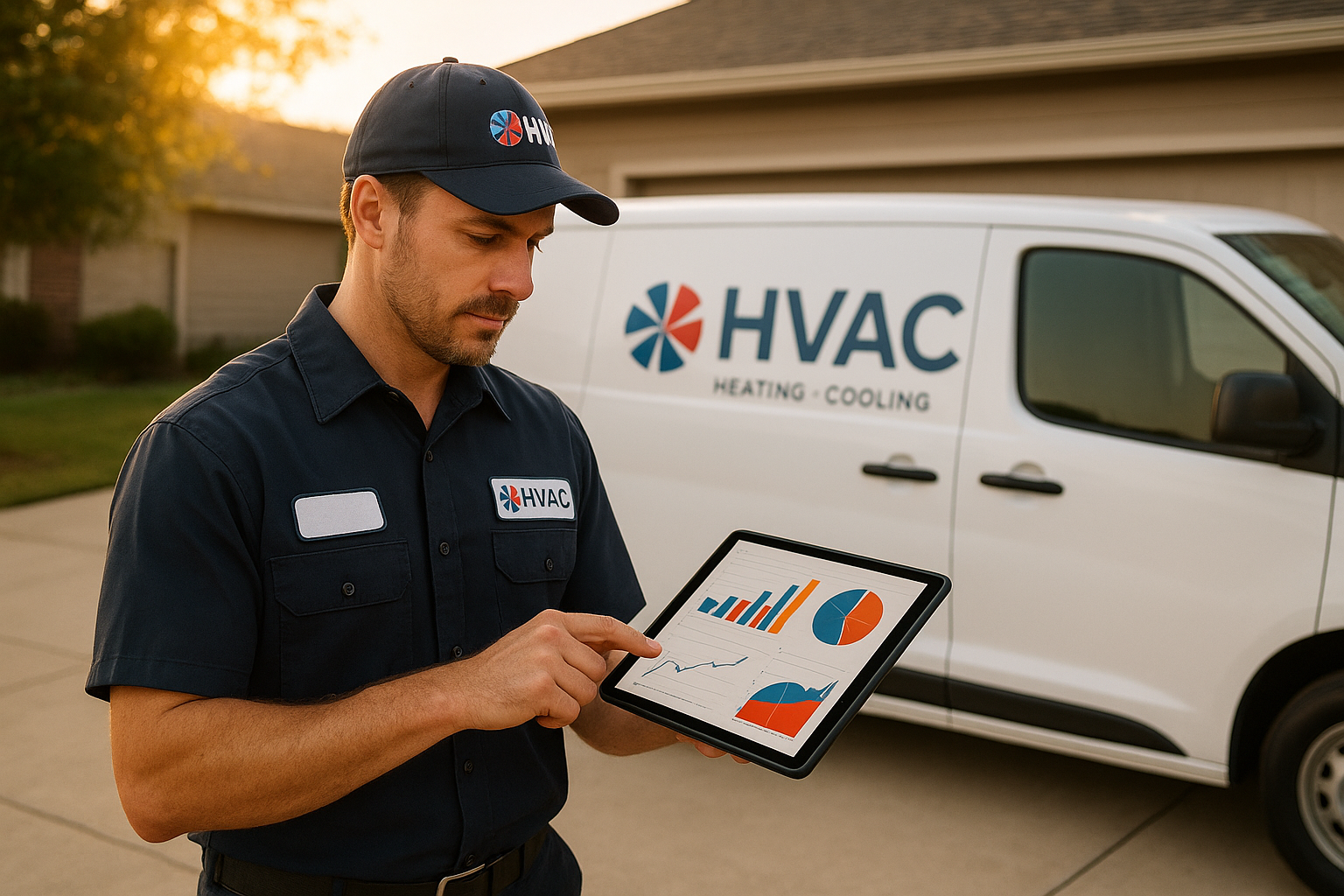
Field-ready HVAC marketing campaign templates are built to drop into an ad account without edits.
Why Generic Ad Templates Fail HVAC Contractors
Most free ad templates online use interchangeable language: "trusted local experts," "quality service you can count on," or "24/7 emergency repair." In particular, that language is a problem because every competitor in the market uses nearly identical phrasing. If a customer can't tell your ad apart from the next contractor's ad, price becomes the only decision left, and price wars rarely favor the smaller operator.
Furthermore, generic templates tend to make promises that sound good but can't be verified. A customer reading "on-time, every time" has no way to check that claim against reality. However, a headline built from public review data, such as addressing missed arrival windows, references something the customer has likely already experienced with a different company. That specificity is what makes review-based copy convert at a higher rate than boilerplate reassurance.
Turning Competitor Reviews Into HVAC Advertising Campaigns
A star rating is an average, and averages hide things. Specifically, a competitor with a 4.9-star rating and 1,500 total reviews can still carry thirty to fifty one- and two-star reviews describing the exact same frustration in different words. Those reviews are public, specific, and written in the customer's own language, which makes them a remarkably reliable source for HVAC advertising campaigns.
The Weakness Themes Hiding Behind 4.9-Star Ratings
Common HVAC complaint clusters include surprise charges ("quoted $150 at the door, billed $410"), missed arrival windows, rushed installs, callbacks that never happen, pushy upsells, and warranty runarounds. As an illustration, one theme, missed arrival windows, might appear in forty separate reviews across a single competitor's history. That repetition is what turns an anecdote into a defensible marketing angle rather than a guess. For a broader reference on how service quality issues get documented publicly, the HVAC industry overview on Wikipedia outlines the scope of service categories where these complaints typically originate.
How to Build HVAC Marketing Campaign Templates in 5 Steps
Building HVAC marketing campaign templates from review data follows a repeatable process. Below is the sequence that keeps the work grounded in evidence rather than assumption.
- Audit your own reviews first. Read through your own one- and two-star Google reviews before looking at anyone else's, since a campaign built on a weakness your customers also mention will invite a losing comparison.
- Pick two to five direct competitors. Choose the businesses you actually lose bids to, then pull their complete Google review history rather than only the most recent or most visible reviews.
- Cluster complaints into named themes. Group similar negative reviews into specific categories, such as surprise charges or rushed jobs, and keep verbatim quotes as supporting evidence for each theme.
- Score each weakness for exploitability. Rate every theme from 1 to 10 based on how often it appears and how sharply it contradicts the competitor's public star rating, then prioritize the top scores.
- Write channel-specific copy inside platform limits. Draft Google Ads headlines within the 30 and 90 character caps, Meta ad copy within the 40, 125, and 25 character fields, and matching Google Business Profile posts and email hooks.

Isolating the negative review cluster is the foundation of every strong HVAC marketing campaign template.
What Belongs in a Complete HVAC Marketing Campaign Pack
A single ad rarely moves the needle on its own. Instead, a complete campaign pack repeats the same validated angle across every channel a customer might encounter, which reinforces the message without repeating identical wording.
| Channel | Constraint |
|---|---|
| Google Ads | 30-character headlines, 90-character descriptions |
| Meta Ads | 40 / 125 / 25 character fields |
| Google Business Profile | Short post copy plus a call-to-action |
| SEO and Email | Content briefs and subject-line hooks |
According to Google's own Ads support documentation, exceeding these character limits simply prevents the asset from serving, which is why validated templates matter more than clever copy that gets rejected. Similarly, the FTC's truth-in-advertising guidance is worth reviewing before any campaign goes live, since claims about competitors or service quality still need to be accurate and substantiated.
Backfire Protection and Your Free Self-Analysis
Before any HVAC marketing campaign templates reach production, it's worth running your own reviews through the same analysis used on competitors. If your own customers also complain about late arrivals, a "we show up when we say we will" campaign invites a comparison you would likely lose. This step, sometimes called backfire protection, stops ad budget from being spent on a claim your own reviews quietly contradict.
WeakSpot built this check into its process specifically because it's the fastest way to catch a self-defeating angle before it costs anything. Every engagement starts with a free self-analysis: submit a business name, a website or Google Maps link, and an email at weakspot.io, and results arrive within two business days with no call required. From there, contractors in the Dallas-Fort Worth area and beyond can choose between the Weak Spot Intel plan at $149 per month for competitor monitoring, or the Market Edge plan at $299 per month, which adds the full campaign pack, self-analysis, and monthly backfire check.
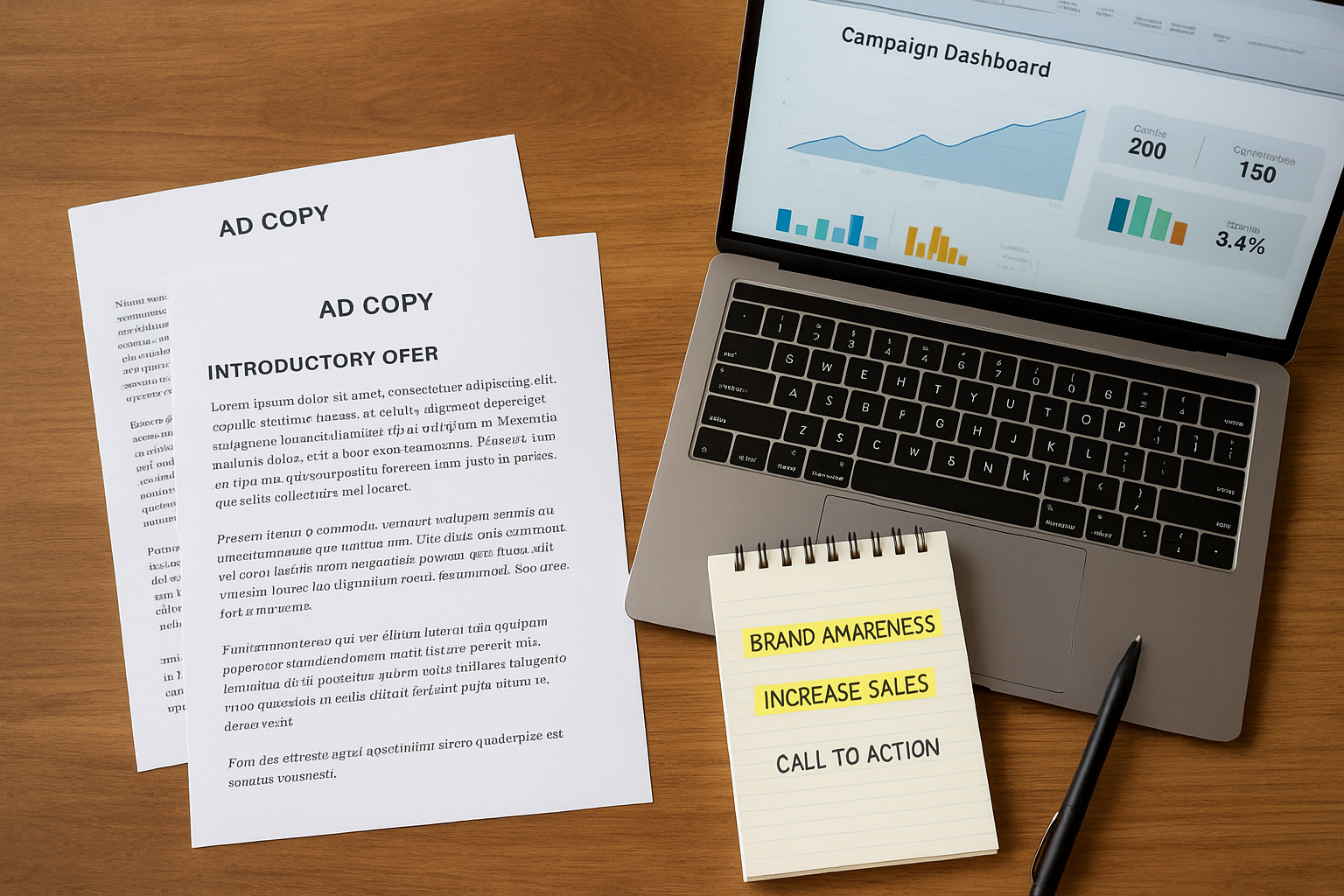
A finished HVAC marketing campaign pack should be ready to drop into an ad account without further edits.
Above all, the goal is not a dashboard telling you a problem exists. Therefore, the most useful HVAC marketing campaign templates end with the headline that runs Monday morning, backed by verbatim evidence and checked against your own review history first. Businesses interested in trying the process can also visit weakspot.io directly or view a live product demo before committing to a plan.
Frequently Asked Questions About HVAC Marketing Campaign Templates
What are HVAC marketing campaign templates?
HVAC marketing campaign templates are pre-built sets of ad copy, social posts, and email content designed for heating and cooling contractors to launch quickly. The strongest ones are built around a specific, data-backed angle rather than generic language about comfort or reliability.
How do HVAC marketing campaign templates differ from generic ad templates?
Generic ad templates use broad claims like "trusted" or "reliable" that every competitor also uses. HVAC-specific templates built from review data target a named, exploitable weakness, such as missed arrival windows, so the message actually stands out.
How much does it cost to build a data-driven HVAC marketing campaign?
Costs vary by approach, but services built specifically for home-service contractors typically run from roughly $150 to $300 per month for research, reporting, and finished copy. Running the resulting ads is a separate cost paid directly to Google or Meta.
How long does it take to launch an HVAC marketing campaign template?
Once the weakness research and copy are finished, most contractors can drop the templates into their ad accounts and go live within a day. The research phase itself, reading a competitor's full review history, usually takes longer than the launch.
What is the backfire effect in HVAC marketing templates?
The backfire effect happens when a contractor runs a campaign about a weakness, such as late arrivals, that their own reviews also show they struggle with. Checking your own review history before launching prevents you from inviting a comparison you cannot win.
What channels should a complete HVAC marketing campaign pack include?
A complete pack should cover Google Ads, Meta ads, Google Business Profile posts, SEO content briefs, and email hooks. Covering multiple channels with the same validated angle reinforces the message everywhere a customer might see it.
Why do HVAC competitors with 4.9-star ratings still have exploitable weaknesses?
A star rating is an average, and averages hide outliers. A competitor with 1,500 reviews and a 4.9 average can still carry thirty to fifty one- and two-star complaints describing specific, repeatable frustrations.
What is a common mistake when writing HVAC ad copy?
The most common mistake is writing vague reassurance copy, such as "quality work you can trust," that says nothing a competitor couldn't also claim. Specific, verifiable claims tied to real customer pain points consistently outperform generic reassurance.
Can I name a competitor directly in an HVAC marketing campaign?
It's best practice to avoid naming competitors directly in ad copy. Effective HVAC marketing campaign templates describe the frustration itself, like surprise charges or missed windows, rather than pointing at a specific company by name.
How often should HVAC marketing campaign templates be refreshed?
Monthly refreshes work well because competitor review patterns shift as new complaints accumulate and old issues get resolved. A monthly cadence also lets you retire an angle before a competitor fixes the underlying problem.
Do HVAC marketing campaign templates work for small local companies?
Yes, review-based templates often work better for smaller companies because they compete on specificity rather than ad budget. A two- or three-truck HVAC company can win against a larger competitor by targeting one well-documented weakness.
How do I start using data-driven HVAC marketing campaign templates?
Start by analyzing your own reviews first, since your weaknesses matter as much as your competitors' do. From there, identify two to five direct competitors and read their negative reviews for repeatable, specific complaint patterns.
Turning Reviews Into Revenue
In summary, HVAC marketing campaign templates only work when they're built on evidence rather than guesswork. Competitor reviews already contain the exact language customers use to describe frustration, and that language, checked first against your own reputation, becomes the foundation for ads, posts, and emails that a generic template could never match. As a result, contractors who build their campaigns this way spend less time competing on price and more time winning the specific customers a competitor's 4.9-star average has quietly been losing all along. For businesses ready to see what their own reviews reveal, a free self-analysis at weakspot.io is the natural next step before building any campaign.
