
10 Free Advertising Sites to Grow Your Local Business
Free advertising sites let any local business — plumbers, roofers, HVAC companies, and everyone in between — get in front of nearby customers without spending a cent on media, and claiming the right ones is still one of the fastest ways to start competing in a market where every rival already looks flawless on paper. Plumbers, roofers, and HVAC companies tend to cluster between 4.8 and 5.0 stars, so visibility alone will not separate one business from the next. Free listings get you into the conversation. What you say once you are there is what actually wins the job.
Quick answer: The 17 free advertising sites most useful to local service businesses are Google Business Profile, Bing Places, Apple Business Connect, Facebook Business Page, Facebook Marketplace, Instagram, LinkedIn, Nextdoor, Yelp, the Better Business Bureau, Angi, Thumbtack, Craigslist, OfferUp, Alignable, Manta, and Foursquare. Together they cover search, maps, social proof, classifieds, and neighborhood referral traffic at no listing cost.
- Search & maps: Google Business Profile, Bing Places, Apple Business Connect
- Social platforms: Facebook, Facebook Marketplace, Instagram, LinkedIn, Nextdoor
- Trust & reviews: Yelp, Better Business Bureau, Angi, Thumbtack
- Classifieds: Craigslist, OfferUp
- Niche directories: Alignable, Manta, Foursquare
Claiming free advertising sites is the groundwork before the real differentiation starts.
Why Free Advertising Sites Still Matter in a Crowded Local Market
In short, free advertising sites exist because search engines, social networks, and homeowners all need a trustworthy place to verify that a business is real before they call it. Specifically, a complete profile confirms a business's name, address, phone number — often shortened to NAP data, the core details search engines use to match a listing to a real location — along with hours, photos, and reviews. As a result, businesses that skip these listings are effectively invisible to the homeowners already searching for help nearby.
Furthermore, this groundwork feeds directly into local search engine optimization, the practice of ranking a business higher for searches tied to a specific city or neighborhood. In contrast to paid ads, which stop producing results the moment a budget runs dry, a well-built free listing keeps working in the background for as long as it stays active and accurate. That makes free advertising sites the foundation every local service business should finish before spending a dollar on media.
The 17 Best Free Advertising Sites for Local Businesses
Below, each platform is grouped by the kind of traffic it sends, since a plumber comparing options needs a different mix than a landscaper or a general contractor. Every listing is widely used by homeowners searching for help, and together they build the digital footprint most local SEO strategies depend on.
Search & Map Platforms
1. Google Business Profile
This is the profile that controls how a business appears in Google Search and Google Maps, including the review count and star average customers see first. It is free to create and verify through Google's own business platform, and for most local service businesses, it drives more calls than every other listing on this page combined.
2. Bing Places for Business
Bing still powers a meaningful share of desktop searches, and Microsoft's free listing tool often imports data directly from an existing Google profile, which cuts setup time significantly. Therefore, claiming it takes only a few minutes once Google Business Profile is already live.
3. Apple Business Connect
This free tool controls how a business appears in Apple Maps and Siri search results, which matters more every year as iPhone users rely on Maps for local search. In particular, service-area businesses can set custom coverage zones instead of a single pin, which helps mobile trades avoid misleading location data.
Social Platforms That Double as Free Advertising Sites
4. Facebook Business Page
A free page lets a business post updates, collect recommendations, and appear in Facebook Marketplace searches. For home-service companies, it also doubles as a casual review hub that homeowners trust more than a polished website alone.
5. Facebook Marketplace
Marketplace listings are free and sit inside an app billions of people already open daily. Although it was built for selling items, local service categories such as home improvement now surface business listings alongside product posts.
6. Instagram Business Profile
A free business account adds contact buttons, categories, and basic insights to an existing Instagram profile. For trades with visual before-and-after results, such as roofing or landscaping, photo posts tend to outperform text-only updates on every other platform in this list.
7. LinkedIn Company Page
LinkedIn is free and underused by local trades, yet it ranks well for a business's own name and helps commercial-side contractors reach property managers and facility directors who rarely browse Nextdoor or Yelp.
8. Nextdoor
Nextdoor connects businesses directly to verified residents in a specific service area, which matters for trades that rely on neighborhood trust and word-of-mouth referrals. Specifically, recommendations here carry more weight than a cold review because neighbors can see who is vouching for whom.
Trust & Review-Based Free Advertising Sites
9. Yelp
A basic Yelp listing is free and still ranks well for service-category searches, even though Yelp pushes paid promotion heavily once a profile is claimed. Even so, the free tier alone is usually enough to appear in relevant local results.
10. Better Business Bureau
A basic BBB listing is free and signals trust to homeowners who specifically search for accredited businesses before hiring, particularly for larger jobs like roof replacements or full HVAC installs.
11. Angi
Formerly Angie's List, Angi offers a free basic profile for contractors and service pros, and it remains a first stop for homeowners vetting trades before they ever pick up the phone.
12. Thumbtack
Creating a Thumbtack profile costs nothing, and it gives a business visibility in a marketplace homeowners already use to compare multiple quotes at once, which makes fast, clear responses especially valuable here.
Classifieds & Marketplace-Style Free Advertising Sites
13. Craigslist
Posting in the services section is still free, and it continues to generate real calls in many mid-size and smaller metro areas where local directories get less traffic.
14. OfferUp
OfferUp's free service listings reach a mobile-first audience that skews younger than Craigslist, which can suit handyman, moving, and small repair businesses looking for quick, local jobs.
Niche Local Directories Worth Claiming for Free
15. Alignable
Alignable is a free small-business networking directory that also functions as a referral exchange, since many local businesses on the platform actively look for trusted trades to recommend to their own customers.
16. Manta
Manta's free directory listing is a quick, low-effort citation that strengthens a business's broader NAP consistency across the web, which search engines use as a trust signal.
17. Foursquare
Foursquare's free business listing still feeds location data into several other apps and services, so claiming it helps keep a business's details consistent across platforms customers never directly visit.
Why Free Business Listings Alone Won't Win You the Job
However, visibility is not the same as persuasion. Once a homeowner searches for a plumber or roofer, they typically see five to eight businesses sitting within the same narrow 4.8 to 5.0 star band. At that point, the profile itself stops being the differentiator, and the message on it becomes everything. This is true whether the lead comes from a plumbing search, an HVAC-specific Google Ads campaign, or a free Nextdoor post.
A competitor with a 4.9 average and 1,500 reviews can still carry thirty to fifty one- and two-star reviews describing specific frustrations, such as being quoted one price at the door and billed another. Those reviews are public, specific, and written in the exact words the next customer is trying to avoid. Almost nobody reads them closely enough to act on them. For plumbing businesses in particular, those complaint patterns are worth studying before writing a single line of ad copy — see these proven local strategies for getting more plumbing customers for a closer look.
In addition, research from Northwestern University's Spiegel Research Center found that purchase likelihood peaks for ratings between 4.0 and 4.7 stars, which suggests shoppers look past the star average before contacting a business. Free advertising sites give that research its stage. What fills the stage determines whether the call comes in.
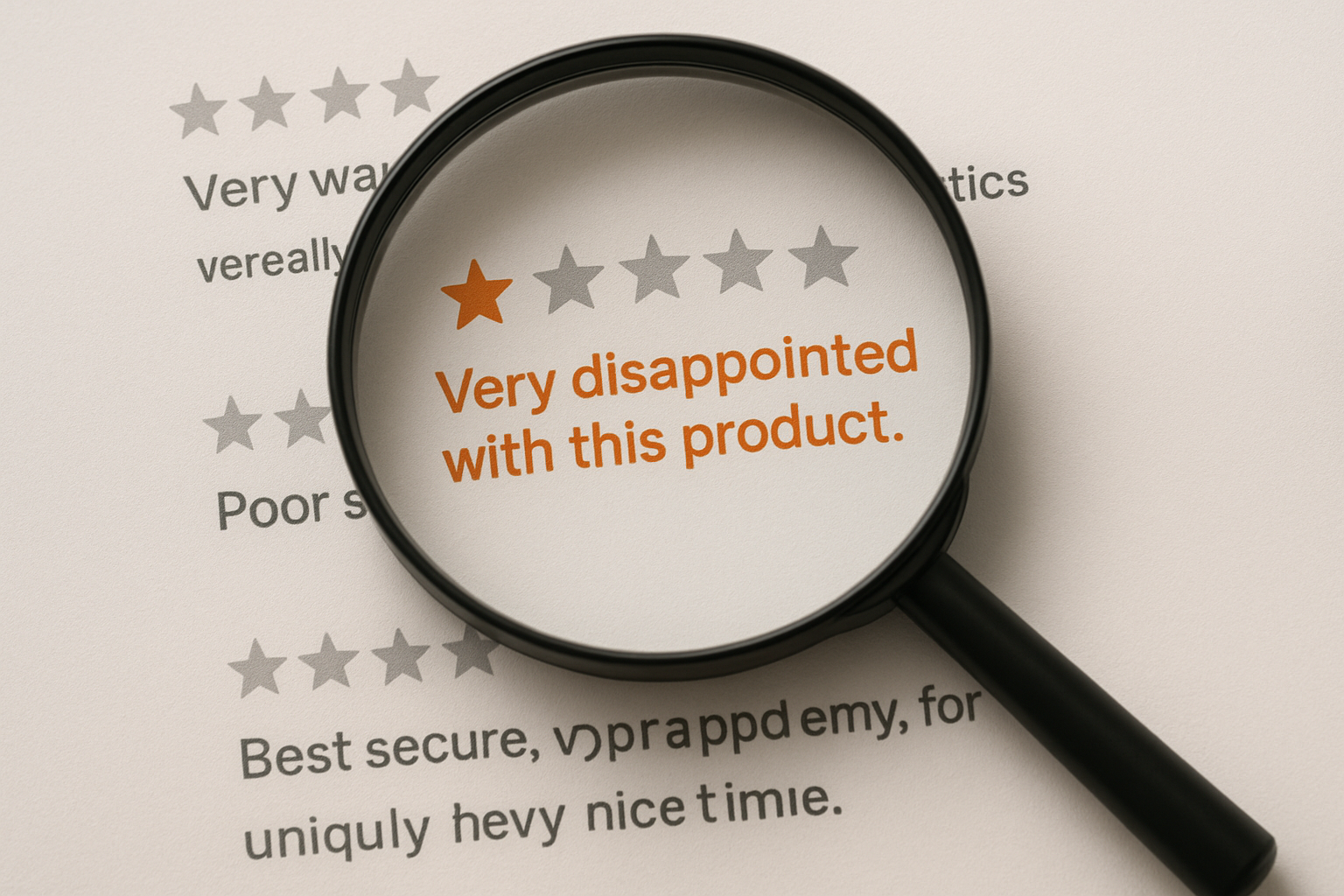 Under a near-perfect average, a small set of detailed complaints usually explains why some customers walked away.
How Do Free Advertising Sites Compare to Paid Ads?
Specifically, free advertising sites and paid advertising solve two different problems, so treating them as competitors usually wastes budget. Free listings build the trust layer — the reviews, photos, and consistent business details homeowners expect to see before they ever click an ad. Paid campaigns, in contrast, buy speed and control over exactly who sees a message and when.
- Free advertising sites cost nothing to join, but results build gradually and depend on consistent upkeep.
- Paid advertising delivers faster visibility but stops producing results the moment spending stops.
- Together, they compound: a strong free profile makes a paid ad's landing experience more credible, and a tested paid headline often reveals which message belongs on the free listing too.
Therefore, most local service businesses get the best return by fully claiming every free advertising site first, then layering paid search or social campaigns on top once the messaging has already been tested in a lower-stakes environment. For HVAC companies specifically, these marketing campaign templates built to convert fast show what that layered approach looks like in practice.
How Do You Turn Free Local Advertising Into Real Leads?
Directly: claim every profile with consistent details, keep them active, and then build messaging around a gap competitors can't close. The five steps below outline the process from first listing to first booked job.
- Claim and verify every profile. Use the exact same business name, address, and phone number on all 17 free advertising sites so search engines don't flag your listing as inconsistent.
- Complete every field. Add service categories, hours, and real job photos, since a half-finished profile rarely outranks a competitor's complete one.
- Collect and answer reviews. Ask happy customers for a review the same day the job finishes, and reply to every review, good or bad, within 48 hours.
- Study competitor review patterns. Read the one- to three-star reviews left for nearby competitors to spot repeated complaints about pricing, scheduling, or follow-up.
- Publish messaging built on the gap. Write headlines, posts, and profile copy that answer the frustration customers described, without naming any competitor directly.
Common Mistakes to Avoid With Free Business Listings
Even well-intentioned businesses undercut their own free advertising sites in a few predictable ways. Above all, avoid these habits before they quietly cap how much traffic a listing can ever earn.
- Inconsistent business details. A phone number that differs between Yelp and Google confuses search engines and homeowners alike.
- Abandoned profiles. A listing with no posts or photos in a year signals a business that may not still be operating.
- Ignoring negative reviews. Silence reads as confirmation, while a thoughtful, specific reply often reassures the next reader more than the review itself worried them.
- Soliciting or manipulating reviews improperly. The Federal Trade Commission's guidance on online reviews makes clear that paying for or faking reviews carries real legal risk, not just a platform penalty.
What Is Competitive Intelligence for Home-Service Marketing?
WeakSpot is a competitive intelligence service built specifically for local home-service businesses. It reads a competitor's entire Google review history, isolates the one- to three-star reviews, and clusters them into named weakness themes such as surprise charges, missed arrival windows, or warranty runarounds, each scored from one to ten for how exploitable it is. For a detailed look at how that process turns complaints into copy, see how to turn competitor reviews into client-winning ads.
Before any angle reaches a client, the same analysis runs on their own reviews first. If a business also gets dinged for late arrivals, a "we show up on time" campaign gets flagged, because it invites a comparison the business would lose. WeakSpot calls this backfire protection, and it is the step most competitive research skips entirely.
Instead of a dashboard, subscribers receive finished copy: Google Ads headlines checked against the 30 and 90 character limits, Meta ad copy sized to 40, 125, and 25 characters, Google Business Profile posts, SEO briefs, and email hooks, all built on verbatim quotes from competitors' own customers. Every engagement starts with a free self-analysis at weakspot.io, where a business submits its name and Google Maps link and receives its own review analysis by email within two business days, no call required. A live walkthrough is also available at app.weakspot.io/demo for anyone who wants to see a finished campaign pack before choosing a plan.
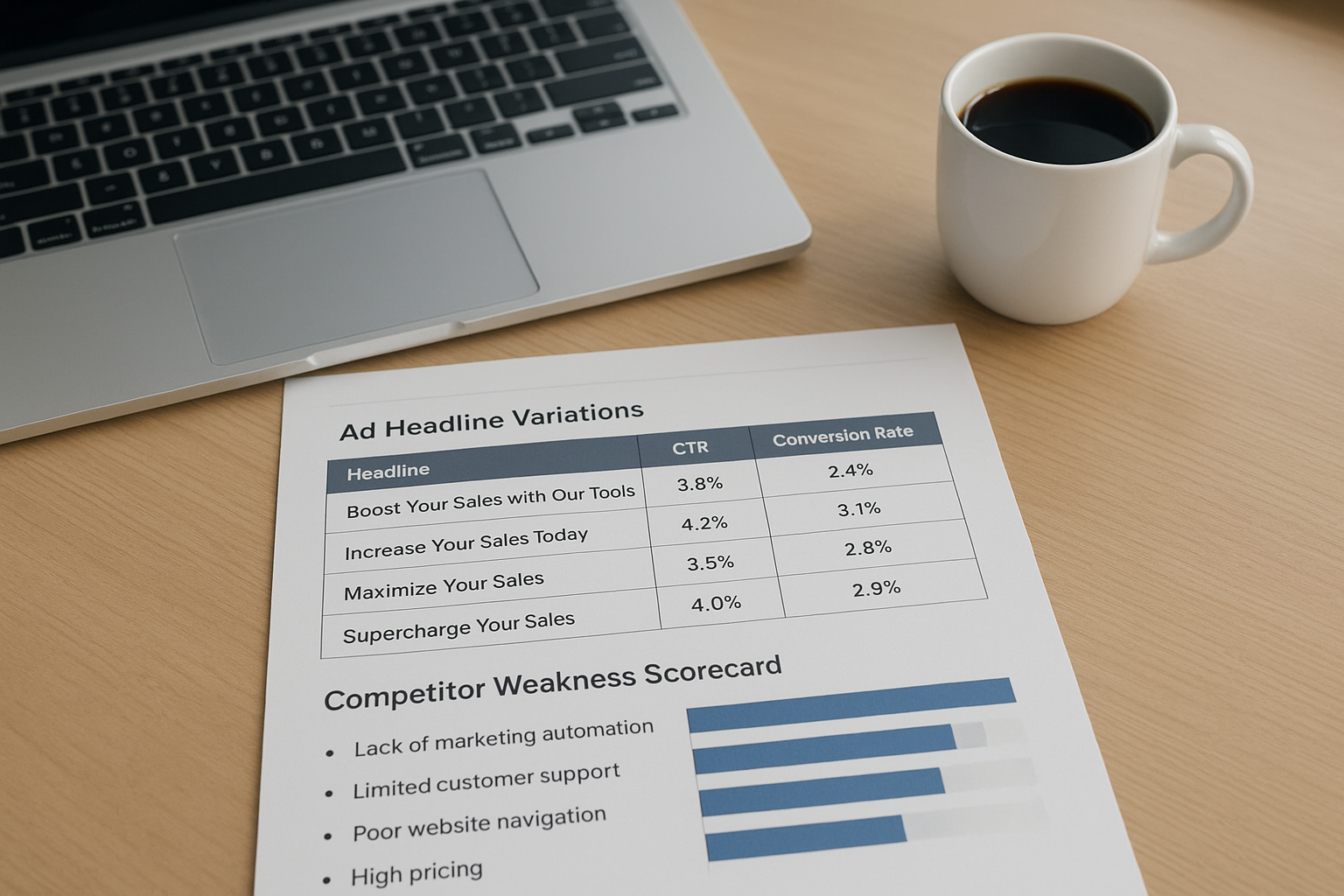 Finished campaign copy, not a chart, is what turns competitor weaknesses into booked jobs.
Key Takeaways on Free Advertising Sites for Local Businesses
Specifically, claiming all 17 free advertising sites builds the visibility layer every local service business needs before spending anything on paid media. For example, a complete, consistent, actively managed profile on Google Business Profile or Nextdoor often outperforms a neglected paid ad. Similarly, the trade-specific directories — Angi, Thumbtack, and the BBB — add the kind of trust signals that general platforms can't replicate. Above all, visit weakspot.io once those profiles are live, since free visibility only converts into booked jobs when the message behind it addresses something competitors can't fix overnight.
In the end, free advertising sites are not a one-time checklist item. They are a living layer of a business's online presence that needs fresh photos, timely review replies, and messaging that evolves as competitors' own weaknesses shift. Visit the weakspot.io homepage to start that process today.
Frequently Asked Questions About Free Advertising Sites
What are the best free advertising sites for local businesses?
The best free advertising sites include Google Business Profile, Facebook, Bing Places, Apple Business Connect, Nextdoor, Yelp, Angi, Thumbtack, Craigslist, the Better Business Bureau, LinkedIn, Instagram, Facebook Marketplace, OfferUp, Alignable, Manta, and Foursquare. Each one lets a local business create a profile and appear in local search results at no listing cost.
Which free advertising site works best for home-service businesses?
Google Business Profile usually drives the most calls because it appears directly in Google Maps and local search. Nextdoor and Angi also perform well for trust-driven trades like plumbing and HVAC.
Do free advertising sites actually generate leads?
Yes, but only when profiles are complete, accurate, and backed by recent reviews. An empty or inconsistent listing rarely converts regardless of which platform hosts it.
Is Google Business Profile really free to use?
Yes, Google Business Profile is free to create, verify, and maintain, including posts, photos, and the Q&A section. Google only charges if a business separately chooses to run Google Ads.
How do free advertising sites compare to paid advertising?
Free advertising sites build the visibility layer a business needs before spending on ads, while paid advertising buys speed and control over placement. Most local businesses get the best results by claiming every free listing first, then layering paid search or social ads on top once messaging is tested.
How many free advertising sites should a small business claim?
There's no hard limit, but claiming the 10 to 17 platforms covered in this guide gives most local businesses full coverage across search engines, maps, social media, and trade directories without spreading a team too thin to keep every profile updated.
What mistakes should I avoid when using free advertising sites?
The most common mistakes are leaving profiles incomplete, using inconsistent business names or phone numbers across sites, ignoring negative reviews, and posting generic descriptions that read identically to every competitor's listing.
What is WeakSpot and how does it help after I claim free advertising sites?
WeakSpot reads every review a chosen competitor has received, clusters recurring complaints into exploitable themes, and delivers ready-to-run ad copy. It turns free listings into sharper, more specific messaging than a generic "we're the best" claim.
