Facebook ads for home service businesses can turn a crowded local market into a steady lead pipeline, but only when the targeting and the copy are built around something more specific than "quality work" or "fast service." Plumbers, roofers, electricians, and HVAC companies almost all sit between 4.8 and 5.0 stars on Google, so a generic ad claiming to be the best simply disappears into the noise. The owners who win instead target a documented frustration their rivals' customers already wrote about in public reviews.
Direct answer: Facebook ads for home service businesses are paid placements run through Meta Ads Manager that target homeowners by location, interests, and behavior to generate calls, form fills, or booked estimates for trades like plumbing, roofing, HVAC, and electrical work. They work best when the budget, audience radius, and ad copy are narrow and specific rather than broad brand awareness.

Reviewing ad performance is step one in running effective facebook ads for home service businesses.
What Are Facebook Ads for Home Service Businesses?
Facebook ads for home service businesses are campaigns built inside Meta's Ads Manager, the same platform that serves both Facebook and Instagram placements. A contractor picks an objective, such as leads or calls, sets a geographic radius, and uploads an image or short video with a headline. Meta then shows that ad to people in the area who match the chosen interests or behaviors.
Unlike search ads, Meta ads reach people before they start looking for a plumber or roofer. That timing matters, because it lets a business plant a specific, memorable message in a homeowner's mind weeks before a pipe bursts or a roof leaks. According to Pew Research Center survey data, roughly two-thirds of U.S. adults still use Facebook regularly, which keeps the audience large enough for most local service areas.
Why Facebook Advertising Works for Local Contractors
Facebook advertising for local contractors works because it separates reach from intent. Search-based platforms only show an ad after someone types a query, so every click competes on price against every other advertiser bidding the same keyword. Meta ads, in contrast, let a business reach a homeowner based on location and household characteristics, which often lowers cost per impression considerably.
Furthermore, visual proof carries more weight on Facebook than on a search results page. A short video of a finished roof replacement or a before-and-after photo of a cleaned-out furnace builds trust faster than text alone. As a result, home service businesses that pair visual proof with a specific promise tend to see stronger engagement than those running generic brand ads.
How Much Should Home Service Companies Budget for Meta Ads?
Budgets vary by trade and market size, but most home service businesses should expect to spend enough to exit Meta's learning phase, which typically requires around 50 conversions per ad set. In practice, that means a starting range rather than a single fixed number.
| Trade | Typical Starting Monthly Budget | Common Campaign Goal |
|---|---|---|
| Plumbing | $750 – $1,500 | Leads and calls |
| Roofing | $1,000 – $2,000 | Inspection requests |
| HVAC | $1,000 – $2,500 | Seasonal tune-ups |
| Electrical | $600 – $1,200 | Estimate requests |
These ranges are general starting points, not guarantees. In particular, a market saturated with aggressive competitors may need a higher budget simply to gather enough data for Meta's algorithm to optimize.
Step-by-Step: Launching Your First Facebook Ad Campaign
Launching facebook ads for home service businesses does not require a marketing degree, but it does require sequence. Skipping a step, especially the review audit, is the most common reason campaigns underperform.
- Audit competitor and your own reviews. Read through a few competitors' one to three star Google reviews to find repeated complaints, then check your own reviews so you never run a claim your customers would contradict.
- Define a tight local audience and budget. Set a 10 to 15 mile radius around your service area and commit to a starting budget that lets the algorithm exit the learning phase within a few weeks.
- Build three ad variations around one weakness. Write three headline and image combinations tied to a single validated weakness theme so you can measure which angle resonates fastest.
- Launch with a dedicated landing page. Send every click to a short page that repeats the ad's promise and includes a simple lead form, then confirm conversion tracking is firing correctly.
- Monitor weekly and refresh underperforming creative. Check cost per lead and ad frequency every week, pause the weakest variation, and swap creative once frequency climbs too high.
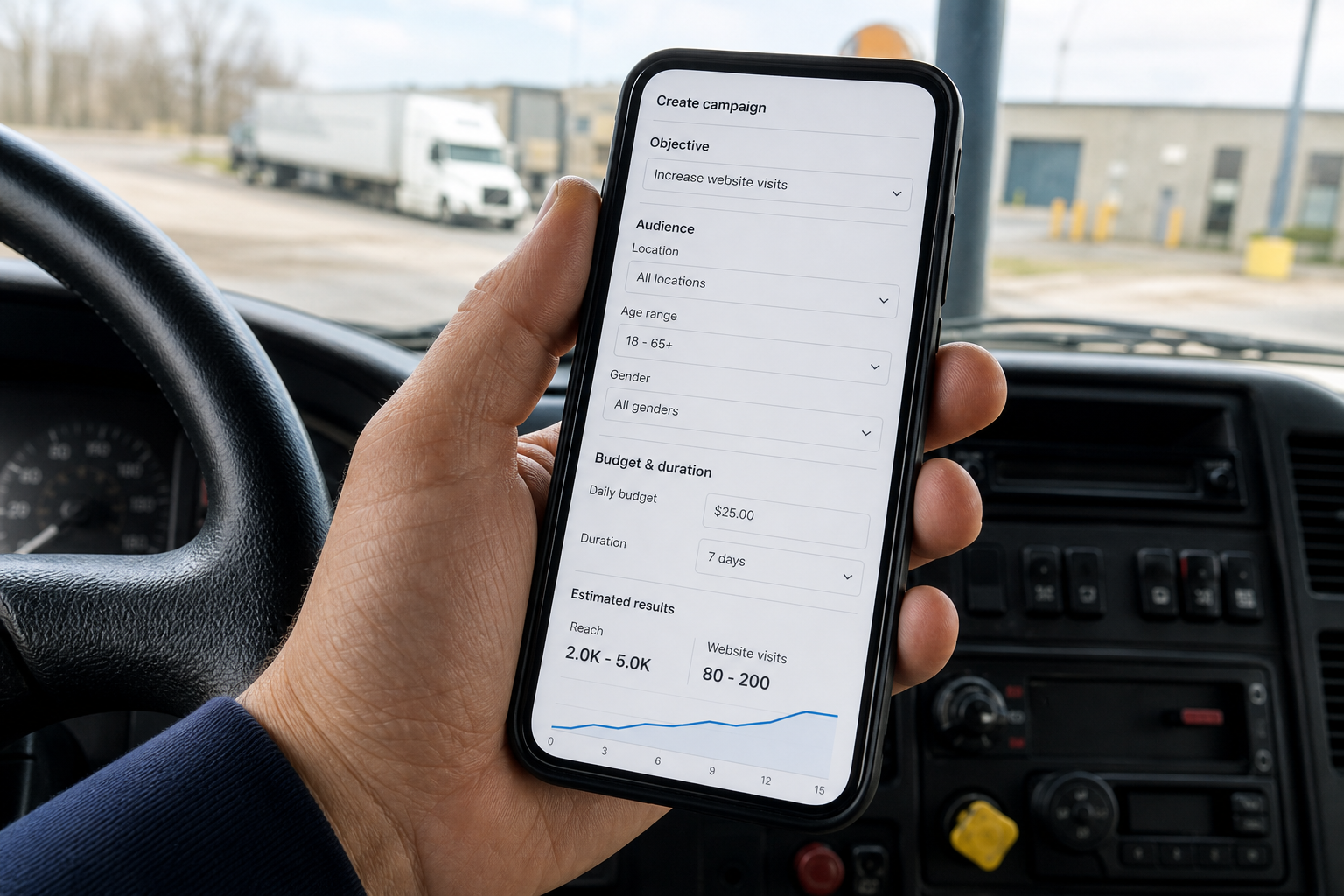
Following a clear process keeps facebook ads for home service businesses on budget and on message.
Social Media Ads for Plumbers, Roofers, and HVAC Companies: Copy That Converts
Good copy starts with a problem the reader recognizes instantly. Instead of "Trusted roofing experts since 2005," a stronger headline might read "Tired of contractors who never call back?" That phrasing mirrors a complaint pattern found across thousands of roofing reviews nationally, which makes it feel specific rather than generic.
Likewise, Meta's own Business Help Center recommends keeping primary text short and leading with the benefit, since mobile users scan quickly. Pairing that advice with a documented weakness theme, such as a missed arrival window, gives the ad both brevity and proof.
However, every claim made in an ad must hold up against the advertiser's own track record. The Federal Trade Commission's advertising guidance is clear that claims must be truthful and substantiated, so a "we always call back" promise only works if your own reviews actually support it.
Common Mistakes That Waste Ad Spend
Three mistakes show up repeatedly across underperforming campaigns. First, many businesses send traffic to a cluttered homepage instead of a focused landing page, which hurts conversion rates significantly. Second, they let one ad run for months without refreshing it, causing frequency to climb and performance to decline. Third, and most costly, they make a claim that directly contradicts their own review history, inviting a comparison they cannot win.
In contrast, campaigns that stay narrow in audience, specific in message, and honest about the business's track record tend to produce a lower, more predictable cost per lead over time.
How WeakSpot Turns Competitor Reviews Into Winning Facebook Ad Copy
Finding a competitor's weakness theme by manually scrolling through hundreds of reviews is slow, and most owners never finish the exercise. WeakSpot was built to remove that bottleneck. It reads a competitor's entire Google review history, isolates the one to three star reviews, and clusters recurring complaints into named themes such as surprise charges, missed arrival windows, or callbacks that never come.
Each theme is scored from 1 to 10 for how exploitable it is and backed by verbatim quotes, so the pattern is undeniable rather than a hunch. Before any angle reaches a client, WeakSpot also runs the client's own reviews through the identical analysis. This backfire protection step flags any campaign idea that the business's own customers would contradict, which keeps every ad defensible.
From there, subscribers receive finished Google Ads headlines validated against the 30 and 90 character limits, along with Meta ad copy that fits the 40, 125, and 25 character fields Facebook enforces. Readers who want a closer look at the underlying research process can review the full breakdown in this guide on home services competitive analysis, or see how the same complaint data turns into finished copy in this piece on turning rival reviews into leads.
Facebook Ads vs. Local Service Ads for Home Service Businesses
Facebook ads and Google Local Services Ads solve different problems, so comparing them head-to-head misses the point slightly. Local Services Ads capture a homeowner who already decided to call someone today, while Facebook ads reach that same homeowner weeks earlier, before the decision was made. A detailed side-by-side breakdown of cost structure and lead quality is available in this comparison of Local Services Ads versus Google Ads for contractors.
Specifically, many agencies running both channels report that Facebook performs better for building initial awareness and nurturing seasonal demand, such as HVAC tune-ups before summer. Google, meanwhile, tends to close the loop when urgency is already high. For roofers specifically, pairing Facebook creative with search copy built from the same weakness data, as outlined in this guide to Google Ads copy for roofers, often produces a more consistent lead flow than either channel alone.
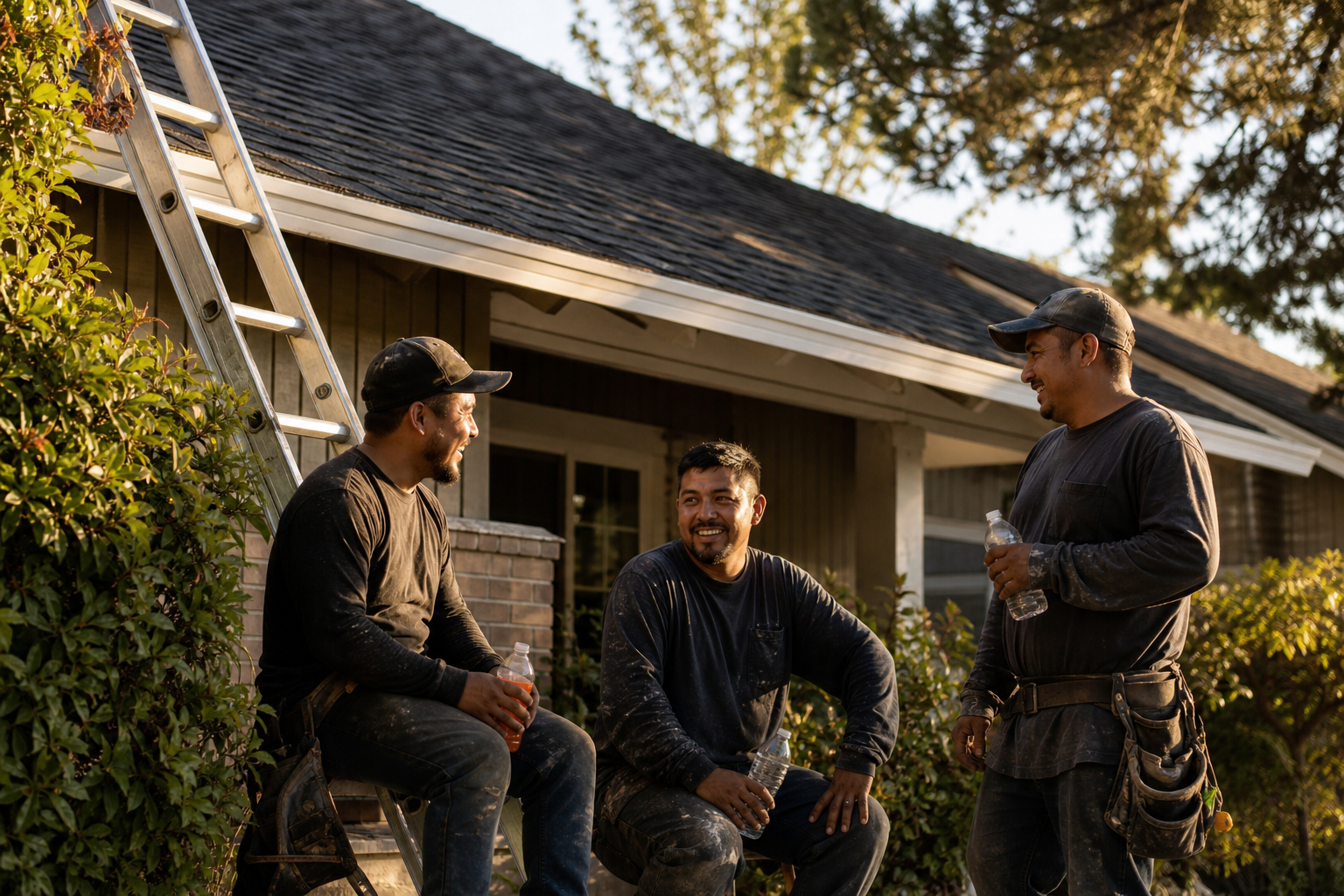
Real job photos like this often outperform stock imagery in facebook ads for home service businesses.
Getting Started Without Guesswork
Before spending a dollar on Meta Ads Manager, it helps to know exactly which complaint patterns your own reviews contain, since that determines which claims are safe to run. WeakSpot's free self-analysis submits a business name, website, and email at weakspot.io and returns results within two business days, with no call required. Businesses that also want more free channels to test alongside Facebook can browse this list of free advertising sites for local businesses.
Frequently Asked Questions
How much should home service businesses budget for Facebook ads?
Most home service businesses start testing facebook ads for home service businesses with $750 to $1,500 per month per trade. That budget usually covers enough impressions to find a winning audience and ad within four to six weeks before scaling up.
How long until Facebook ads generate leads for a contractor?
Early leads often appear within the first one to two weeks, but the learning phase usually needs about 50 conversions before performance stabilizes. Plan on a four to six week test window before judging true cost per lead.
What is the biggest mistake home service companies make with Facebook ads?
The most common mistake is running generic ads that mention speed or quality without proof, since every competitor claims the same thing. A close second is sending traffic to a slow homepage instead of a focused landing page.
Do one-truck or small crews benefit from Facebook ads?
Yes, small crews often see strong results because Facebook's radius targeting can concentrate a modest budget on a few zip codes. A narrow, specific offer tends to outperform a broad brand-awareness campaign for a small operation.
Facebook ads or Google Local Services Ads: which is better for home service businesses?
Google Local Services Ads capture people actively searching for a service right now, while Facebook ads reach people before they start that search. Most successful home service marketers run both, since they serve different stages of the buying decision.
What ad format works best for plumbers, roofers, and HVAC companies?
Single-image or short-video ads that show real trucks, crews, or finished jobs typically outperform stock photography. A simple carousel comparing a common frustration to your fix also performs well for seasonal trades like HVAC.
How do I write Facebook ad copy that doesn't sound like everyone else?
Anchor the headline to a specific frustration your competitors' customers have complained about, not a generic promise. Naming the exact problem, such as a missed arrival window, feels more credible than simply claiming to be the best.
Do home service businesses need a dedicated landing page for Facebook ads?
Yes, a focused landing page that matches the ad's promise converts far better than a general homepage. It should repeat the offer, show a short form, and remove navigation links that distract the visitor.
How often should Facebook ad creative be refreshed?
Refresh creative every three to six weeks once frequency climbs above two to three impressions per person. Seasonal trades should also swap messaging ahead of predictable demand spikes, such as storms or heat waves.
What audience targeting radius works best for local service ads?
A 10 to 15 mile radius around the service area usually balances reach and relevance for most trades. Dense urban markets can often narrow further, while rural service areas may need 20 miles or more.
Can competitor review complaints really improve Facebook ad performance?
Yes, because verbatim complaints from a competitor's reviews describe the exact frustration the next customer is trying to avoid. Building ad copy around a documented weakness theme is more persuasive than a generic quality claim.
What does WeakSpot cost and what's included each month?
Weak Spot Intel starts at $149 a month for monitoring two competitors with a monthly intelligence report. Market Edge, the most popular plan at $299 a month, adds five competitors, a full campaign pack, and a backfire check on your own reviews.
Key Takeaways
Facebook ads for home service businesses work best when they stop competing on vague quality claims and start addressing a frustration customers have already written about in public reviews. A tight local radius, a starting budget that lets the algorithm learn, and copy built around a documented weakness theme consistently outperform generic brand messaging. Above all, every claim should hold up against a business's own review history, since a promise it cannot back up invites the exact comparison it should avoid. For owners who want that research done without weeks of manual review reading, WeakSpot's free self-analysis is a reasonable first step before the next campaign goes live.

