
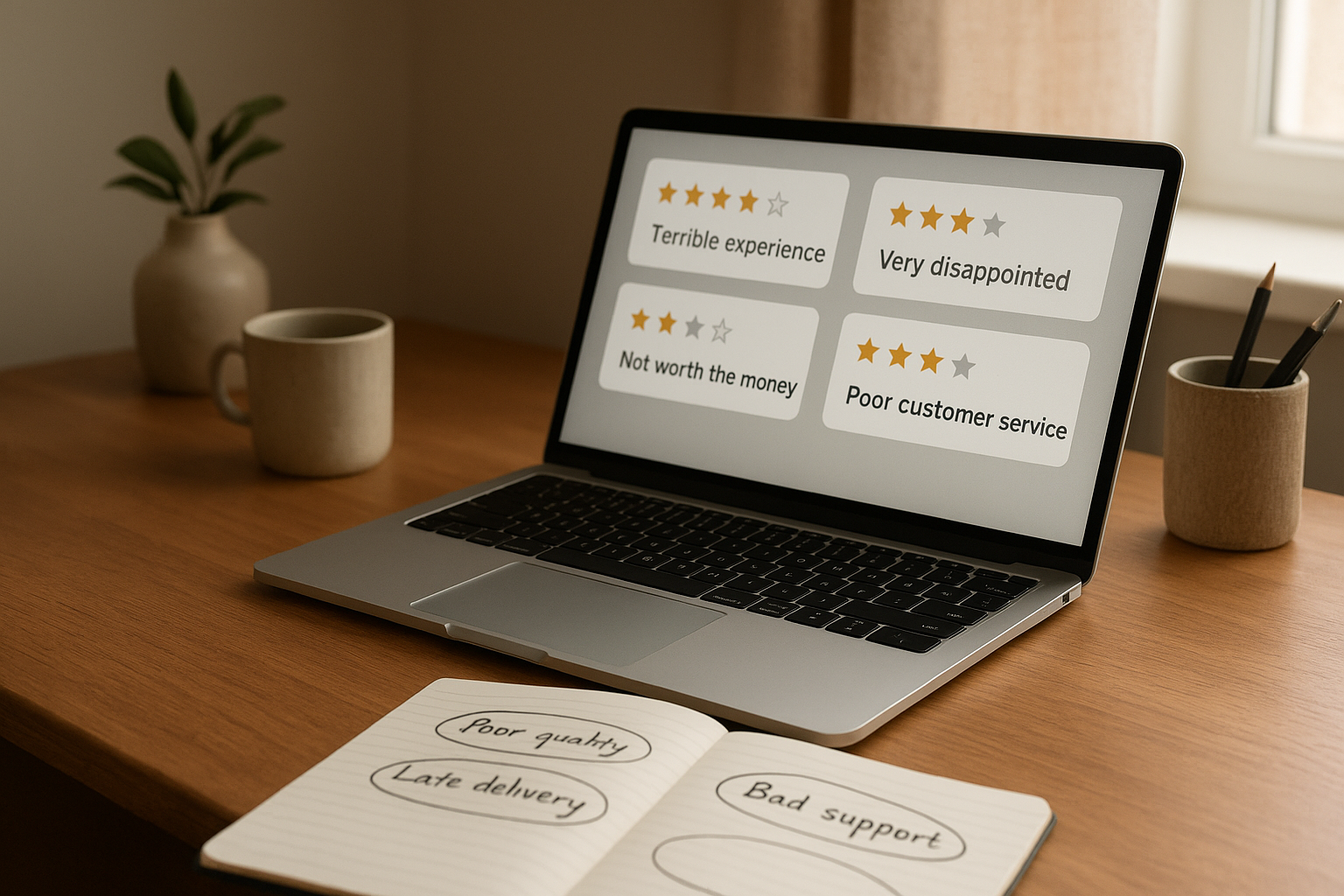
How to Find Competitor Weaknesses in Local Services
To find competitor weaknesses in your local market, the fastest and most reliable method is reading the one, two, and three-star Google reviews your rivals have earned, because unhappy customers describe, in their own words, exactly where a business falls short. Most local service owners never scroll past the star average, so the complaint patterns sitting in plain sight go completely unnoticed. This guide walks through every step of how to find competitor weaknesses, where else those weaknesses hide beyond Google, how to turn them into validated campaign angles, and how to avoid the single mistake that makes a competitive campaign backfire.
Quick Answer
To find competitor weaknesses, read every 1 to 3 star review a rival has collected on Google, Yelp, and other local platforms, then group the recurring complaints into named themes like surprise fees or missed arrival windows. Next, score those themes by how often they repeat and how strongly they signal an unmet expectation. Finally, check your own reviews for the same complaints before you build a single campaign around them.
What Does It Mean to Find Competitor Weaknesses?
Finding competitor weaknesses means identifying, with evidence, the specific operational failures a rival business repeats often enough that customers took the time to complain publicly. It is not guesswork, and it is not an opinion formed from a quick glance at a competitor's homepage. Specifically, it relies on verbatim quotes pulled straight from a competitor's own review history, which makes it far harder to dispute than a generic claim about "service quality."
Consider a plumbing company sitting at 4.9 stars with 1,500 reviews. On the surface, that looks flawless. However, inside the one and two-star reviews, thirty or more customers might describe the same frustration: "quoted one price, billed another," or "tech showed up three hours late and never apologized." Those are not isolated complaints. Instead, they form a pattern, and a pattern is something you can market against with confidence.
Reading the full 1 to 3 star history is the core method used to find competitor weaknesses hiding under a high star average.
Why Star Ratings Hide the Real Competitive Gaps
A star rating is an average, and averages are designed to smooth out extremes. As a result, a business can carry a 4.8 or 4.9 score while still accumulating dozens of detailed negative reviews that describe the exact same frustration. According to Wikipedia's overview of online review systems, aggregated ratings are one of the most common decision-making shortcuts consumers use, yet they rarely reflect the real distribution of individual experiences behind the number.
In almost every local home-service market, from plumbers to roofers to HVAC companies, every serious competitor sits between 4.8 and 5.0 stars. Consequently, owners who want to grow end up competing on price and ad spend alone, because there appears to be nothing left to differentiate one provider from another. In contrast, the competitive gaps are absolutely there; they are simply buried under aggregate math that nobody bothers to unpack.
Review Mining vs. Traditional Competitive Intelligence Frameworks
Many competitive intelligence guides focus on enterprise frameworks like SWOT analysis, Porter's Five Forces, or sales battlecards built from win-loss interviews. These frameworks are useful for large B2B companies comparing product roadmaps and pricing tiers. For a local service business, though, they tend to produce vague, unactionable conclusions such as "competitor has strong brand recognition" or "pricing is a weakness," without ever citing a single piece of evidence a customer can verify.
Review-based weakness mining solves that problem by replacing assumptions with direct quotes. Rather than guessing that a rival "might struggle with scheduling," you can point to forty-one reviews over eighteen months that each mention a missed arrival window. As the Wikipedia entry on competitive intelligence notes, the discipline is built on gathering and analyzing publicly available information ethically — and few sources are more public, more specific, or more honest than a customer who left a one-star review describing exactly what went wrong.
Step-by-Step: How to Find Competitor Weaknesses in Under a Week
Finding genuine, exploitable weaknesses follows a repeatable process. Below is the exact sequence that produces reliable, evidence-backed results instead of guesswork.
Identify your real competitors. Search the services you offer alongside your city name on Google Maps and note which three to five businesses appear repeatedly near the top of results.
Pull the full review history. Collect every one, two, and three-star review for each competitor, not just the most recent page, going back as far as the platform allows.
Cluster complaints into named themes. Group recurring issues such as missed arrival windows, surprise fees, or rushed installs, and count how often each theme repeats across different reviewers.
Score each theme for exploitability. Rank every theme based on frequency and how strongly it signals a genuinely unmet customer expectation worth addressing in marketing.
Check your own reviews first. Compare each validated theme against your own review history, so you never invite a comparison you would actually lose.
Monitor monthly for new patterns. Repeat this process on a recurring schedule, because complaint themes shift as competitors hire, train, or lose staff over time.
For a deeper breakdown of how this process applies specifically to trade businesses, the guide on plumbing competitor analysis tools walks through the method in far more detail, and the companion piece on HVAC competitor analysis covers the themes most specific to heating and cooling contractors.
Common Weakness Themes in Home Service Reviews
Although every market is different, the same handful of themes show up again and again across plumbing, roofing, HVAC, and residential service reviews. Above all, these themes repeat because they reflect operational habits that rarely change on their own.
Surprise charges: a fee nobody mentioned on the phone, added after the job starts.
Missed arrival windows: promised time slots that pass with no call or update.
Rushed jobs: technicians who leave before confirming the work actually solved the problem.
Callbacks that never come: a request for a follow-up visit that simply goes unanswered.
Messy installs: finished work that leaves debris, scuffed walls, or disconnected fixtures behind.
Pushy upsells: a simple repair call that turns into a high-pressure sales pitch.
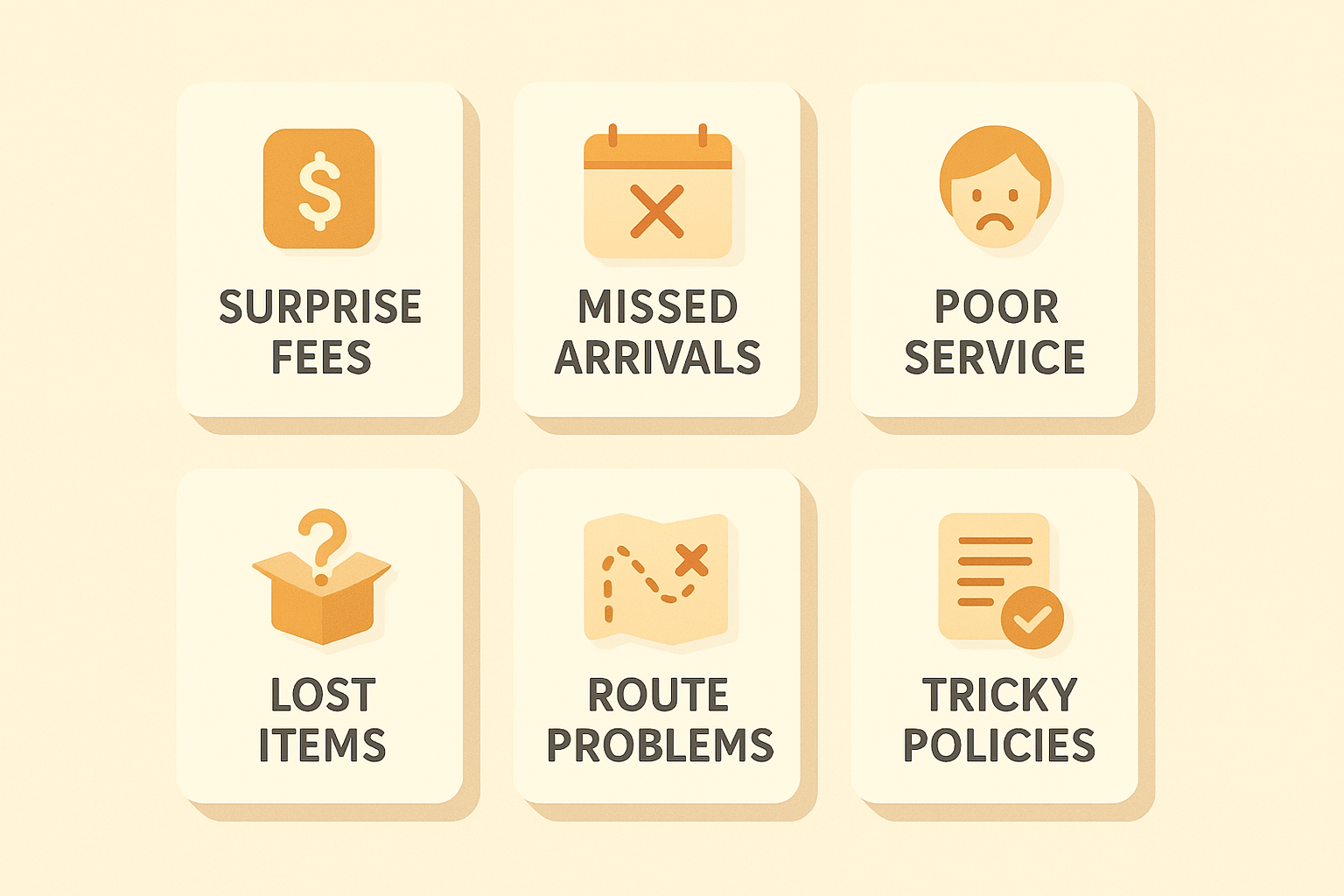
Named, repeating complaint categories make it far easier to find competitor weaknesses that are actually worth marketing against.
Industry Breakdown: Plumbing, HVAC, and Roofing Patterns
Specifically, the weight of each theme shifts depending on the trade. The table below summarizes which weakness patterns tend to dominate in each category, based on how complaints typically cluster.
Industry | Most Common Theme | Why It Converts |
|---|---|---|
Plumbing | Surprise charges after the quote | Pricing anxiety is the top objection before a call is even booked. |
HVAC | Missed or vague arrival windows | Comfort emergencies make punctuality a decisive factor. |
Roofing | Messy jobsites and slow follow-up | Large projects make cleanliness and communication highly visible. |
Beyond Google: Other Places to Spot Rival Vulnerabilities
Google reviews are the richest single source, but they are not the only one. In particular, Yelp tends to attract a slightly different reviewer than Google, often surfacing complaints about communication style rather than scheduling. The Better Business Bureau, meanwhile, captures formal disputes that customers only escalate after a company failed to resolve a problem directly, which signals an even more severe pattern.
Facebook recommendations, Nextdoor threads, and Angi reviews round out the picture, particularly in suburban markets where neighbors actively warn each other about bad experiences. Therefore, a thorough weakness audit cross-references at least two or three platforms before a theme is considered confirmed, rather than relying on a single data source the way many generic competitive analysis checklists suggest.
Avoid the Backfire Trap: Check Your Own Reviews First
Before any weakness theme becomes a headline, it needs one more test. Specifically, your own review history needs to be screened for the same complaint. If your customers also mention late arrivals, a "we show up when we say we will" campaign invites a comparison you would lose, not win.
This step is frequently skipped, and it is the single most expensive mistake in competitive marketing. Therefore, treating your own reviews with the same scrutiny you apply to a competitor's reviews is not optional; it is the difference between a campaign that converts and one that quietly erodes trust. For more on building a full monitoring habit around this idea, see the piece on review monitoring for contractors.
Turning Weaknesses Into Campaign Copy That Converts
Once a weakness theme is validated and cleared against your own backfire risk, it becomes raw material for marketing. For example, a repeated "surprise fee" theme at a competitor can become a Google Ads headline about transparent, upfront pricing, written to fit within Google's standard character limits. Similarly, a "missed arrival window" theme can anchor a Google Business Profile post about a specific on-time guarantee.
Keep the Copy About You, Not Them
Notably, none of this copy should name the competitor directly. In particular, naming a rival invites unnecessary legal and reputational risk, while addressing the underlying frustration, such as unclear pricing or unreliable scheduling, speaks directly to the customer's actual concern. The U.S. Federal Trade Commission's guidance on endorsements and reviews is a useful reference point when deciding how far comparative claims can safely go.
Mistakes That Sabotage Your Competitor Weakness Analysis
Even a sound process can fail if a few common traps go unchecked. Below are the mistakes that most often undermine an otherwise solid competitor weakness analysis.
Reading only recent reviews: this misses older but still-repeating complaint patterns that reveal long-term habits.
Skipping your own reviews: this is what causes a confident campaign to backfire in the comments.
Treating one complaint as a theme: a single angry review is an anecdote, not evidence of a pattern.
Naming competitors directly: this raises legal risk without making the underlying message any more persuasive.
Tools That Help You Uncover Competitor Shortcomings at Scale
Manually reading thousands of reviews across five competitors is realistic for a one-time project, but it is not sustainable monthly. As a result, many owners turn to a dedicated service once they understand the value of the method. WeakSpot, for instance, monitors up to five competitors chosen by the business, reads their entire Google review history, and clusters the 1 to 3 star corpus into named, scored weakness themes backed by verbatim quotes.
Unlike tools that stop at a dashboard, WeakSpot delivers finished copy: Google Ads headlines validated against the 30 and 90 character limits, Meta ad copy within the 40, 125, and 25 character fields, GBP posts, SEO briefs, and email hooks. Every engagement starts with a free self-analysis of your own reviews, emailed within two business days with no call required. You can learn more about the full approach to competitive intelligence for local businesses or explore weakspot.io directly to request a free self-analysis. A deeper look at the software category itself is also covered in this competitor review analysis software guide.
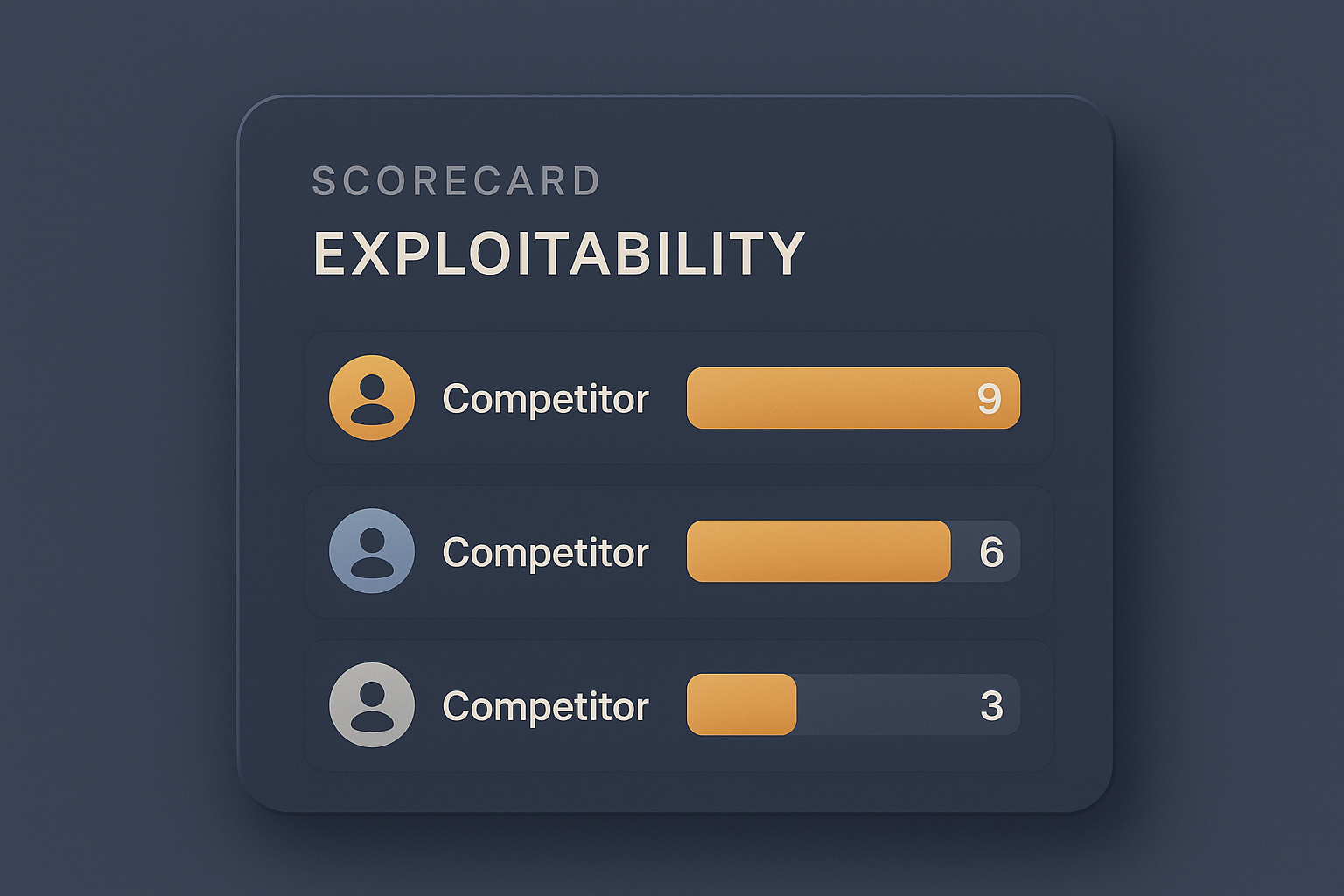
Scoring each theme for exploitability turns raw complaints into a prioritized, ready-to-run action list.
Industry-Specific Guides for Finding Competitor Weaknesses
Because every trade has its own rhythm of complaints, it helps to study a guide built for your exact niche. The plumbing competitor analysis tools guide covers pricing transparency and emergency response patterns specific to plumbers, while the HVAC competitor analysis guide focuses on seasonal demand spikes and maintenance plan complaints unique to heating and cooling businesses.
Owners who want a faster path often start by comparing their current tactics against proven approaches. For additional tactical ideas beyond review mining, the article on proven tactics for winning customers from competitors rounds out the broader strategy.
Putting It All Into Practice
None of this requires guesswork once the process is in place. Similarly, it does not require a large marketing budget to get started; it requires reading what customers have already written down and acting on the patterns that repeat. According to Google's own guidance on managing Google reviews, review content is public and searchable, which means every competitor's complaint history is already available for anyone willing to read it carefully.
Frequently Asked Questions About How to Find Competitor Weaknesses
What does it mean to find competitor weaknesses in local reviews?
To find competitor weaknesses means reading the one, two, and three-star Google reviews a rival has received and identifying repeated complaint patterns, such as missed arrival windows or surprise fees. These patterns reveal specific, provable gaps hiding under an otherwise high star average.
How many competitors should I analyze at once?
Most local service owners get useful results by analyzing three to five direct competitors in the same service area. Going beyond five tends to dilute focus without adding meaningfully different weakness themes.
Why do 4.9-star competitors still have exploitable weaknesses?
A star rating is an average, so a business with 1,500 reviews and a 4.9 score can still have thirty to fifty detailed one and two-star complaints. Those reviews describe, in the customer's own words, exactly what went wrong and why.
What is the fastest way to find competitor weaknesses without reading thousands of reviews manually?
A competitive intelligence service can read a competitor's entire review history and cluster complaints into named, scored themes within days. Doing this manually across five competitors with thousands of combined reviews can take an individual owner dozens of hours.
How is review-based weakness mining different from a traditional SWOT analysis?
A SWOT analysis is often based on assumptions or internal opinions about competitors. Review-based weakness mining relies entirely on verbatim, public statements from the competitor's own paying customers, which makes every claim easier to defend.
What counts as a weakness theme in a Google review?
A weakness theme is a specific, repeated complaint pattern such as a surprise charge, a missed arrival window, or a callback that never came. A single complaint is an anecdote; the same complaint repeated across dozens of reviews is a theme.
Where else can I find competitor weaknesses besides Google reviews?
Yelp, the Better Business Bureau, Facebook recommendations, Nextdoor threads, and Angi reviews each surface complaints that Google sometimes misses. Cross-referencing at least two platforms strengthens confidence before a theme is treated as confirmed.
How much does competitor review analysis typically cost?
Pricing varies by provider and scope, with monthly subscription services for home-service businesses commonly ranging from roughly $149 to $299 a month depending on how many competitors are tracked and whether campaign copy is included. Free self-analysis of your own reviews is often available before committing to a paid plan.
How long does it take to get results from a competitor review audit?
A focused self-analysis of a single business's reviews can often be completed and delivered within two business days. A full multi-competitor report with scored themes and campaign copy typically follows on a monthly cycle.
What is the backfire risk in competitive marketing?
The backfire risk happens when a business runs a campaign claiming a strength, such as punctual arrivals, while its own reviews contain the same complaint. Checking your own review history before writing any ad prevents this costly mistake.
Can I legally name a competitor in my ads?
You generally can, but naming a competitor directly invites legal scrutiny and can feel aggressive to local customers. Most effective campaigns address the underlying frustration, like unclear pricing, without naming any specific company.
What is a common mistake businesses make when trying to find competitor weaknesses?
The most common mistake is reading only the most recent reviews instead of the full history, which misses older but still-repeating complaint patterns. A second common mistake is skipping the check on your own reviews, which leads to campaigns that backfire.
Do negative reviews actually predict future complaints?
Repeated complaint themes tend to reflect operational habits, like scheduling practices or pricing disclosure, that do not change quickly. As a result, a weakness that appears across dozens of reviews over months is a reasonably reliable signal of an ongoing pattern.
How often should I re-check competitors for new weaknesses?
A monthly check is usually enough to catch new complaint clusters without overwhelming your team. However, after a competitor hires new staff or changes pricing, it is worth checking sooner, since those events often trigger fresh waves of complaints.
What should I do after I find competitor weaknesses?
After identifying a validated weakness theme, turn it into specific campaign copy, such as a Google Ads headline or a Google Business Profile post, that highlights your own reliable process without naming the competitor. Always verify your own reviews do not share the same weakness before launching the campaign.
In the end, learning how to find competitor weaknesses is less about tools and more about discipline: reading the reviews nobody else bothers to read, grouping the complaints into honest themes, and checking your own history before you ever write a headline. Local markets where every provider sits between 4.8 and 5.0 stars are not actually undifferentiated; the differences are written down in plain English by customers who already walked away frustrated. Whether you build this process yourself or lean on a service like WeakSpot to read the reviews, score the themes, and hand you finished campaign copy, the core idea stays the same. Your competitors' bad reviews are public, specific, and sitting right there, and once you know how to find competitor weaknesses, they become the clearest marketing advantage available in your market.