How to get more HVAC customers is the question almost every owner in a saturated local market eventually asks, especially once ad costs climb and every rival's Google profile sits at 4.8 or 4.9 stars. In Dallas-Fort Worth and most other metro areas, HVAC companies look nearly identical on paper. However, a star rating is only an average, and averages hide the exact words unhappy customers used to describe why they left.
Direct answer: The fastest way to get more HVAC customers is to mine competitors' one- to three-star Google reviews for repeated complaint patterns. Then build ad copy, Google Business Profile posts, and email campaigns around the exact frustration those customers describe. Always check your own reviews first, so you never run a claim your own feedback contradicts.
What Is the Fastest Way to Get More HVAC Customers?
How to get more HVAC customers is, at its core, the process of turning public review data, local search visibility, and targeted ad campaigns into booked jobs rather than just a bigger ad budget. Most owners default to spending more on Google Ads or Facebook, which only raises the cost per click in an already crowded auction. In contrast, reading the specific complaints buried in competitors' low-star reviews gives you a message no one else is using.
For example, a plumber or an HVAC company sitting at 4.9 stars with 1,500 reviews can still carry thirty to fifty one- and two-star reviews describing a missed arrival window or a surprise fee. Those details are public, specific, and repeated. As a result, they make far stronger ad copy than a generic promise of quality service.
Why Most HVAC Marketing Plans Stall at 4.9 Stars
When every serious competitor in a market hovers between 4.8 and 5.0 stars, there is seemingly nothing to separate them. Consequently, owners compete on price, on ad spend, or on who shouts loudest in local Facebook groups. This is exactly the trap that keeps HVAC customer acquisition expensive and unpredictable.
According to BrightLocal's annual consumer review research, the vast majority of consumers read online reviews before choosing a local service business, and many trust those reviews as much as a personal recommendation. That means the specific wording inside a competitor's negative reviews is not just internal feedback; it is a preview of the objection the next customer in that market is already trying to avoid. Therefore, addressing that objection directly, without naming the competitor, is one of the most reliable ways to attract more HVAC customers who are actively comparing providers.
Owners running home service businesses beyond HVAC face the same pattern. Readers comparing strategies across trades may also find value in a related breakdown of proven local strategies for plumbing companies, since the review-mining approach transfers directly between trades.
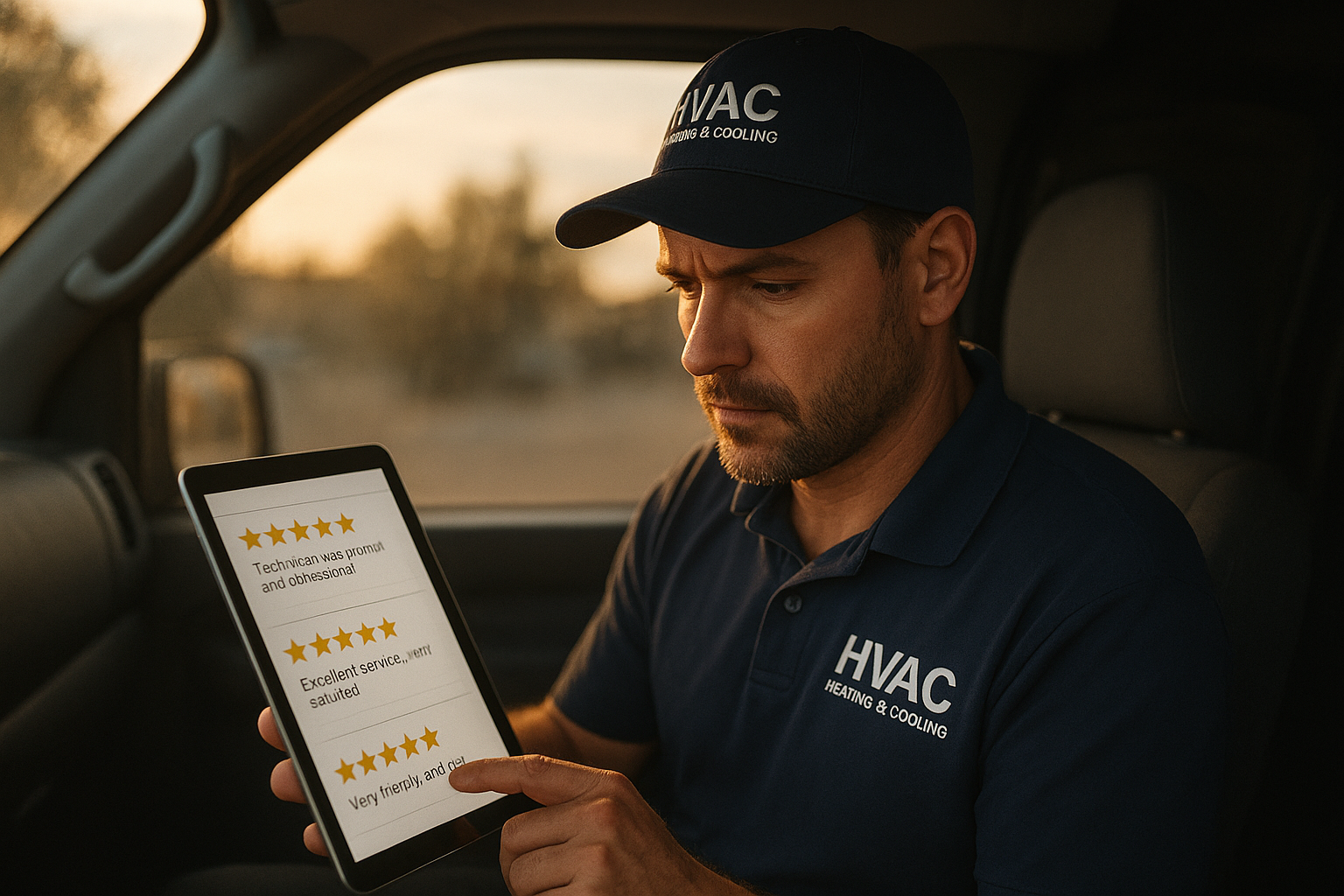
Reading competitor reviews closely is one of the most overlooked ways to learn how to get more HVAC customers.
How to Get More HVAC Customers by Mining Competitor Reviews
The process below outlines the exact steps for turning scattered one-star complaints into a structured, repeatable marketing advantage. Each step builds on the last, so skipping ahead usually produces weaker, less specific campaign copy.
- Pick up to five local competitors. Choose the HVAC companies you lose bids against most often, prioritizing those with high review counts and strong overall averages.
- Read the full review history, not just the recent ones. Older one- and two-star reviews frequently reveal patterns that have persisted for years and still apply today.
- Isolate the negative reviews and group them into named themes. Surprise charges, missed arrival windows, rushed installs, and unanswered callbacks tend to be the most common categories.
- Score each theme for how exploitable it is. A theme repeated across dozens of reviews, backed by specific quotes, is far stronger than a single vague complaint.
- Check your own reviews before writing copy. If your own customers mention the same problem, that angle is off the table until it is fixed.
- Build the finished campaign assets. Translate the validated theme into ad headlines, Google Business Profile posts, and email subject lines that speak to the frustration directly.
How to Get More HVAC Customers Without Naming a Competitor
Specifically, strong review-based campaigns never mention a rival company by name. Instead, they describe the frustration in neutral language, such as "no surprise fees after the quote" or "we call when we're running late," and let the reader connect the dots from their own experience shopping around. This approach keeps campaigns both ethical and legally safer, since you are responding to a documented pattern rather than making a direct accusation.
Turn Weakness Themes Into HVAC Ad Campaigns That Convert
Once a weakness theme is validated with real quotes, it needs to become finished copy quickly, before the opportunity cools off. Google Ads headlines, for instance, must fit within the platform's 30-character headline and 90-character description limits, while Meta ad copy needs to respect the 40, 125, and 25 character fields for primary text, headline, and description. Owners who want to see finished examples before writing their own can review a set of HVAC Google Ads examples built around real review data.
In addition, the same weakness theme should extend beyond paid ads. A Google Business Profile post, an email subject line, and a short blog brief can all reinforce the same message in a customer's inbox, search results, and Google Maps listing simultaneously. For a broader library of finished layouts, see these HVAC marketing campaign templates that convert fast.
Why Backfire Protection Matters Before You Launch
Before any campaign goes live, it is worth asking a hard question: does my own review history contradict the claim I'm about to make? This step, sometimes called backfire protection, means running your own Google reviews through the same analysis used on competitors. If your reviews also mention late arrivals, a "we show up when we say we will" campaign invites a comparison you are likely to lose.
Consequently, skipping this check is one of the most expensive mistakes in local HVAC marketing. A campaign that highlights a strength you do not actually have will draw attention to the gap, often in the comments section of the very ad meant to generate leads.
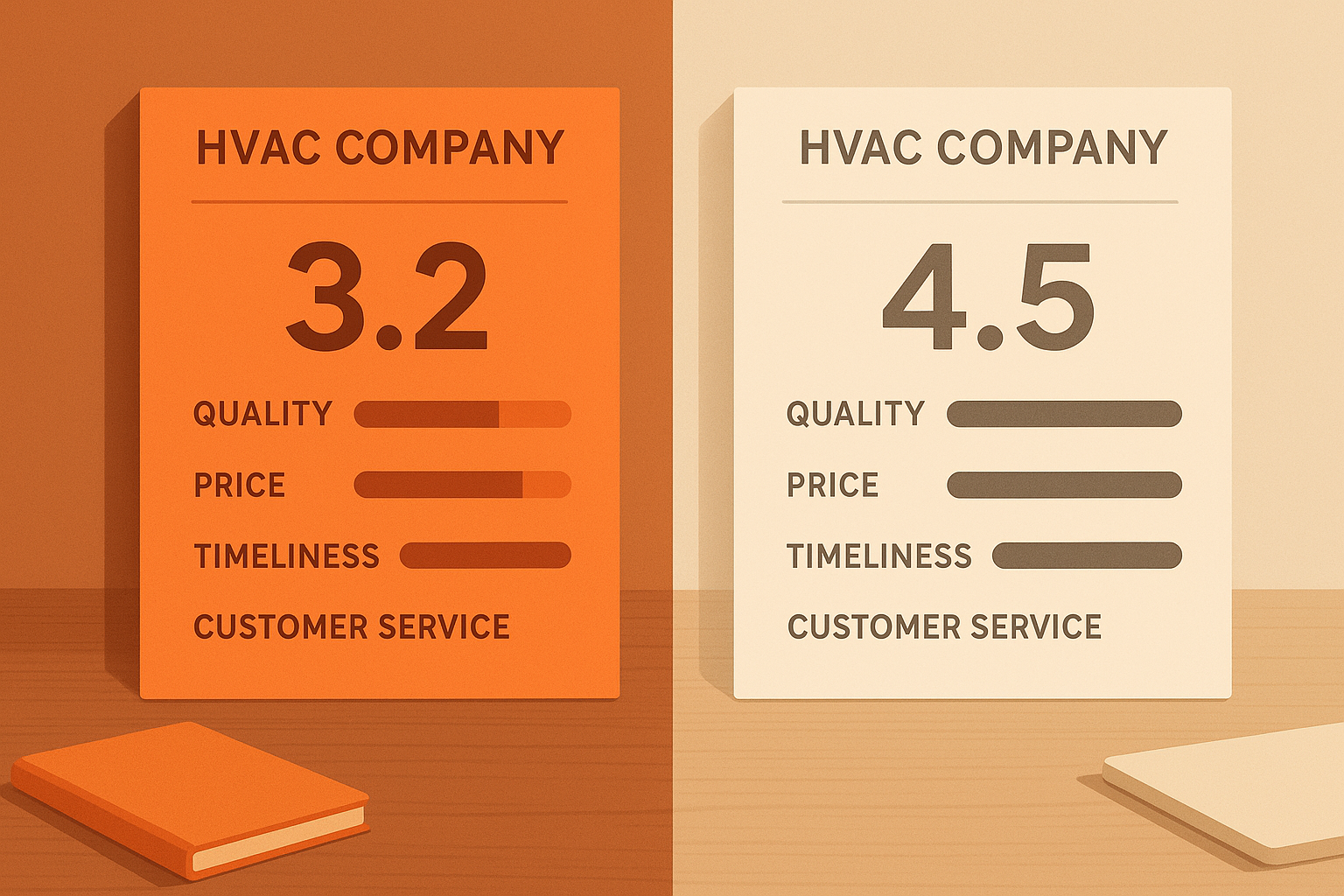
Scoring each weakness theme helps HVAC owners decide which complaint pattern is worth building a campaign around.
Local SEO and Content Tactics to Attract More HVAC Customers
Paid ads deliver speed, but local SEO builds a compounding advantage that keeps working after the ad budget runs out. According to the U.S. Small Business Administration, maintaining an accurate, regularly updated online presence is one of the most consistent factors in local customer acquisition for service-based businesses. Specifically, an optimized Google Business Profile, consistent name-address-phone details across directories, and locally focused blog content all support the same goal: showing up when someone nearby searches for emergency repair or installation.
Content briefs built from the same weakness-theme research used for ads tend to outperform generic "top 10 HVAC tips" posts, since they answer a question the reader is already forming based on a bad experience elsewhere. For a wider view of how content and campaigns work together across the home service category, see this guide to home service marketing content that wins customers. The Federal Trade Commission also publishes guidance on featuring online customer reviews, which is worth reading before publishing any review-based claim.

Most homeowners read reviews before calling, which is why review-based campaigns consistently attract more HVAC customers.
Getting Started Without Building an In-House Research Team
Reading every review for five competitors by hand takes real time, often several hours per competitor once you account for sorting, clustering, and fact-checking quotes. For owners who would rather start with their own numbers first, weakspot.io offers a free self-analysis: submit a business name, website or Google Maps link, and a business email, and results arrive by email within two business days, with no call required. From there, monthly plans add competitor tracking, scored weakness themes, and finished campaign copy sized to Google Ads and Meta's character limits. A live walkthrough of the process is also available at app.weakspot.io/demo for owners who want to see the reports before submitting their own details.
Frequently Asked Questions About How to Get More HVAC Customers
What does "how to get more HVAC customers" actually mean for a local company?
It means turning public data, like competitor reviews, local search rankings, and ad performance, into a repeatable system that books more jobs without simply outbidding rivals on cost per click. The goal is a messaging advantage, not just a bigger ad budget.
How many Google reviews does a typical HVAC competitor have?
Established HVAC companies in competitive metros often have 500 to 1,500 or more Google reviews. Even at a 4.8 or 4.9 average, that volume usually includes thirty to fifty one- and two-star reviews describing specific, repeatable frustrations.
How long does it take to see results from review-based HVAC marketing?
Most owners notice a shift in call volume or lead quality within four to eight weeks of launching campaigns built on verified weakness themes. Google Business Profile posts and email hooks tend to move faster than organic SEO content.
Why do most HVAC ads look the same in every market?
Because most companies write ads around their own features, licensed, insured, 24/7 service, rather than around what customers actually complain about with competitors. When every ad says the same thing, price becomes the only differentiator left.
What is backfire protection and why does it matter for HVAC campaigns?
Backfire protection means checking your own reviews before claiming a strength your competitors lack. If your reviews also mention late arrivals, running a "we show up on time" campaign invites a comparison you would lose.
How much does competitive intelligence for HVAC companies cost?
Plans typically range from roughly $149 a month for a basic competitor report to around $299 a month for a full package that includes campaign copy, self-analysis, and ongoing alerts. Costs vary by how many competitors are tracked and whether finished ad copy is included.
What's the difference between local SEO and paid ads for HVAC companies?
Local SEO builds organic visibility in Google Maps and search results over months, while paid ads deliver immediate placement for a cost per click. The strongest approach to how to get more HVAC customers uses both, with SEO content and ads built on the same validated weakness themes.
What are the most common complaints about HVAC companies?
Recurring themes include surprise charges beyond the quoted price, missed arrival windows, rushed installs, callbacks that never happen, and pushy upsell attempts. These patterns repeat across markets because the underlying business pressures are similar.
What mistakes should HVAC owners avoid when running ads?
The biggest mistake is copying a generic ad template without checking whether your own reviews support the claim. Another common error is naming a competitor directly, which can create legal and ethical problems and usually performs worse than a general promise.
How often should HVAC companies update their marketing campaigns?
Review-based campaigns should be refreshed monthly, since new reviews and rating shifts change which weakness themes are strongest. A monthly cadence also lets you retire a message once competitors fix the underlying problem.
Can I run this strategy without hiring a full marketing agency?
Yes. Many owners read competitor reviews manually, or use a service that delivers finished ad copy, GBP posts, and SEO briefs, then run those assets themselves inside their existing Google Ads or Meta accounts.
Is it ethical to use competitors' reviews in marketing campaigns?
Yes, because the reviews are public data posted voluntarily by real customers on Google. Ethical campaigns address the underlying frustration, such as missed arrival windows, without naming the competitor directly.
Key Takeaways on Winning More HVAC Customers
Ultimately, how to get more HVAC customers comes down to reading what the market has already written for you. Competitors' one- and two-star reviews describe, in exact detail, the frustrations the next customer in your area is trying to avoid, from surprise fees to missed arrival windows. Rather than outbidding rivals on the same generic ad copy, pulling those complaint patterns into scored, quote-backed themes gives you a message almost nobody else is using.
That said, every strong campaign starts with an honest look at your own reviews, since a claim your own customers contradict will cost more than it earns. If you would rather see this analysis applied to your own business before writing a single ad, visit weakspot.io for a free self-analysis, delivered by email within two business days. Combined with consistent local SEO and monthly campaign refreshes, this review-driven approach remains one of the most reliable ways to get more HVAC customers in a market where everyone else still looks the same.
