
HVAC Marketing Ideas That Beat 4.9-Star Competitors
HVAC marketing ideas are most useful when they target something your competitors can't fix overnight: the complaints already sitting inside their own Google reviews. Most HVAC companies compete on price and ad spend because every competitor's star rating looks nearly identical, usually somewhere between 4.8 and 5.0. However, a star rating is only an average, and averages hide the thirty or fifty unhappy customers who wrote down the exact reason they left. This article walks through practical, review-based HVAC marketing ideas you can run this month, plus the one step most companies skip before writing a single ad.
Quick answer: The strongest HVAC marketing ideas combine two things: specific, verbatim pain points pulled from competitors' 1 to 3 star reviews, and a check of your own reviews first so you never run a claim your customers would contradict. Pair that with Google Ads built around arrival-time and pricing-transparency promises, consistent Google Business Profile posts, and local SEO content, and generic "we're the best" messaging stops being able to compete.
What Are the Best HVAC Marketing Ideas?
The best HVAC marketing ideas start from a specific, provable claim rather than a vague promise. Instead of "trusted service you can count on," a stronger approach is "we call thirty minutes before arrival, every time," because it answers a frustration real customers have actually written about. In particular, this works because HVAC, which stands for heating, ventilation, and air conditioning, is a trust-based purchase; homeowners rarely know the difference between a fair quote and an inflated one, so they lean heavily on reviews and reputation signals before calling.
Consequently, the companies that win local search and paid ads are rarely the ones with the highest star rating. They are the ones whose messaging answers the specific worry a homeowner already has in their head: will the quote change, will the tech actually show up, and will anyone call back if something goes wrong.
Why HVAC Advertising Ideas All Start to Sound the Same
In almost every local market, every serious HVAC competitor looks nearly perfect online. Plumbers, roofers, and HVAC companies alike tend to sit between 4.8 and 5.0 stars, which means there is nothing obvious on the surface to separate one from another. As a result, owners default to competing on price and ad spend, bidding against each other for the same clicks on the same keywords.
According to the U.S. Bureau of Labor Statistics, demand for heating and air conditioning work is projected to keep growing faster than average through the decade, which means competition for leads is unlikely to ease on its own. BLS data also confirms that most of this work remains local, which is exactly why review-based differentiation matters more in HVAC than in categories where customers shop nationally. Similarly, industry surveys consistently find that the large majority of consumers read online reviews before choosing a local service provider, which means those thirty or fifty negative reviews under a 4.9 average are being read by someone right now.
Therefore, the opportunity isn't to out-shout competitors with a bigger ad budget. It's to say something they can't, because it describes the exact frustration their own customers already lived through.
HVAC Marketing Ideas That Target Competitors' Weak Spots
A competitor sitting at 4.9 stars with fifteen hundred reviews still has dozens of one, two, and three-star reviews describing specific problems: "quoted one price, billed another," "waited all day, nobody called," or "tech showed up three hours late and never apologized." Those reviews are public, specific, and written in the exact words the next customer in that market is already worried about.
Turn Competitor Reviews Into HVAC Marketing Ideas
For example, if three competitors in your market all have repeated complaints about surprise fees, a pricing-transparency promise becomes an obvious campaign angle. Likewise, if missed arrival windows show up again and again, a scheduling-accuracy message will resonate because it answers a worry homeowners already hold, not one you invented for the ad. This is the core idea behind WeakSpot, a competitive intelligence service that reads a competitor's entire Google review history, isolates the low-star reviews, and clusters them into named weakness themes scored for how exploitable they are, each backed by verbatim quotes so the pattern is undeniable.
Turning competitor complaint patterns into usable hvac marketing ideas starts with reading the reviews nobody else bothers to read.
Step-by-Step: Build HVAC Marketing Ideas From Review Data
Here is the process, broken into five steps you can run manually or hand off to a service built for it.
- Choose up to five competitors. Pick the companies whose trucks and ads you see most often in your market.
- Read the full 1 to 3 star review history. Skim-reading only recent reviews misses long-standing, unresolved problems.
- Cluster complaints into named weakness themes. Group repeated issues like surprise charges or missed arrival windows, then score each for how exploitable it is.
- Check your own reviews for the same theme. If your customers complain about the same thing, that angle is off the table.
- Turn surviving themes into platform-ready copy. Write Google Ads, Meta ads, Google Business Profile posts, and email hooks within each platform's character limits.
Readers who want finished examples of this copy in action can review real HVAC Google Ads examples built from this exact process before writing their own.
HVAC Lead Generation Ideas Beyond Competitor Reviews
Review-based messaging works best alongside, not instead of, solid fundamentals. A complete Google Business Profile with accurate service areas, recent photos, and weekly posts still drives a meaningful share of local HVAC leads. In addition, seasonal content, such as spring AC tune-up reminders or winter furnace safety checklists, keeps your site relevant to search engines between big campaign pushes.
Email follow-up is another underused channel. Past customers who had a furnace replaced three years ago are due for a tune-up reminder, and a short email built around a weakness theme, such as transparent flat-rate pricing, often outperforms a cold ad to a stranger. For broader context on building this kind of content calendar, see this guide to home service marketing content that wins customers.
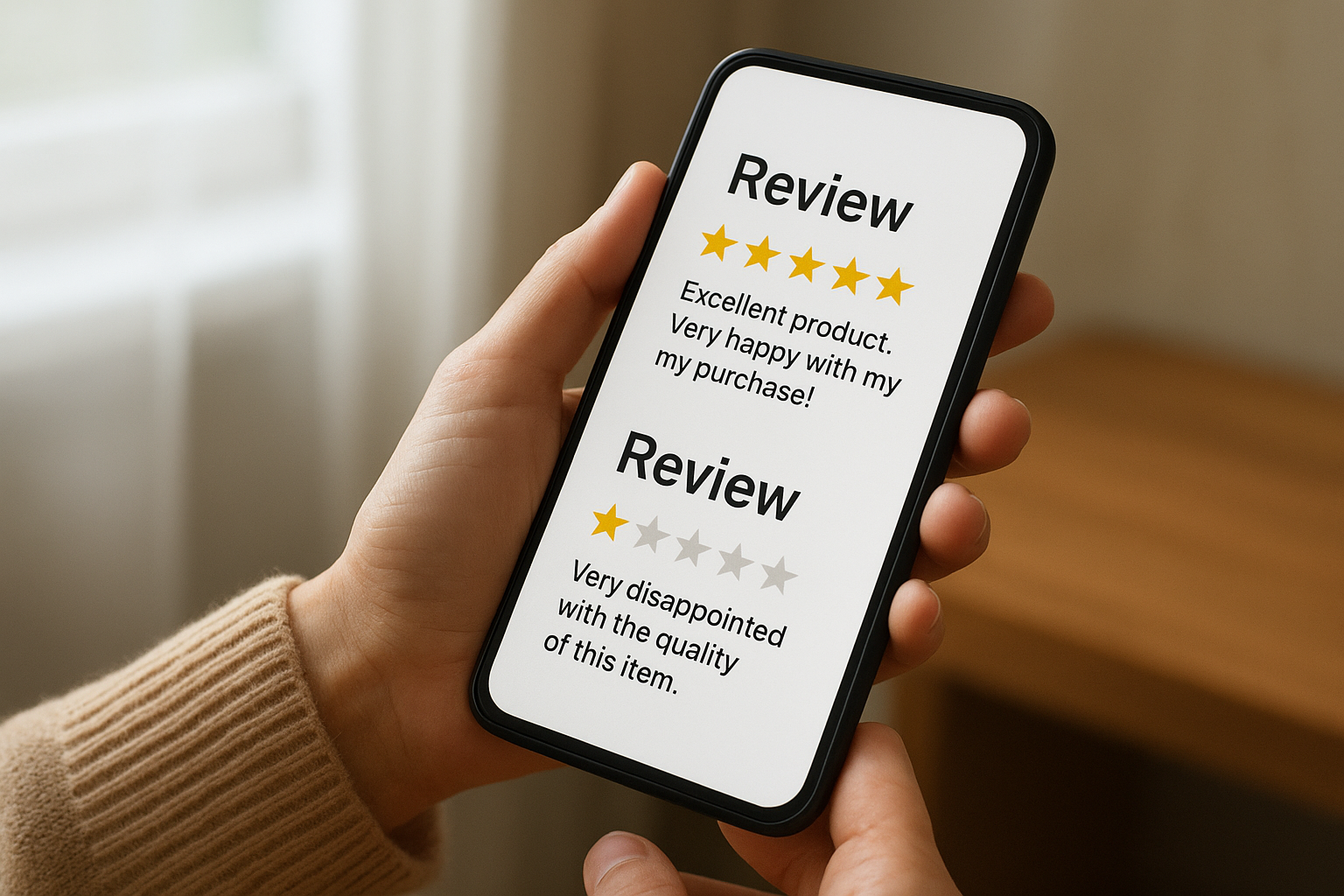
Most homeowners scroll past the five-star reviews and go straight to the one and two-star complaints.
Check Your Own Reviews Before You Launch
Before any weakness-based angle reaches an ad account, it needs to survive one test: does your own review history say the same thing? If your own customers also mention late arrivals, a "we show up when we say we will" campaign invites a comparison you would lose. This is sometimes called backfire protection, and skipping it is the fastest way to waste ad budget on a claim your own reviews quietly contradict.
The Federal Trade Commission's guidance on featuring online customer reviews reinforces why accuracy matters here: claims made in advertising need to reflect reality, not just aspiration. Running your own reviews through the same analysis you use on competitors is the simplest way to stay on the right side of that line while protecting your budget.
Google Ads, Local SEO, and GBP Ideas for HVAC Companies
Once a weakness theme clears the backfire check, it needs to fit the platform it's running on. Google Ads headlines are limited to 30 characters each with a 90-character description, so a pricing-transparency theme might read: "Flat-Rate Pricing. No Surprise Fees." Meta ads allow more room, roughly 40 characters for the primary text, 125 for the body, and 25 for the headline, giving space to add a short proof point.
Google Business Profile posts, meanwhile, work well for shorter, more conversational versions of the same theme, since they appear directly in local search and map results. For a deeper library of ready-to-adapt examples across all three formats, this collection of HVAC marketing campaign templates that convert fast is a useful starting point, and the underlying principle (read the reviews, then write to the character limits) is detailed further on Wikipedia's overview of the HVAC industry.

Fitting a weakness theme into platform character limits is the last step before an idea becomes a running campaign.
Growing an HVAC Business With Monthly Marketing Intelligence
Competitor review patterns shift over time as staff turns over, pricing changes, or scheduling software improves. Because of this, a one-time audit tends to go stale within a few months. A monthly intelligence report, paired with alerts for complaint surges or sudden rating drops, keeps campaigns current without requiring a full re-audit every time.
Owners who want to see this process end-to-end, from raw reviews to finished copy, can start with a free self-analysis at weakspot.io, which analyzes the business's own reviews first and emails results within two business days, no call required. The same approach also applies well beyond HVAC; plumbers facing the same 4.8-to-5.0 star gridlock can review this guide on proven local strategies for getting more plumbing customers for a parallel playbook, and the WeakSpot homepage outlines current plan details.
Frequently Asked Questions About HVAC Marketing Ideas
What are HVAC marketing ideas that actually work in a crowded local market?
The HVAC marketing ideas that work best in crowded markets focus on specific, verifiable differences rather than generic quality claims. Pulling verbatim pain points from competitors' low-star reviews, such as missed arrival windows or surprise fees, gives you concrete messaging that a "5-star service" headline cannot match.
How do I find HVAC marketing ideas based on competitor reviews?
Start by reading every 1 to 3 star Google review for up to five local competitors, not just the recent ones. Then group the recurring complaints into themes, like pricing transparency or callback response time, and turn the strongest themes into ad copy, GBP posts, and email hooks.
Why do most HVAC advertising campaigns look the same?
Most HVAC companies sit between 4.8 and 5.0 stars, so their ads default to the same vague claims: fast, friendly, affordable. Without a way to see what customers actually complain about beneath that average, there is nothing left to differentiate on except price and ad spend.
What is backfire protection in HVAC marketing?
Backfire protection means checking your own Google reviews for the same complaint before you run a campaign based on it. If your own customers also mention late arrivals, a "we're always on time" campaign invites a comparison you would lose.
How much does competitive review intelligence cost for HVAC companies?
Pricing for review-based competitive intelligence services typically starts around $149 per month for a basic monitoring plan covering a couple of competitors. Full-service plans that include a complete campaign pack, self-analysis, and backfire checks tend to run closer to $299 per month.
How long does it take to build a review-based HVAC marketing campaign?
Manually reading hundreds of competitor reviews and clustering complaints into themes can take a marketer several days per competitor. Automated analysis can compress that same research into a report delivered within one to two business days.
What mistakes do HVAC companies make when writing ad copy?
The most common mistake is leading with unverifiable superlatives like "best in town" instead of a specific, provable promise. A close second is ignoring their own review history, which lets competitors or customers call out the exact claim being made.
How is review-based marketing different from general reputation management?
Reputation management focuses inward, responding to your own reviews and improving your own rating. Review-based HVAC marketing ideas look outward, mining competitors' public review data for exploitable weakness themes you can message against.
Can small HVAC companies use these HVAC marketing ideas without hiring an agency?
Yes. Because the finished output is ready-to-run copy with character counts already matched to each ad platform, an owner or office manager can paste it directly into their own Google Ads or Meta account without creative help.
What marketing channels should HVAC companies prioritize first?
Google Ads and Google Business Profile posts tend to deliver the fastest return because they appear at the exact moment someone searches for HVAC help. Local SEO content and email follow-up then extend the reach of the same weakness-based messaging over time.
Do I need to mention competitors by name in HVAC marketing ideas built from their reviews?
No, and it is better not to. Campaign copy built from competitor weakness themes works by implication, describing the frustration the customer wants to avoid, without naming the company that caused it.
How often should HVAC marketing ideas be refreshed?
Monthly refreshes work well because review patterns shift as competitors change staff, pricing, or scheduling practices. A rating drop or a sudden cluster of similar complaints is often the first sign a new weakness theme is ready to message against.
The Bottom Line
The most effective HVAC marketing ideas no longer come from guessing what sounds persuasive. They come from reading what real customers already wrote about your competitors, checking that your own reviews can back up the same promise, and turning the surviving themes into copy sized correctly for each platform. In a market where every serious competitor hovers near 4.9 stars, the business willing to read the thirty or fifty unhappy reviews underneath that average has a message no one else is running, and that is usually enough to win the next click.

