
Plumber Marketing Ideas to Outrank 4.9-Star Rivals
Plumber marketing ideas that actually move the needle are hard to find when every competitor in your town sits at 4.8 or 4.9 stars on Google. When every plumbing company looks equally trustworthy on the surface, owners end up competing on price and ad spend instead of on anything real. However, those shiny averages hide something most business owners never check closely: a large pile of one and two-star reviews describing exactly where the "perfect" competitor keeps failing customers.
That gap between the star rating and the real customer experience is where the best plumber marketing ideas come from. Specifically, it comes from reading what frustrated customers actually wrote, not just scanning the average they left. This article walks through how to find those patterns, how to turn them into campaign copy you can run this week, and how to avoid the one mistake that makes review-based marketing backfire.
Finding plumber marketing ideas starts with the reviews nobody else is reading closely.
What Are Plumber Marketing Ideas That Actually Work?
Plumber marketing ideas are the underlying strategies a plumbing company uses to win new customers, and the strongest ones are built around a specific, verifiable promise rather than a generic slogan. In short, "licensed, insured, and friendly" fails to differentiate you, but "we call before we're late, every time" does, because it directly answers a frustration customers already have.
As a result, the plumbers who grow fastest in crowded markets rarely win on budget alone. Instead, they win because their message lands on a real, specific pain point that a competitor's reviews prove is unresolved. That one shift, from generic reassurance to specific proof, is the foundation of every idea in this article.
Why Most Plumbing Marketing Strategies Fail in a 4.8-Star Market
In almost every local market, serious plumbing competitors cluster between 4.8 and 5.0 stars. Consequently, a homeowner scanning search results sees five nearly identical businesses and defaults to whoever shows up first or charges the least. This is exactly why so many plumbing marketing strategies stall out: they're built to impress on the surface instead of solving a specific, provable problem.
Meanwhile, those same 4.8 and 4.9-star businesses still collect a steady stream of unhappy reviewers alongside the satisfied ones. A competitor with 1,500 reviews at 4.9 stars, for example, can still have dozens of low-star reviews that describe specific frustrations in detail. Those detailed complaints are public, specific, and almost never read by competing owners.
Therefore, the opportunity isn't in outspending the competition. It's in reading what their customers already told you, for free, in their own words.
Plumber Marketing Ideas Hiding in Competitors' Bad Reviews
Once you start reading the one, two, and three-star reviews across a competitor's full history, certain complaint themes repeat constantly. For example, "quoted one price, billed another" shows up again and again in plumbing reviews nationally, as does "waited all day, nobody called," and "tech showed up three hours late and never apologized."
Each of these themes is a ready-made plumber marketing idea. Specifically, a cluster around surprise charges becomes a campaign about transparent, written quotes. A cluster around missed arrival windows becomes a campaign about live tracking and confirmation calls. In other words, every complaint theme is really a positioning gap waiting for the right message.
Common plumbing complaint themes worth building campaigns around:
- Surprise charges at the door or on the final invoice
- Missed or unconfirmed arrival windows
- Rushed jobs that required a callback within weeks
- Pushy upsells during an emergency visit
- Warranty claims that go unanswered
For a deeper breakdown of how this kind of competitor research works, resources like this plumbing competitor analysis guide walk through scoring each theme by how exploitable it is.
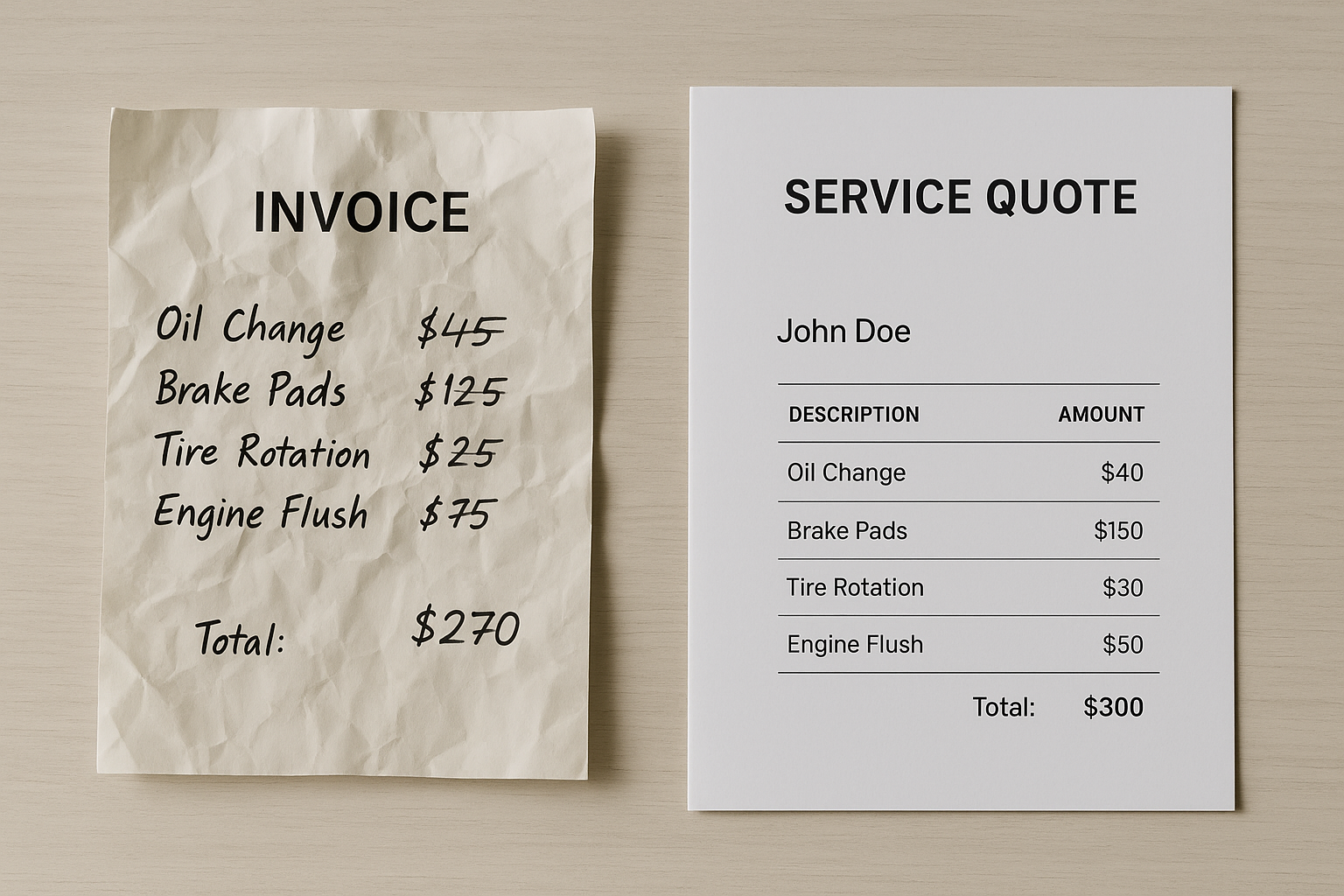 A transparent pricing promise is one of the fastest-converting plumber marketing ideas when competitors are known for surprise fees.
How to Turn Weaknesses Into Plumbing Marketing Campaigns
Turning a complaint theme into a finished plumbing marketing campaign follows a repeatable process. Above all, the goal is to move from raw reviews to a specific claim you can run in an ad account by the end of the week.
- Identify the one to five competitors you actually lose jobs to in your service area.
- Read their full one, two, and three-star review history, not just the recent highlights.
- Group complaints into named themes and rank them by how often and how strongly they appear.
- Check your own reviews for the same language before committing to a theme.
- Write the opposite promise into a headline, keeping Google Ads copy within 30 and 90 character limits and Meta ad copy within 40, 125, and 25 characters.
- Publish across Google Ads, your Google Business Profile, and one supporting channel, then track calls weekly.
Notably, this is the exact workflow WeakSpot automates for home-service businesses, reading every review across up to five competitors, scoring each weakness theme from 1 to 10 for exploitability, and handing back finished copy instead of a dashboard. If you'd rather see the full campaign pack format first, the live demo at weakspot.io shows exactly what arrives each month.
Local Plumber Advertising Tactics That Build Immediate Trust
Once you know which theme to target, the tactic matters almost as much as the message. For instance, Google Ads performs well for high-intent searches like "emergency plumber near me," while Google Business Profile posts reinforce the same promise to anyone checking your listing after clicking an ad.
In addition, SEO content that answers specific questions, such as "how to get more plumbing customers," builds long-term trust with both readers and search engines. A detailed resource like this guide on getting more plumbing customers pairs well with paid campaigns because it gives prospects somewhere to land after they click.
Similarly, Meta ads work best as a supporting layer rather than a primary lead source for plumbers, since most homeowners search with intent rather than scroll passively. Because emergency and trade services are usually searched for at the moment of need, Google Ads and GBP should anchor most plumber marketing ideas.
Avoiding the Backfire: Check Your Own Reviews First
However, there's a critical step most owners skip, and it's the one that determines whether a campaign builds trust or quietly destroys it. Before running any message about reliability, pricing, or speed, search your own Google reviews for the same keywords.
If your own customers also complain about late arrivals, a "we show up when we say we will" campaign invites a comparison you'll lose the moment a prospect checks your profile. This is why backfire protection matters: it's the fastest way to stop spending budget on a claim your own review history quietly contradicts. Every campaign you run should be one you can actually win on, not just one that sounds good in isolation.
For a broader look at how home-service brands structure this kind of messaging across different trades, the home service marketing content guide and this HVAC campaign template resource both show the same backfire check applied to adjacent trades.
 Plumber marketing ideas convert fastest when the promise matches what your own customers already experience.
Frequently Asked Questions About Plumber Marketing Ideas
What are plumber marketing ideas, exactly?
Plumber marketing ideas are tactics and messages a plumbing company uses to attract new customers, ranging from Google Ads and SEO to review-based campaigns that highlight what competitors get wrong. The strongest ideas connect directly to a frustration local customers already have.
How do I find plumber marketing ideas that actually beat competitors with high ratings?
Read the one and two-star reviews on competitor Google Business Profiles instead of the averages, since that's where recurring complaints like missed windows or surprise fees live. Build your messaging around solving exactly what those reviewers describe.
Why do review-based plumber marketing ideas work better than generic ads?
Generic ads like "licensed and insured" sound identical across every plumbing company in a market, so they get ignored. Review-based messaging speaks to a specific, verified pain point, which makes it far more persuasive and memorable.
What common mistakes do plumbers make when running marketing campaigns?
The most common mistake is copying whatever message the market leader uses, which just blends in. A close second is running a campaign that promises something your own reviews contradict, which erodes trust the moment a prospect checks.
Is it legal to use information from competitors' public Google reviews?
Yes. Google reviews are public data, and referencing the themes within them, without naming the competitor directly, is a standard competitive research practice used across industries, similar to how businesses study published customer reviews for product development.
How do I know if a marketing claim will backfire because of my own reviews?
Before running any campaign, search your own Google reviews for the same keywords you plan to use in the ad, such as "late" or "overcharged." If those complaints show up in your own history, that angle will likely backfire.
Final Takeaway on Plumber Marketing Ideas
In the end, the best plumber marketing ideas rarely come from a bigger ad budget or a louder slogan. Instead, they come from reading what unhappy customers already told your competitors, for free, in reviews nobody else bothered to finish reading. Once you identify the recurring complaint themes, check them against your own review history, and write a specific promise around the gap, you have a campaign built on evidence rather than guesswork.
Ultimately, that combination, a provable competitor weakness paired with a claim your own customers can confirm, is what separates plumber marketing ideas that sound nice from ones that actually book jobs. If you want that research and the finished campaign copy done for you every month, start with a free self-analysis at weakspot.io and see what your own reviews reveal first.
