Google ads headlines for plumbers are the single biggest lever in a search campaign, because they decide whether a homeowner clicks or scrolls past. However, most plumbing companies write headlines that sound exactly like every other 4.8-star competitor in town. As a result, the ad spend goes up while the click-through rate stays flat. This guide breaks down how to write plumbing PPC headlines that actually stand out, using real character limits, real formulas, and real competitor weak spots pulled straight from public Google reviews.
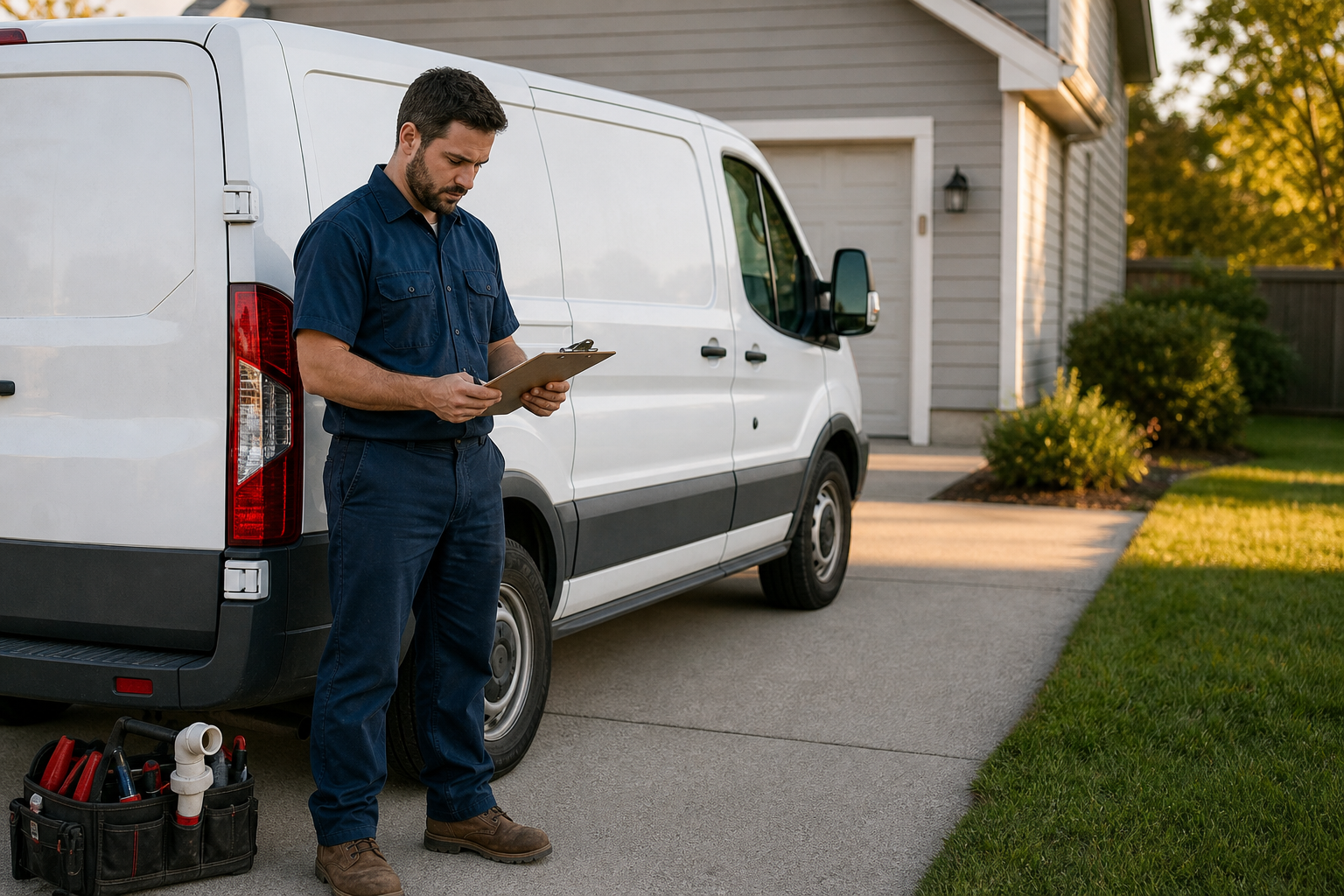
Strong google ads headlines for plumbers work best when they describe a promise the business can actually keep.
What Are Google Ads Headlines for Plumbers?
Google ads headlines for plumbers are the short, bold text lines that appear at the top of a search ad, each capped at 30 characters. Google's system mixes and rotates up to three of your submitted headlines per impression, so every single one has to earn the click on its own.
In particular, a Responsive Search Ad lets you submit up to 15 headlines and 4 descriptions. Google then tests combinations automatically and favors whichever pairing gets the most clicks and conversions over time. Consequently, the headlines you write are not just copy, they are the raw material Google's algorithm uses to decide who wins the auction for attention.
According to Google's own ad specifications, headlines that exceed 30 characters get truncated or rejected entirely before they ever reach a searcher (see Google's Responsive Search Ads guidance). That hard limit is exactly why sloppy headline writing quietly wastes budget.
Why Generic Plumbing PPC Headlines Fail Against 4.9-Star Competitors
In almost every local market, every serious plumbing competitor sits between 4.8 and 5.0 stars. Therefore, a headline that says "Trusted Local Plumbers" or "5-Star Rated Service" blends into the background instead of standing out. Homeowners scanning search results cannot tell one near-perfect rating from another.
A star rating is an average, and averages hide things. Even a competitor with 1,500 reviews and a 4.9 average still has thirty to fifty unhappy customers who wrote down, in detail, exactly what went wrong: a quoted price that changed, a technician who never called, a callback that never came. Those complaints are public, specific, and searchable. Meanwhile, almost nobody reads them before writing ad copy.
For a deeper look at why this approach beats price-based bidding wars, the guide on plumber marketing ideas to outrank 4.9-star rivals walks through the broader strategy behind weakness-based positioning, not just the ad headlines.
Google Ads Character Limits Plumbers Must Follow
Before writing a single headline, it helps to see the exact constraints side by side. Specifically, Search and Meta campaigns use different limits, which matters if a plumbing company runs both.
| Ad Element | Platform | Character Limit |
|---|---|---|
| Headline | Google Ads | 30 characters |
| Description | Google Ads | 90 characters |
| Primary text | Meta Ads | 125 characters |
| Headline | Meta Ads | 40 characters |
| Description | Meta Ads | 25 characters |
Above all, treat these numbers as hard rules, not suggestions. A headline that runs one character over gets cut off mid-word, which looks unpolished and can cost clicks even when the offer underneath is strong.
How to Write Google Ads Headlines for Plumbers That Convert
Writing effective google ads headlines for plumbers follows a repeatable process rather than a flash of inspiration. The five steps below move from research to a live, testable ad group.
- Audit your top five local competitors' Google reviews for recurring one- to three-star complaints about pricing, scheduling, or workmanship, then verify your own reviews don't share the same weak spot.
- Pick the single most exploitable complaint theme and translate it into a plain-language promise your business can back up, such as "Flat-Rate Pricing, No Surprise Fees."
- Write three to five headline variations for that promise, keeping each one inside Google's 30-character headline limit so nothing gets truncated in the ad preview.
- Pair every headline with a matching description line, up to 90 characters, that adds proof such as a guarantee, a review count, or a response-time statistic.
- Launch the ad group, monitor click-through rate for two weeks, then pause whichever headline underperforms and test a new angle from your updated weakness list.
Notably, the research step is where most plumbing companies skip ahead too fast. Without it, headlines default to generic trust claims that every competitor already owns.
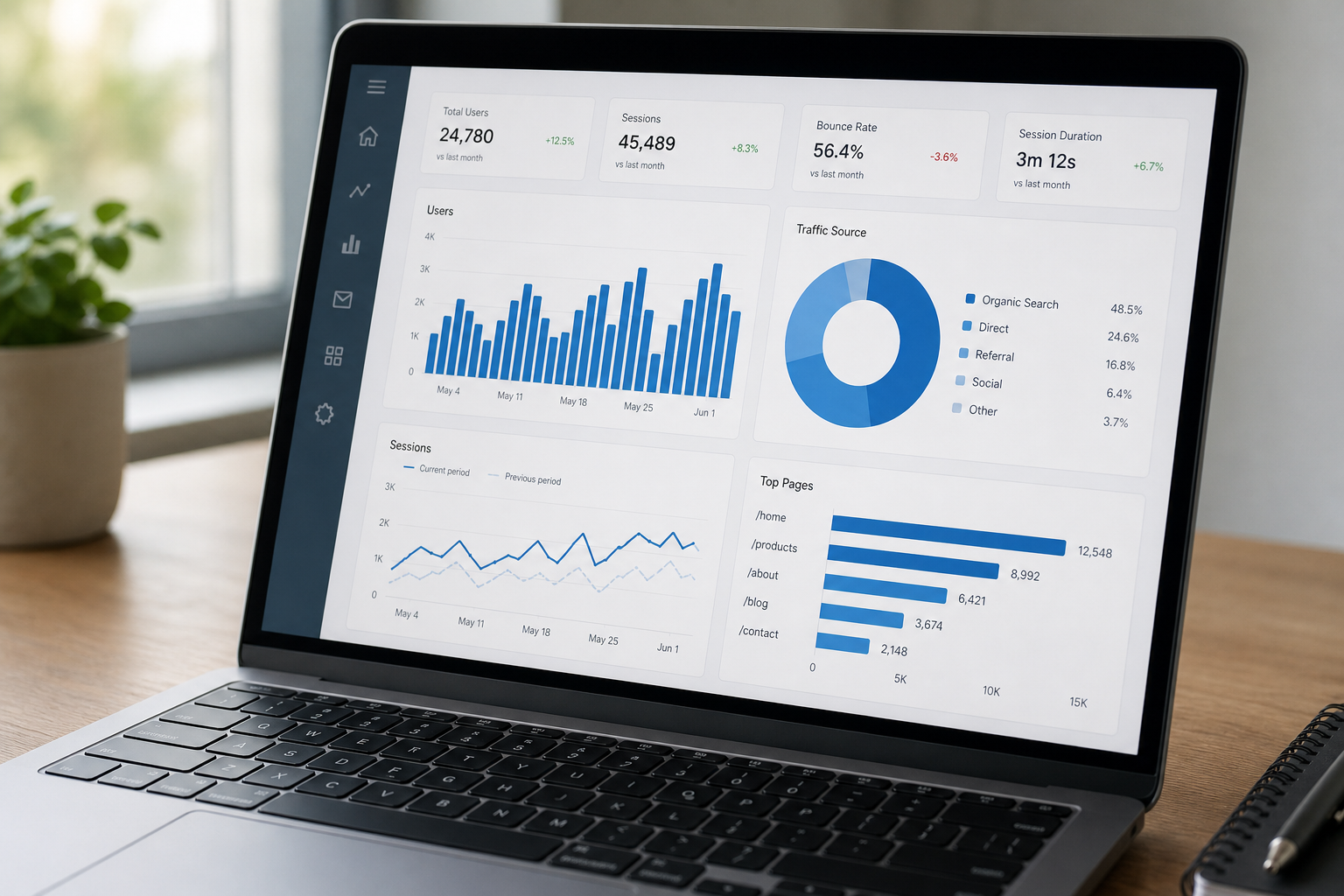
Reviewing click-through data every two weeks helps refine which plumbing ad headlines are worth keeping.
Turning Competitor Complaints Into Headline Ideas
WeakSpot is built specifically for this step. The service reads a plumbing company's chosen competitors' entire Google review history, not just the highlights, and isolates the one- to three-star reviews into named weakness themes such as surprise charges, missed arrival windows, rushed jobs, and warranty runarounds. Each theme gets scored from 1 to 10 for how exploitable it is, backed by verbatim customer quotes.
Before any angle becomes a headline, however, WeakSpot runs the same analysis on the client's own reviews. This is called backfire protection. If a plumbing company's own customers also complain about late arrivals, a "we show up when we say we will" headline gets flagged automatically, because it invites a comparison the business would lose. In other words, the goal is never to pick a fight you can't win.
The monthly campaign pack then delivers finished Google Ads headline variations validated against the 30- and 90-character limits, alongside Meta ad copy and Google Business Profile posts, so the copy drops straight into an existing account. For roofing companies running the same playbook, the Google Ads copy for roofers guide shows how the same weakness-scoring method translates across trades, while the HVAC Google Ads examples article does the same for heating and cooling contractors.
Examples of High-Performing Plumber Ad Headlines
Specific, review-backed headlines consistently outperform vague trust statements. A few examples, each within the 30-character limit:
- "Flat Price Before We Start" (27 characters)
- "On-Time Window, Guaranteed" (27 characters)
- "Same-Day Plumber, No Hidden Fee" trimmed to "Same-Day, No Hidden Fees" (25 characters)
- "We Call Back, Every Time" (25 characters)
- "Licensed Techs, Clean Jobs" (27 characters)
Each example above maps directly to a common complaint theme found in local plumbing reviews, such as surprise charges or missed callbacks. For a wider set of plumbing-specific strategies beyond paid search, see how to get more plumbing customers with proven local strategies.
Common Mistakes With Plumbing Ad Headlines
Even experienced marketers repeat a few avoidable errors. First, writing all 15 headline slots with slight rewordings of the same claim gives Google's algorithm nothing new to test. Second, ignoring the 30-character limit until the ad preview shows a truncated word is a surprisingly common and entirely preventable mistake. Third, and most costly, is making a promise the business's own reviews contradict, which erodes trust the moment a customer checks.
Additionally, many plumbing companies run Google Ads and Local Services Ads without understanding how differently each platform charges and ranks listings. The comparison in Local Services Ads vs Google Ads for contractors breaks down when to run each one. According to industry benchmarks compiled by Wikipedia's overview of pay-per-click advertising, ad relevance and click-through rate directly affect cost per click across nearly every PPC platform, which is exactly why sharper headlines also lower spend over time.

Most homeowners check reviews before clicking an ad, which is why google ads headlines for plumbers work best when they echo real customer concerns.
Frequently Asked Questions
What are Google Ads headlines for plumbers?
Google ads headlines for plumbers are the short, bold text lines at the top of a search ad, limited to 30 characters each. Google rotates up to three of your submitted headlines per impression, so each one needs to stand alone as a reason to click.
How many headlines can I add to a plumbing Google Ads campaign?
A Responsive Search Ad allows up to 15 headlines and 4 descriptions per ad group. Most plumbing campaigns perform best with 8 to 10 varied headlines so Google's system has enough options to test.
What is the character limit for Google Ads headlines?
Each headline is capped at 30 characters, and each description line is capped at 90 characters. Going even one character over means Google truncates or rejects the line before it ever reaches a searcher.
Why do my plumbing ads get low click-through rates even with a 4.9-star rating?
A high average rating looks identical to every other plumber's ad, so it no longer differentiates you. Click-through rates improve when headlines address a specific frustration, such as pricing surprises or missed arrival windows, instead of repeating a generic star count.
How much does it cost to run Google Ads for a plumbing company?
Local plumbing keywords commonly range from $8 to $25 per click depending on the market, with emergency terms often at the high end. Budget matters, but headline relevance has a direct effect on cost per click because it drives Quality Score.
How long does it take to see results from plumbing PPC campaigns?
Most plumbing accounts need 2 to 4 weeks of data before headline performance becomes statistically meaningful. After that window, underperforming headlines should be paused and replaced with new angles.
What's the difference between Google Ads and Local Services Ads for plumbers?
Google Ads search campaigns let you write and control your own headlines and bidding, while Local Services Ads show a simpler profile card and charge per lead rather than per click. Many plumbing companies run both, since they target different stages of the search results page.
What common mistakes hurt plumbing ad headline performance?
The most frequent mistakes are repeating the same claim in every headline, ignoring the 30-character limit until Google truncates the text, and making a promise the business's own reviews contradict. Each of these quietly wastes ad spend.
How can competitor reviews improve my Google Ads headlines?
Reading the one- to three-star reviews of top competitors reveals exact phrases unhappy customers used, such as complaints about surprise fees or late arrivals. Turning those specific frustrations into a direct promise gives a headline real differentiation instead of a vague claim.
Should I mention guarantees in my plumbing ad headlines?
Yes, a specific guarantee tied to a real weakness in the market, such as an on-time arrival promise, tends to outperform generic trust phrases. It only works, however, if your own reviews support the claim.
How often should I refresh Google Ads headlines for plumbers?
Review headline performance at least monthly and swap out the weakest performers for new angles drawn from fresh competitor complaints. Markets shift, and a weakness theme that worked six months ago may no longer be the sharpest angle available.
What is backfire protection in competitive ad copy?
Backfire protection means checking your own reviews before running a headline that attacks a competitor's weakness, to confirm your business doesn't share the same flaw. Without it, a plumber could advertise fast arrival times while their own reviews complain about the exact same problem.
Conclusion
Writing strong google ads headlines for plumbers comes down to specificity over polish. Generic trust claims blend into a market where every competitor already sits near 5 stars, whereas headlines built from verbatim complaint patterns, such as surprise fees or missed callbacks, give homeowners a concrete reason to choose one plumber over another. Just as importantly, backfire protection keeps every claim honest by checking it against the plumbing company's own review history first. Readers who want a head start can get a free self-analysis of their own reviews, delivered by email within two business days, at weakspot.io, or explore a live demo at app.weakspot.io/demo before choosing a monthly plan.

