How to get more roofing leads is the question every roofing contractor eventually asks once referrals slow down and pay-per-click costs keep climbing. Most roofers respond by raising their ad budget or dropping their price, which only works until a competitor does the same thing. There is a better lever available to almost nobody is using it: the negative reviews your competitors already have sitting in public view.
Direct answer:
The fastest way to get more roofing leads is to find the specific, repeated complaints hiding in your competitors' 1 to 3 star Google reviews, then build ads and content around the exact frustration homeowners are trying to avoid, as long as your own reviews do not say the same thing.
What Is Roofing Lead Generation and Why Does It Matter?
Roofing lead generation is the ongoing process of attracting homeowners who need a repair, replacement, or inspection and capturing enough of their information to follow up. It matters because roofing is almost always an unplanned purchase, triggered by a leak, a storm, or an inspection report, which means the homeowner is searching and comparing quickly.
In most local markets, every serious roofing company sits between 4.8 and 5.0 stars on Google. On the surface, there is nothing separating one roofer from the next, so companies end up competing on price and ad spend alone. However, a star rating is only an average, and averages hide a great deal.
According to BrightLocal's Local Consumer Review Survey, roughly 98 percent of consumers used the internet to find information about local businesses in the past year, and most read reviews before calling. A competitor with 1,500 reviews and a 4.9 average can still have thirty or more unhappy customers describing, in detail, exactly what went wrong. Those details are the opening.

Reading competitor reviews closely is often the fastest path to more roofing leads.
How to Get More Roofing Leads by Studying Competitor Reviews
Homeowners who write a negative review are not venting randomly. In particular, they tend to describe the exact moment that broke their trust: a quote that changed after the work started, a crew that never called before arriving, or a warranty claim that went nowhere. Those sentences describe the precise frustration the next customer in that market is trying to avoid.
For example, a roofer with dozens of complaints about "surprise charges" or "price changed after tear-off" is handing you a ready-made angle: a transparent, written estimate with no change orders. As a result, your marketing stops competing on price and starts competing on a specific, provable promise.
Step-by-Step: Turning Reviews Into Roofing Marketing Strategies
Here is a repeatable process for converting competitor complaints into usable roofing marketing strategies:
- Build a watch list of three to five direct competitors in your service area, prioritizing the ones homeowners compare you against most often.
- Read the full negative review history for each competitor, not just the highlights, since the useful detail is usually buried past the first page.
- Cluster repeated complaints into named weakness themes, such as missed arrival windows, rushed installs, or callbacks that never come.
- Score each theme for how exploitable it is, based on how often it appears and how strongly it would matter to a homeowner comparing quotes today.
- Check your own reviews for the same complaint before you commit, so you are not inviting a comparison you would lose.
- Turn the top-scoring themes into finished copy for Google Ads, Meta ads, Google Business Profile posts, and email, each sized to the platform's character limits.
Doing this manually for even one competitor can take several hours per month. This is exactly the gap a service like WeakSpot was built to close, reading the entire review history for up to five competitors and handing back scored weakness themes with verbatim quotes instead of a vague summary.
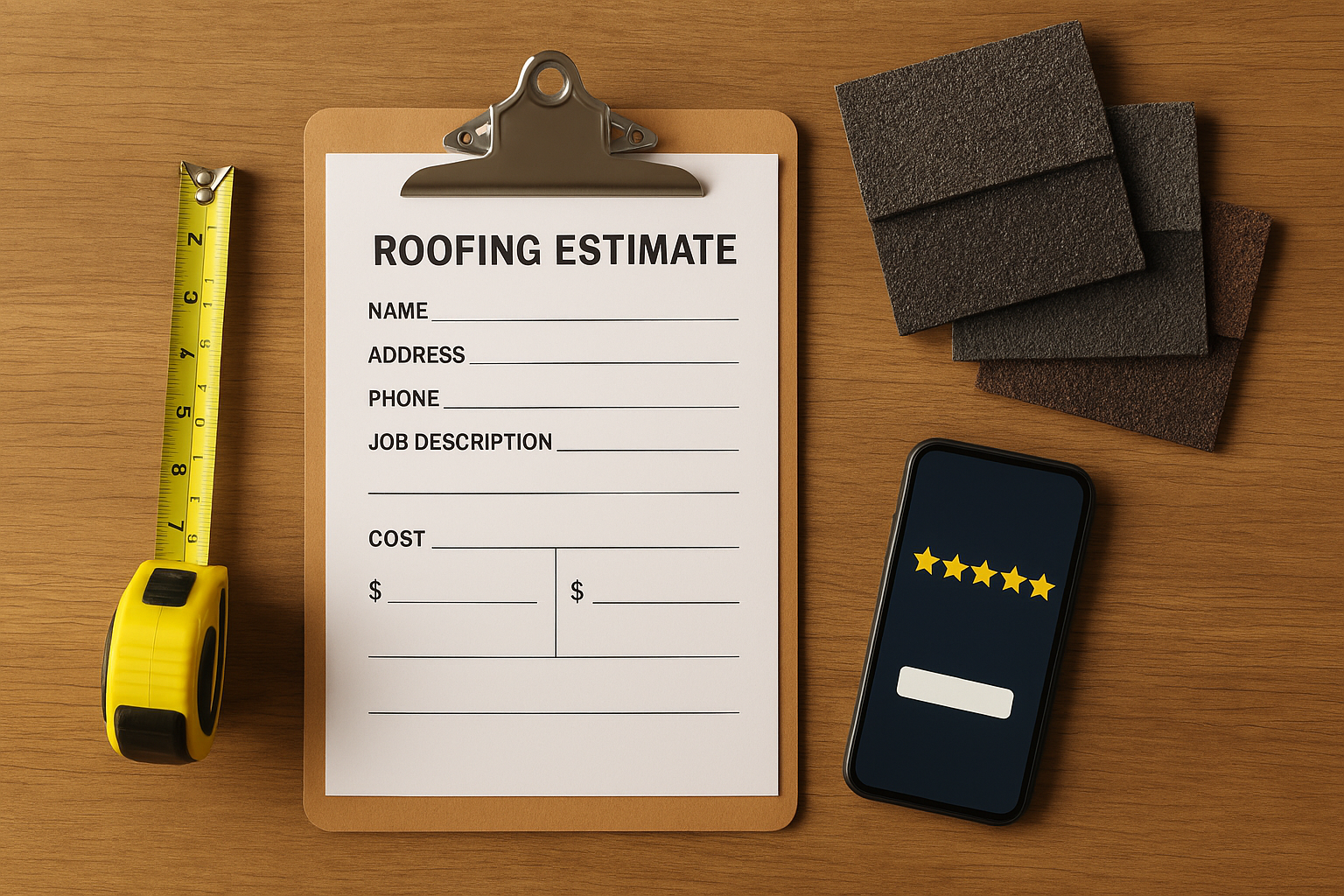
Turning scattered review data into one clear estimate promise is a core roofing marketing strategy.
Proven Channels to Generate More Roofing Customers
Once you know which weakness theme to lead with, the next question is where to run it. Most roofing companies see the strongest results from a combination of channels rather than one single tactic.
Google Business Profile. Specifically, your profile is usually the first thing a homeowner checks after a search. Posting updates that address a verified weakness, such as a written no-surprise-charge guarantee, helps you stand out in the map pack.
Google Ads. Search ads work well for roofing because the homeowner is already looking for help. Headlines validated against the 30 and 90 character limits, built around a specific competitor weakness, tend to outperform generic "licensed and insured" claims.
Meta ads. Facebook and Instagram ads work best for awareness and retargeting, especially after a storm event drives search volume up across an entire metro. For a closer look at platform-specific examples, see these Google Ads examples built around competitor weaknesses, since the same approach transfers directly to roofing.
Local SEO content, referral programs, and even low-cost directory listings still matter too. For additional free options, this list of free advertising sites for local businesses is a useful starting point if your budget is tight.
Protect Your Budget: Check Your Own Reviews Before You Launch
Before any weakness-based angle goes live, it is worth running the same analysis on your own Google reviews. If your customers also complain about late arrivals, then a "we show up when we say we will" campaign invites a comparison you would lose.
This check, sometimes called backfire protection, is the fastest way to stop wasting ad budget on a claim your own reviews quietly contradict. Consequently, every message you run becomes one you can actually defend if a prospective customer checks your reviews after seeing your ad.
This approach is not unique to roofing. Home-service categories like plumbing and HVAC face the identical problem of near-identical star ratings; related strategies are covered in this guide to getting more plumbing customers and these HVAC campaign templates, both built on the same review-mining logic.
Putting It Into Practice
None of this requires a large marketing team. In fact, a single owner can run the manual version of this process over a weekend for one or two competitors, then expand once a theme proves it converts. For a broader look at what finished, ready-to-run content can look like across formats, see this roundup of home service marketing content that wins customers.
Beyond the local market research, it also helps to understand broader rules around claims in advertising. The Federal Trade Commission publishes guidance on advertising and marketing basics that applies to any local business making comparative or guarantee-based claims, and it is worth a quick read before your first campaign goes live.

Finished ad copy, not just a chart, is what actually moves the needle on roofing leads.
Frequently Asked Questions About How to Get More Roofing Leads
How to get more roofing leads without increasing ad spend?
You can get more roofing leads without spending more by sharpening your messaging instead of your budget. Studying competitor reviews reveals specific complaints you can address directly, which often lifts click-through and conversion rates on the same spend.
What is roofing lead generation?
Roofing lead generation is the process of attracting homeowners who need roof repair, replacement, or inspection and capturing their contact information. It combines visibility channels like search, ads, and referrals with messaging that builds trust quickly.
How long does it take to see results from a new roofing marketing strategy?
Paid channels like Google Ads and Meta ads can produce leads within days once campaigns go live. In contrast, organic strategies such as SEO and Google Business Profile optimization typically take 8 to 16 weeks to show steady improvement.
Why do roofing companies struggle to stand out when every competitor has a near-perfect rating?
When every roofer sits between 4.8 and 5.0 stars, the average hides dozens of specific complaints buried in the 1 to 3 star reviews. Without reading that negative review history, companies end up competing on price instead of a real differentiator.
How much does it cost to generate roofing leads online?
Costs vary by market and channel, with paid search often ranging from roughly $40 to $150 per lead in competitive metro areas. Costs typically drop once campaign messaging is sharpened around a real customer pain point rather than generic claims.
What is the biggest mistake roofing companies make in their ads?
The most common mistake is running a claim that your own customers already contradict in their reviews, such as promising fast callbacks while your reviews mention missed callbacks. This backfires by inviting an unflattering comparison.
How do competitor review complaints compare to traditional market research for roofers?
Traditional market research relies on surveys and estimates, while competitor review complaints are specific, dated, and written in the customer's own words. As a result, review-based insight tends to be faster to gather and cheaper than commissioning original research.
What channels work best to get more roofing customers?
Google Business Profile, local SEO, Google Ads, and Meta ads consistently perform well for roofing companies because homeowners search locally when a roof problem appears. Referral programs and direct mail remain useful supplements in storm-affected areas.
How often should I check competitor reviews for new weakness patterns?
Checking monthly is usually enough for most local markets, since review patterns shift slowly outside of storm season. However, watching for a sudden rating drop or complaint spike helps you react before competitors notice the same opening.
Can I name a competitor directly in my roofing ads?
It is best practice to avoid naming a competitor directly in ad copy, since it can trigger platform policy reviews and feels confrontational to homeowners. Instead, address the underlying frustration, such as surprise fees or missed appointment windows, without mentioning who causes it.
What is backfire protection in roofing marketing?
Backfire protection means checking your own reviews for the same complaint before you run a campaign built around a competitor's weakness. If your customers report the same issue, the claim invites a losing comparison instead of winning new business.
Do I need a large ad budget to compete with established roofing companies?
A large budget helps, but precise messaging matters more in most local markets. Often, a smaller budget aimed at a specific, verified competitor weakness outperforms a larger budget spent on generic claims everyone else is already making.
Final Takeaway
Ultimately, how to get more roofing leads comes down to paying attention to what almost nobody else is reading: the specific, verbatim complaints sitting in your competitors' 1 to 3 star reviews. Those complaints describe exactly what the next homeowner in your market wants to avoid, and that makes them one of the most underused sources of roofing lead generation available today.
Start by reading one competitor's full negative review history this week, check your own reviews for the same issue, and build one piece of copy around whatever gap remains. If you would rather skip the manual research, WeakSpot offers a free self-analysis of your own reviews, delivered by email within two business days with no call required, and a live demo is available at app.weakspot.io/demo.

